

The diagnostic process plays a vital role in the timely identification of diseases and infections caused by pathogenic microorganisms, genes, or specific proteins. Blood testing cartridges are compact devices that are crucial in diagnostic testing.
You must ensure strong bonding and leak-proof assembly to guarantee accurate fluid handling and reliable test results. Without proper preparation, the cartridges may fail to perform as intended, potentially leading to inaccurate diagnoses.
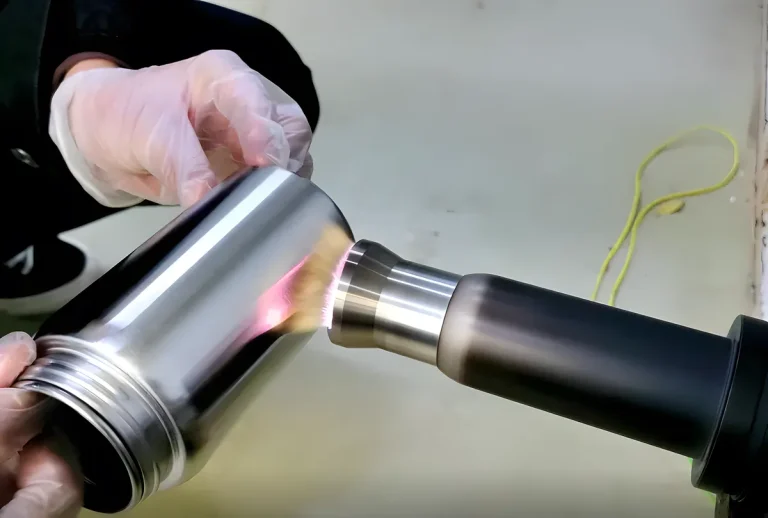
Plasma activation is a process that can strengthen the bonding between materials. By using plasma activation, you can significantly improve assembly reliability and overall cartridge functionality.
It is common to see blood testing cartridges made of PMMA (Polymethyl Methacrylate), PC (Polycarbonate), and PS (Polystyrene). These materials are chosen because of their exceptional clarity of sight and tenaciousness, which are indispensable for precise test results and long-term reliability.
The challenges presented by using these materials to create the system are discussed below:.
Low Surface Energy: Polymers are inherently hydrophobic, which means that they repel water. This property decreases bonding and sealing effectiveness, complicating the creation of a closed assembly.
Surface Contamination: The residues from the manufacturing moldings, the lubricators used in the production, and environmental exposure are potential barriers to bond formation. These contaminants create a barrier between the surfaces that must be bonded, compromising the assembly’s integrity.
To overcome the above issues and develop suitable blood testing cartridges, two primary requirements should be met:
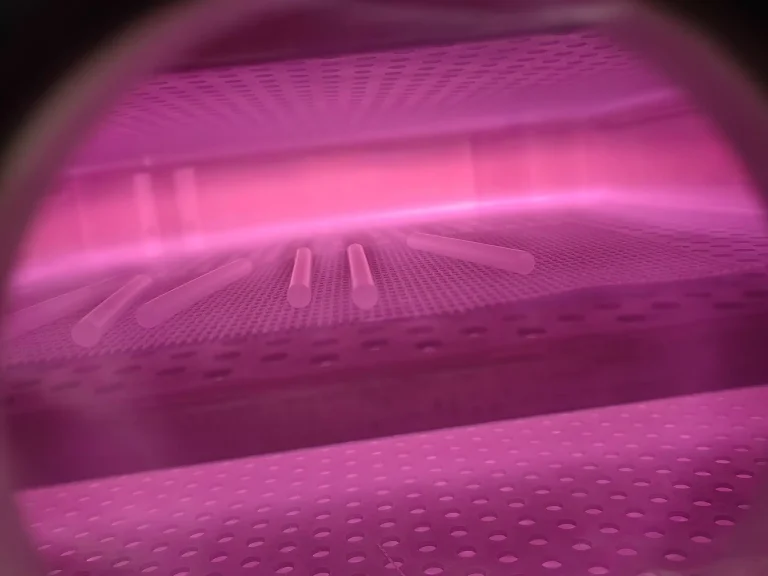
Plasma activation is brought about by changing the properties that will, in return, increase the very important bonds, which are then used as adhesives. It’s an effective process that turns everything around and helps two surfaces bond securely and tightly.
The plasma activation process is interdependent with several mechanisms:
Surface Cleaning: Plasma easily and effectively removes oil and dirt from a surface. This process cleans the surface to improve the bonding between the adhesives and the material by eliminating the barriers between them.
Surface Functionalization: Under this process, the plasma deposits polar groups such as -OH and -COOH onto the material’s surface. These groups increase the surface energy, which is used to increase the bonding of the material to the other.
Microstructuring: Plasma simultaneously introduces nanoscale roughness on the surface. This increase in surface area and texture helps lock the pieces during the adhesion process, leading to a stronger bond.
One of the main benefits of plasma activation is the significant increase in adhesion. Plasma treatment ensures the creation of strong and durable bonds for all the cartridge components, which is substantial for the general integrity of the device.
In making the adhesion of the components and the assembler joining, the plasma activation involves changing the surface properties. Thus, the process of bonding is made possible.
Plasma activation has another great benefit; it helps seal flaws by inhibiting fluid flow.
The bond made after plasma activation is so strong that it makes a membrane unbreakable when subjected to physical and thermal loads. This endurance is vital for using and sterilizing the cartridge so the tape can safely run from one end of the life cycle to the other.
Plasma activation decreases the reliance on chemical primers and adhesives. The manufacturing process is simplified, and environmental issues are tackled by reducing the products used and the emitted wastes.
The main additional positive point of plasma activation is that its use in proper surface treatment is highly consistent. Thus, it becomes suitable for robotic operation, which leads to uniform production throughout many production cycles.
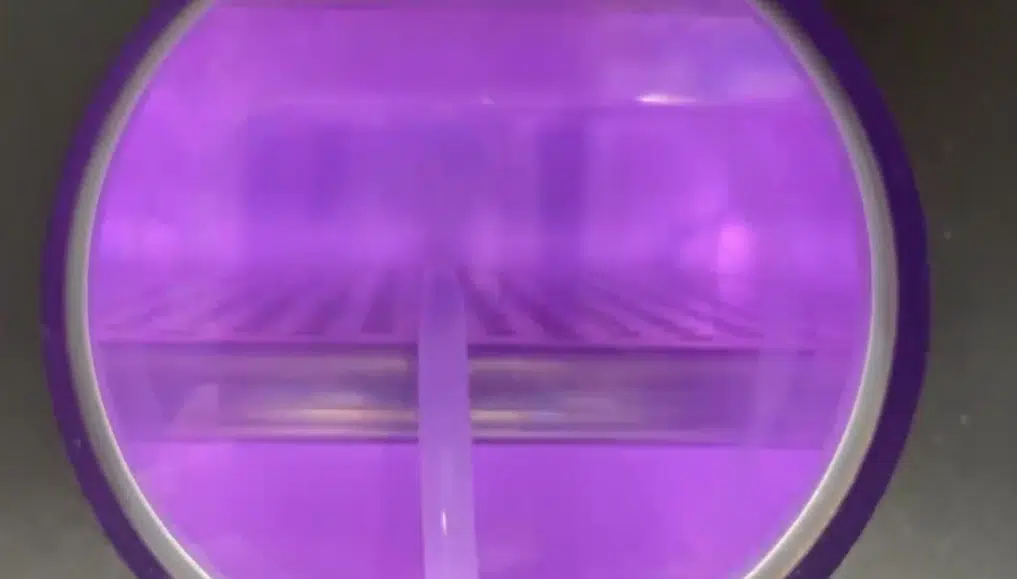
Plasma activation is used to ensure that the various components of the cartridge are perfectly attached to create a complete and tight assembly. It is included in the bonding process of the lids, bases, and channels where it is necessary for smooth and reliable lower-long production.
Plasma activation allows the sensors to be effectively attached to the cartridge surfaces in blood testing cartridges with incorporated sensors. This is important for data collection during tests.
Plasma activation is applied to change the attachment situation of hydrophilic or hydrophobic coatings to the cartridge surfaces. These coatings usually help manage text fluids within the cartridge.
Plasma activation ensures a leak-proof bonding of components in microfluidic channels in cartridges. This is important for the accurate handling and flow control of the fluids in the device.
In the plasma activation process, to ensure the best results, some key parameters would need to be closely controlled, and among the conditions are:
Gas Selection: Of the gases, the cleaner and researcher will likely opt for oxygen or argon for ideal cleaning and activation, respectively. The material will determine the type of gas that should be used and the properties of the surface.
Power Levels: Overdoing the surface treatment must be prevented, and the materials should not be damaged. At the same time, the plasma surface treatment should be effective.
Treatment Duration: The exposure time to plasma must be determined to get proper surface activation while keeping the material intact.
The effectiveness of the treatment must be validated after the plasma activation.
Contact Angle Measurements: These describe an increased wettability of the surface, which results from the plasma surface activation, indicating its role in successful bonding.
Adhesion Testing: This allows for assessing uniform and strong bonding in all treated areas of the cartridge components.
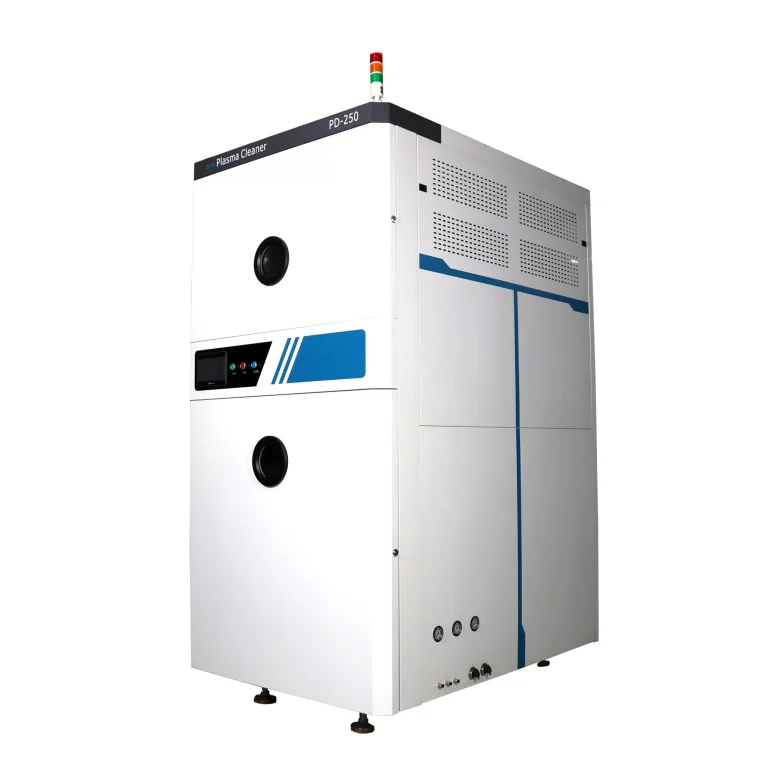
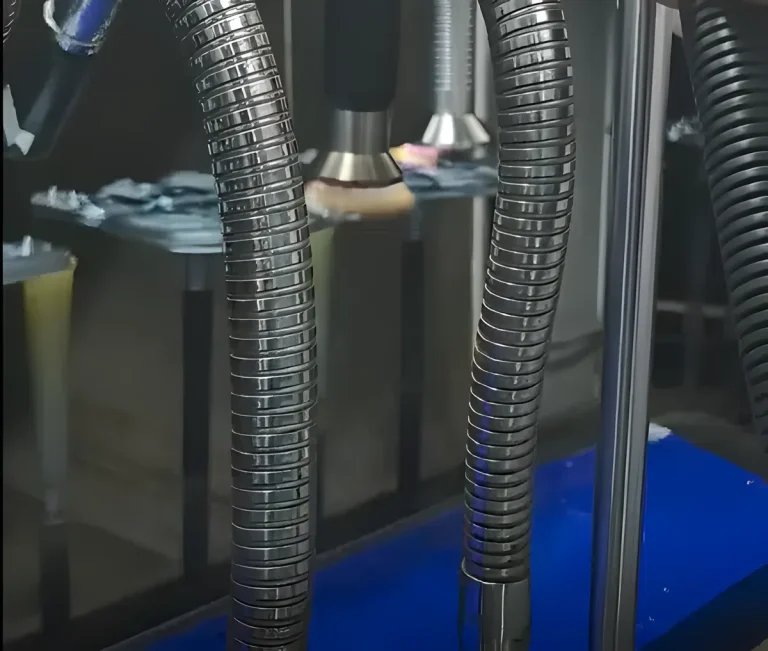
The operation may be run automatically with plasma activation systems to produce cartridge components efficiently. This will code and sequence cartridge components in constant quality along production lines.
An issue faced in plasma activation is excess treatment, which might lead to structural distortion of the polymeric materials if it is carried through too much.
It is, therefore, crucial to formulate and use the right balance between the various materials and consequent treatment process adjustments.
Intricately designed blood testing cartridges are commonly characterized by arrangements of microfluidic channels.
The particular features of the channel, such as uniform plasma exposure, largely determine this, which might require special devices to resolve.
Medical devices like blood testing cartridges used in medicine are supposed to adhere to strict regulations for safety and reliable performance. Confirmation of the plasma activation process is one example of the documents that the company must submit to the concerned authority.
While plasma activation is certainly valuable, the initial cost of the equipment involved can sometimes be quite large.
Manufacturers should find a way to balance the initial price of the equipment with the long-term improvements in the products and the savings on the production process.
Several laboratories have further proven that devices treated with plasma have fewer assembly defects and provide better diagnostic results. The increase in reliability means that the patient will be given the proper treatment and, thus, will recover more quickly.
The adoption of plasma activation in large-scale production by most of the top medical diagnostic firms is visible proof of the feasibility of this high-volume technology. The wide use of plasma treatment in large batches is now a fact of life in industries.
Studies have justified plasma activation by illustrating that bonded sensors in plasma-activated cartridges are more durable and reliable than unbonded ones. This will contribute to making the devices more reliable and long-lasting.
Plasma-based surfaces are the most used to enable next-generation coatings for improved fluid handling. These improvements may mean that more advanced diagnostic cartridges will be introduced.
The integration of AI and machine learning in plasma activation will be the next big thing. It will be possible to monitor and sense every detail of the process, improving its quality and efficiency.
It is becoming popular to apply plasma technology in waste reduction and Green processing, especially in medicine equipment production. This falls exactly within the green movement, where analysts of most fields support changing the conditions of production in the direction of sustainability.
Plasma activation has added positive value to the field of blood cartridge production for the assembly unit.
The technology has gained attention for its potential to eliminate surface preparation challenges and significantly contribute to producing more reliable, precise, and efficient diagnostic devices.
Fari Plasma has been doing plasma treatments with CE and ISO9001 quality management system certificates. The technology’s benefits as a growing trend of the future of medical diagnostics are related to the better health of the world.


English

Japanese

Korean
Rogatus ad ultimum admissusque in consistorium ambage nulla praegressa inconsiderate