If your parts are flat or easily accessible and you need inline speed, atmospheric plasma systems offer the fastest path to inline integration without a vacuum chamber. If your parts have complex geometries — deep channels, internal cavities, or multi-sided surfaces that all need uniform activation — low-pressure (vacuum) plasma is the technology that will actually deliver. The real decision comes down to part geometry, throughput requirements, process gas needs, and budget — and getting it wrong means either over-investing in equipment you don’t need or under-treating surfaces that end up failing in the field.
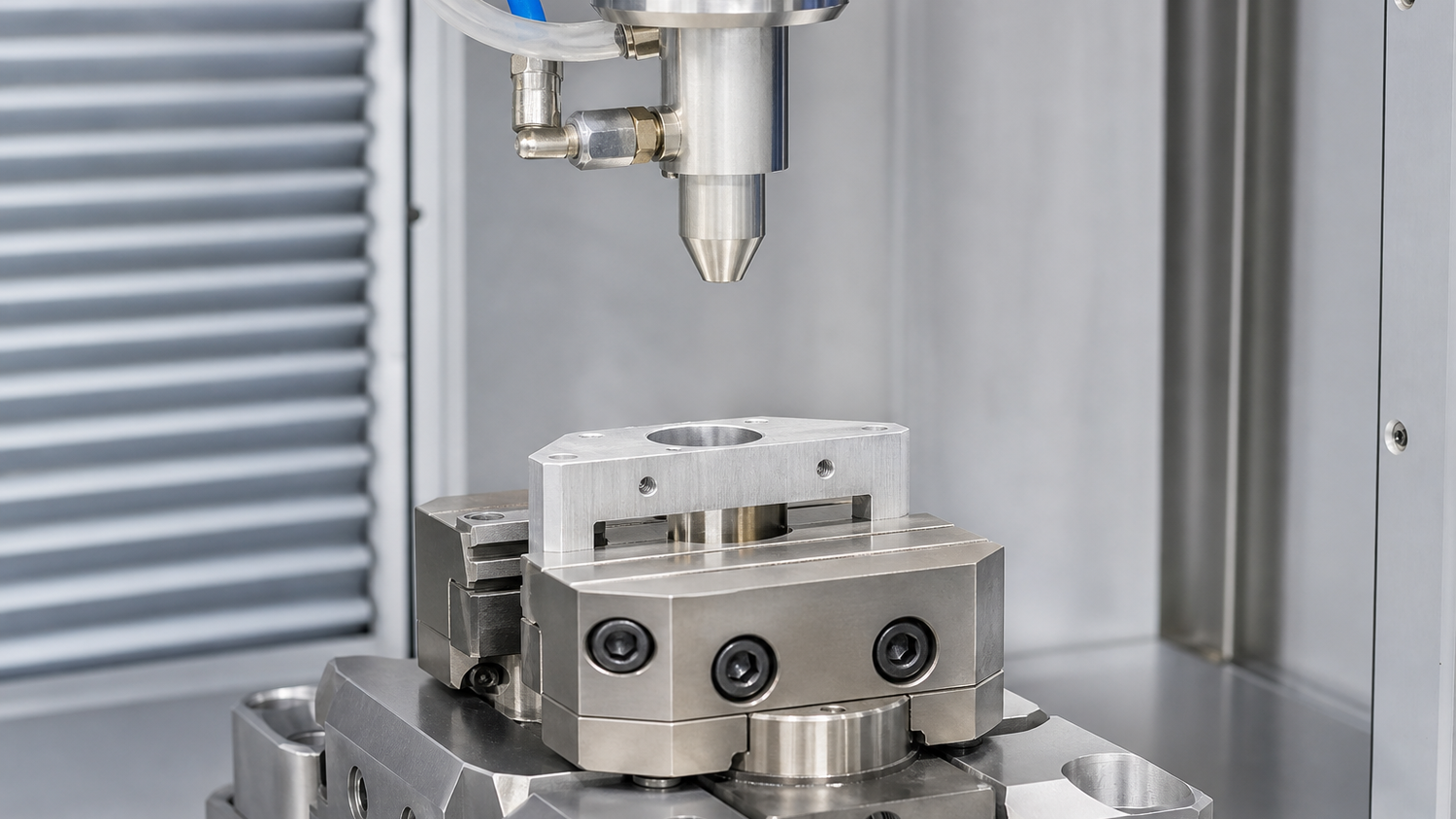
Atmospheric plasma fires a focused jet or curtain of ionized gas at ambient pressure — no chamber, no pump-down, no waiting. You mount it on a robot arm or over a conveyor and it treats surfaces as parts move past. Low-pressure plasma, by contrast, places parts inside a sealed vacuum chamber, evacuates the air, then ignites a plasma that fills the entire chamber volume and reaches every exposed surface simultaneously.
That single architectural difference — open-air jet versus enclosed chamber — cascades into every practical consideration: speed, uniformity, cost, gas chemistry, and the types of parts you can treat. Neither technology is universally superior. But one of them is almost certainly better for your specific production scenario.
Atmospheric plasma systems generate a plasma discharge at ambient pressure, typically using compressed air or nitrogen as the process gas. The ionized stream exits through a nozzle — sometimes as a focused jet (for precision work), sometimes as a wide curtain (for broad coverage). Surface energies jump from ~30 mN/m to 60–72 mN/m in a single pass lasting fractions of a second.
Because there is no chamber to load, evacuate, process, vent, and unload, atmospheric plasma integrates directly into continuous production lines. Treatment speeds of 10–200 m/min are common. For high-volume manufacturing — think automotive trim panels, packaging films, or electronic housings moving on a conveyor — this speed advantage is decisive.
The plasma plume follows line-of-sight physics. If the nozzle can’t “see” a surface, that surface doesn’t get treated. Recessed features, blind holes, and the backsides of parts require repositioning or multiple nozzles, which adds complexity and cost. For a simple flat gasket surface, that’s irrelevant. For a complex injection-molded housing with internal bonding surfaces, it’s a deal-breaker.
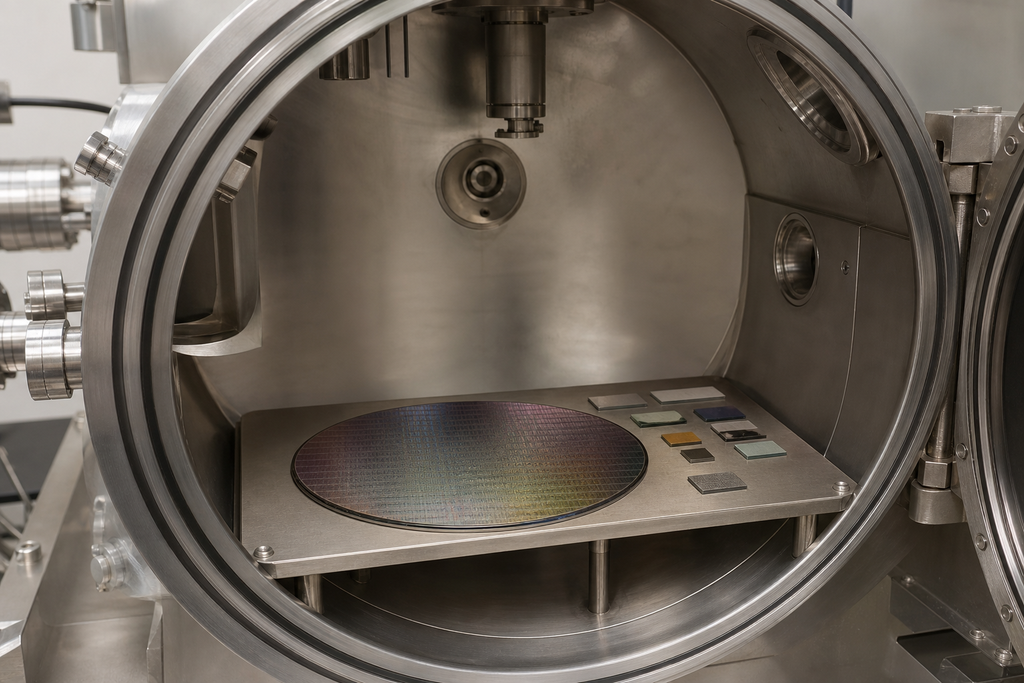
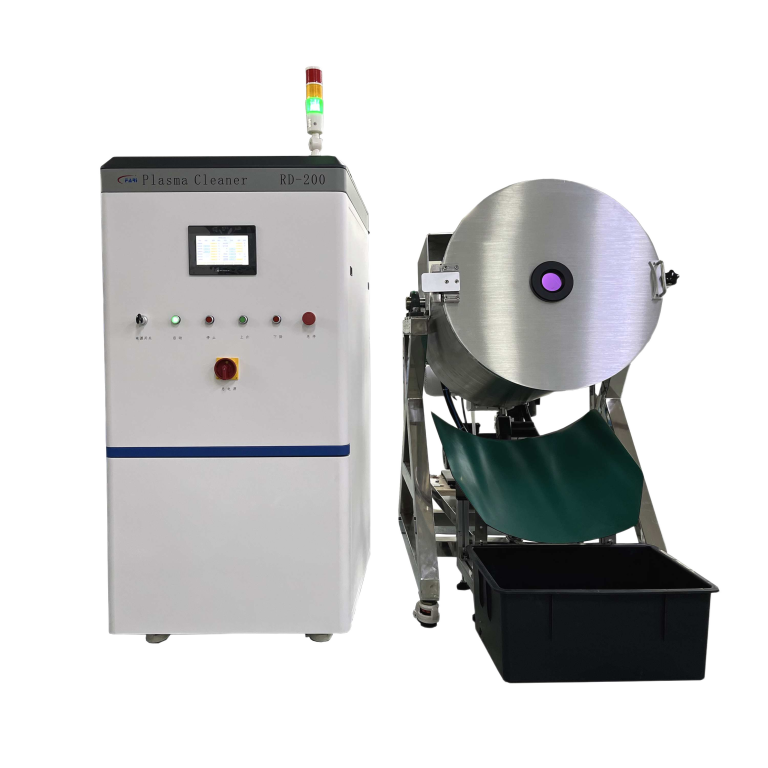
Low-pressure plasma systems operate at pressures typically between 0.1 and 2 mbar. Parts are loaded into a vacuum chamber — ranging from benchtop units to walk-in industrial chambers — the system pumps down, introduces process gas, and ignites the plasma via RF or microwave energy. The plasma fills the entire chamber volume, wrapping around every exposed surface uniformly.
A part with undercuts, internal channels, threaded holes, or stacked layers will receive consistent activation across all surfaces. This is physically impossible with a directional atmospheric jet. For medical device components that require validated, repeatable surface energy across complex geometries, low-pressure plasma is the standard for good reason.
Operating under vacuum allows precise control of process gas composition. Oxygen plasma for aggressive organic cleaning. Argon for gentle surface activation. Hydrogen for oxide reduction on metals. Fluorocarbon gases for hydrophobic functionalization. This chemical versatility is something atmospheric systems simply cannot match — most are limited to air or nitrogen at ambient pressure.
Pump-down, process, and vent cycles typically run 2–15 minutes depending on chamber size and recipe. That makes low-pressure plasma inherently a batch process. You can optimize throughput with larger chambers, automated loading, or dual-chamber configurations, but you will never match the continuous inline speed of an atmospheric system.
Here is a direct side-by-side breakdown of the criteria that matter most when choosing between atmospheric and low-pressure plasma for production:
| Criteria | Atmospheric Plasma | Low-Pressure Plasma |
|---|---|---|
| Operating Environment | Open air, no vacuum needed | Vacuum chamber required |
| Treatment Uniformity on Complex Parts | Moderate — line-of-sight dependent | Excellent — penetrates recesses and undercuts |
| Integration into Inline Production | ✓ Easily integrated | ✗ Batch process typically |
| Typical Throughput | High — continuous processing | Moderate — limited by chamber cycle |
| Capital Equipment Cost | Lower upfront | Higher upfront |
| Process Gas Flexibility | Limited (mostly compressed air/N₂) | Wide range (O₂, Ar, H₂, CF₄, etc.) |
| Treatment Depth / Penetration | Surface-level, localized | Deep, all-around activation |
| Best Use Case | Flat or accessible surfaces at speed | Complex 3D parts needing uniform treatment |
Use this table as a starting filter, but always validate with process trials on your actual parts. Surface energy measurements and adhesion testing on treated samples will confirm whether the chosen method delivers the activation level your downstream process demands. Our plasma treatment capabilities page details the testing and validation services we offer.
Abstract comparisons only get you so far. Let’s look at two concrete scenarios that illustrate how the decision plays out in practice.
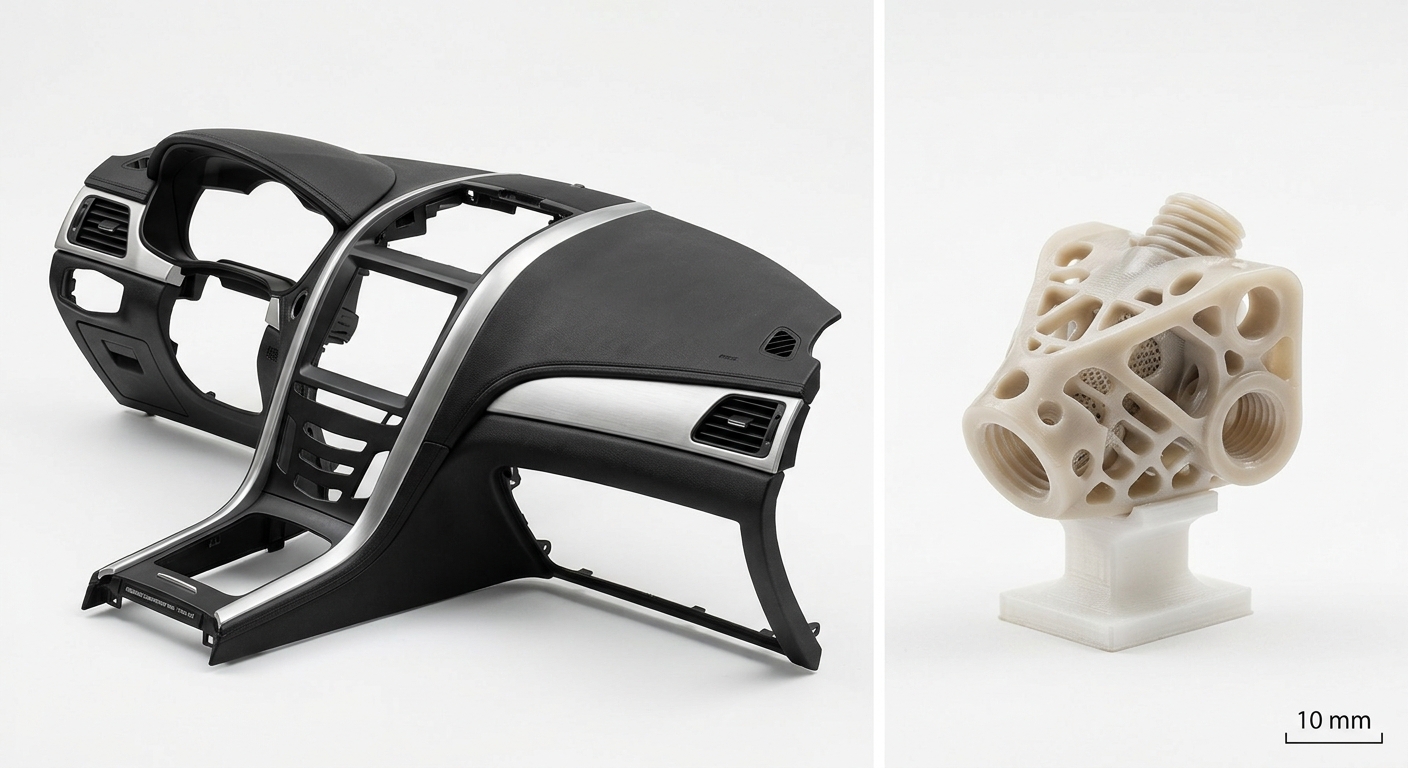
A tier-1 automotive supplier needed to improve paint adhesion on polypropylene dashboard trim panels. The parts were large, relatively flat, and moved through a painting line at 12 meters per minute. An atmospheric plasma jet mounted on a 6-axis robot treated the bonding surfaces inline, immediately before the paint station. No production slowdown, no additional handling steps, no vacuum chamber large enough to fit dashboard panels. Atmospheric plasma was the obvious — and only practical — choice.
A medical device manufacturer needed to activate PEEK (polyether ether ketone) spinal fusion cages to promote bone cell adhesion. These parts had porous lattice structures, internal channels, and strict regulatory requirements for treatment uniformity across 100% of the surface. Low-pressure oxygen plasma in a validated chamber process delivered uniform surface energy readings (within ±2 mN/m) across all surfaces — including deep inside the lattice. An atmospheric jet would have left internal surfaces completely untreated.
Two different parts, two different production realities, two different correct answers. Your decision should follow the same logic: start with the part, not the technology.
Before requesting quotes or scheduling demos, run through these five questions. They will narrow your options fast.
If you need help mapping these questions to your specific production scenario, our applications overview covers the industries and part types we work with every day.
Here’s something vendors rarely mention upfront: some production lines benefit from deploying both technologies at different stages. It’s not either/or in every case.
For instance, a consumer electronics manufacturer might use low-pressure plasma in a batch process to clean and activate injection-molded housing components (complex geometry, multiple bonding surfaces), then use an atmospheric plasma jet inline to re-activate flat gasket surfaces immediately before adhesive dispensing — because surface energy decays over time and the gasket area is easily accessible.
Consider a hybrid approach when your product has both complex internal surfaces and simple external surfaces that need treatment at different production stages. Also consider it when parts are treated in batch (vacuum plasma) but then stored before a downstream bonding step — a quick atmospheric re-activation inline can restore surface energy that has decayed during storage.
If all your treatment needs can be met by a single technology, adding the second only increases capital cost, maintenance burden, and process complexity. Don’t engineer a hybrid line just because it sounds sophisticated. Simplicity wins when it delivers the same result.
The way you validate and monitor plasma treatment differs significantly between the two technologies — and this can influence your choice, especially in regulated industries.
Treatment intensity in atmospheric systems depends on nozzle-to-surface distance, traverse speed, power level, and gas flow rate. Small variations in any of these — a robot path drifting by 1 mm, a conveyor speed fluctuation — can change the treatment result. Inline quality control typically involves contact angle measurements or dyne ink testing on sample parts at regular intervals. Some advanced systems include optical emission spectroscopy for real-time monitoring.
In vacuum plasma, the entire chamber volume reaches a steady-state plasma condition. Every part in the chamber receives essentially the same treatment, governed by gas pressure, RF power, gas composition, and time — all of which are precisely controlled and logged. This makes process validation more straightforward, which is why regulatory bodies in medical and aerospace sectors often prefer vacuum plasma processes. Validation documentation is simpler when you can demonstrate that the process is geometry-independent within the chamber.
For deeper technical background on how plasma treatment interacts with different surfaces, explore our technology and knowledge resources.
Let’s talk real numbers — or at least realistic ranges — because “it depends” isn’t a budget.
A single-nozzle atmospheric plasma unit starts around €5,000–€15,000 for the generator and nozzle. But that’s just the plasma source. Add robotic integration (€30,000–€80,000+), safety enclosures, compressed air supply, and fixturing, and a fully integrated atmospheric plasma station typically lands between €50,000 and €150,000. Operating costs are low — compressed air and electricity — with nozzle replacements every 500–2,000 hours depending on the system.
Benchtop vacuum plasma units for R&D or low-volume production start around €15,000–€40,000. Production-scale systems with automated loading, large chambers, and multi-gas capability range from €80,000 to €300,000+. Operating costs include vacuum pump maintenance, process gas supply, and electrode replacement. Cycle time per batch is the hidden cost — it determines how many parts per hour you can treat, which directly affects your cost per part.
A €10,000 atmospheric nozzle treating 10,000 parts per hour will have a dramatically lower cost per part than a €200,000 vacuum system treating 500 parts per hour. But if the atmospheric system can’t achieve the required treatment uniformity, the cheapest system is the one that actually works. Always calculate cost per successfully treated part — factoring in reject rates from insufficient treatment.
Start with your part, not the technology brochure. Map out every surface that needs treatment, identify the geometry constraints, define your throughput target, and specify any gas chemistry requirements. That exercise alone will eliminate one option for most applications.
For the cases where both technologies could work, request process trials. No amount of specification comparison replaces treating your actual parts and measuring the results. Contact angle measurements, adhesion pull tests, and XPS surface analysis on treated samples will give you the data to make a confident decision.
At fariplasmatech, we help manufacturers navigate exactly this decision every week. Whether you need a single atmospheric nozzle integrated into an existing line or a fully automated vacuum plasma system with recipe management, our team can walk you through process trials, system selection, and integration planning. Reach out to our engineering team to start the conversation, or browse our plasma treatment products to see the full range of atmospheric and low-pressure systems we offer.




English

Spanish
Rogatus ad ultimum admissusque in consistorium ambage nulla praegressa inconsiderate