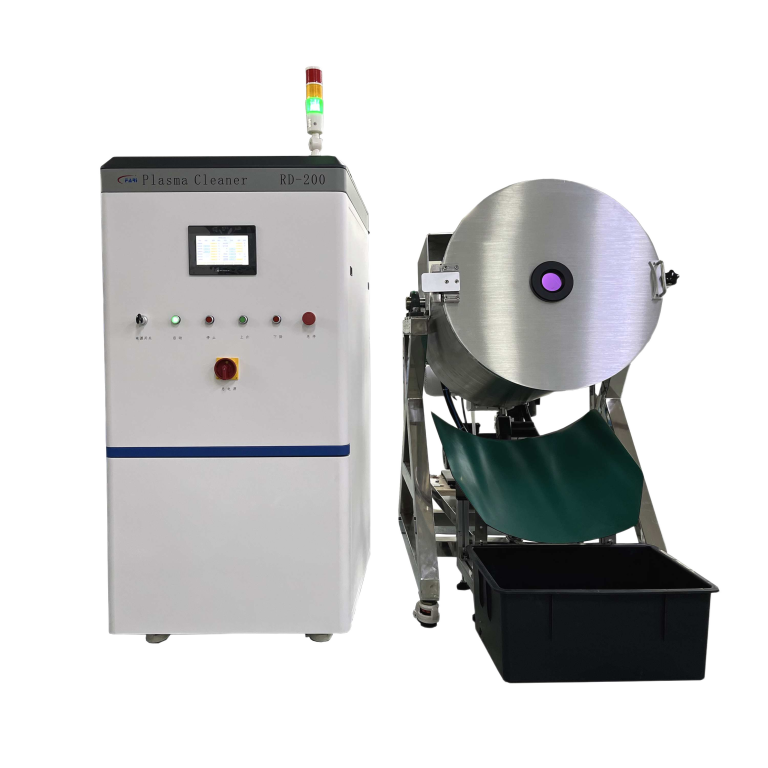
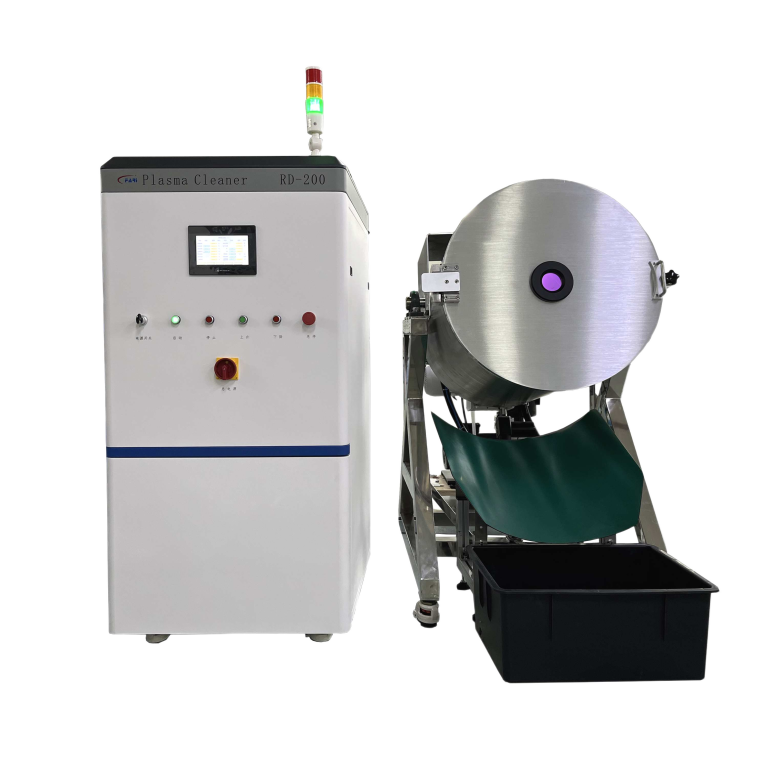
A plasma treatment system in 2026 typically costs between $15,000 for a compact benchtop unit and well over $500,000 for a fully automated inline production system — with the majority of mid-range standalone systems landing in the $50,000–$200,000 corridor. But the sticker price on the equipment itself is only part of the story. Gas supply, facility prep, maintenance contracts, process validation, and training can add 15–30% to your first-year total cost of ownership, and most vendors won’t volunteer that information upfront. This guide breaks down every cost layer so you can build a realistic budget before you ever request a quote.
If you’ve tried to find plasma treatment system pricing online, you’ve probably noticed that almost nobody publishes numbers. There’s a reason: every system is configured to a specific application, substrate, and throughput requirement. A plasma nozzle that treats automotive bumpers at 10 meters per minute is a fundamentally different animal from a vacuum chamber that activates catheter tubing surfaces in 60-second batch cycles.
That said, opaque pricing shouldn’t mean you walk into a sales conversation blind. The ranges below are based on real-world market data for 2026 and will get you within striking distance of an accurate budget — close enough to secure internal approval before you engage vendors for formal quotes.
Plasma systems generally fall into three buckets: benchtop/lab units for R&D and prototyping, standalone production units for batch or semi-continuous processing, and fully integrated inline systems built into existing production lines. Each tier carries different capital costs, integration complexity, and operating expenses. The comparison table below summarizes what to expect.
The equipment itself accounts for 55–75% of your total first-year spend, so let’s start here.
These are compact, often low-pressure (vacuum) systems designed for process development, material screening, and small-batch production. A typical lab-scale low-pressure plasma chamber with a 10-liter volume, RF generator, and basic recipe control will run $25,000–$40,000. Handheld atmospheric plasma pens for lab use can start as low as $8,000–$15,000, though they’re limited in repeatability and throughput.
This is the sweet spot for manufacturers adding plasma treatment as a discrete process step. Atmospheric plasma jet systems with single or multiple nozzles, motorized stages, and process monitoring typically land between $60,000 and $150,000. Low-pressure batch systems with larger chambers (50–200 liters), automated door mechanisms, and multi-gas capability push toward $120,000–$200,000. For instance, a medical device contract manufacturer treating PEEK implant components might invest around $130,000 in a low-pressure oxygen plasma system with full recipe logging to satisfy ISO 13485 traceability requirements.
When plasma treatment needs to happen at line speed — inside a coating line, a bonding station, or a printing press — you’re looking at custom-engineered solutions. Multi-nozzle atmospheric plasma arrays, robotic positioning, PLC integration, safety interlocks, and custom fixturing all add up. A fully automated inline system treating automotive interior panels before adhesive bonding, for example, can easily reach $350,000–$500,000 once you factor in the integration engineering. Browse our plasma treatment products to see the range of configurations available.

This is the single decision that most dramatically shifts your total cost of ownership — and many buyers get it wrong by defaulting to whichever technology their first vendor happens to sell.
Atmospheric systems don’t need vacuum pumps or sealed chambers, which keeps the capital cost lower for equivalent throughput. But they consume process gas continuously (typically compressed air, nitrogen, or forming gas at 20–60 SLM per nozzle), and nozzle tips wear out every 500–2,000 hours depending on the design. Annual consumable costs for a single-nozzle production system typically run $3,000–$8,000.
Vacuum systems require a chamber, pumps, and more floor space, which drives capital cost up. However, gas consumption per cycle is minimal (often under 1 SLM), and there are fewer wear parts. The tradeoff is cycle time — loading, pumping down, treating, venting, and unloading adds minutes that atmospheric treatment avoids. Annual operating costs for a mid-size low-pressure system are typically $2,000–$6,000, but the throughput limitation may mean you need multiple chambers to match an atmospheric system’s output.
Not sure which technology fits your process? Our technology and knowledge hub covers the engineering fundamentals behind both approaches.


Here’s where budgets blow up. The equipment quote arrives, finance approves it, and then a cascade of “oh, we also need” items starts piling on. Plan for these from day one.
Atmospheric systems may need compressed air upgrades (oil-free, dried to -40°C dew point), dedicated gas lines for nitrogen or forming gas, and exhaust ventilation. Low-pressure systems require appropriate electrical supply (often 3-phase), vacuum pump exhaust routing, and sometimes reinforced flooring for heavy chambers. Budget $2,000–$15,000 depending on your current facility state.
A single atmospheric plasma nozzle running nitrogen at 40 SLM will consume roughly one standard cylinder every 3–4 hours of operation. High-volume users quickly find that switching to bulk liquid nitrogen with an on-site dewar saves 40–60% on gas costs. The dewar rental and installation itself might cost $3,000–$8,000 upfront, but the payback period is often under six months.
Especially in regulated industries (medical devices, aerospace, automotive Tier 1), you’ll need to validate your plasma process — IQ/OQ/PQ protocols, contact angle measurements, surface energy mapping, and possibly accelerated aging studies. Third-party validation services or internal lab time can add $5,000–$30,000 depending on the regulatory framework.
Most vendors include basic operator training with the system purchase. But advanced process engineering training, maintenance certification, and application-specific optimization workshops are often sold separately at $1,500–$5,000 per session. Don’t skip this — undertrained operators are the number-one cause of inconsistent treatment results.

Once the system is running, your ongoing costs fall into four buckets: consumables, preventive maintenance, energy, and spare parts.
Process gases are the primary consumable. Atmospheric systems also burn through nozzle tips, electrodes, and sometimes dielectric barriers. Low-pressure systems may need periodic replacement of O-rings, viewport windows, and RF matching network components.
Vacuum pump oil changes, chamber cleaning, nozzle inspections, and electrical safety checks should happen on a scheduled basis. Many manufacturers offer annual service contracts in this range. Skipping PM is a false economy — a contaminated chamber or worn electrode doesn’t just reduce treatment quality, it can damage substrates.
Plasma generators typically draw 1–10 kW depending on the system. Vacuum pumps add another 1–5 kW for low-pressure systems. At average US industrial electricity rates of $0.08–$0.12/kWh, energy costs are usually the smallest operating line item — but they’re not zero.
Keep critical spares on hand: nozzle assemblies, ignition electrodes, pump rebuild kits, and fuses. A reasonable spare parts kit costs $1,500–$5,000 and prevents days of downtime waiting for shipments. Check our frequently asked questions for guidance on recommended spare parts for different system types.
Let’s make this concrete. Imagine a Tier 1 automotive supplier in the US Midwest that needs to plasma-treat polypropylene interior trim panels before adhesive bonding. They run two shifts, five days a week, treating roughly 800 parts per day.
They choose a dual-nozzle atmospheric plasma system integrated into their existing conveyor line, with robotic nozzle positioning and PLC communication. The equipment quote comes in at $185,000, including integration engineering and commissioning.
First-year total: ~$240,000
That’s 30% above the equipment-only quote. In subsequent years, operating costs settle to roughly $25,000–$30,000 annually. The ROI justification? They eliminated a solvent-based primer step that cost $0.35 per part in material alone — at 200,000 parts per year, that’s $70,000 in annual savings, plus reduced VOC emissions and faster cycle times. The system pays for itself in under four years on direct material savings alone, and often faster when you factor in reduced rework from bonding failures.

Budget pressure is real. Here are five strategies that actually work — not the generic “negotiate harder” advice.
Overspecifying is the most expensive mistake in plasma procurement. If your current volume is 200 parts per day, don’t buy a system engineered for 2,000. Most reputable manufacturers can design modular systems that scale — start with one nozzle and add more later.
Many atmospheric plasma applications work perfectly well with clean, dry compressed air instead of nitrogen or argon. The treatment chemistry is slightly different (more oxidative), but for applications like improving paint adhesion on metals or activating polyolefins for bonding, air plasma is often the better and cheaper choice.
Spending $5,000–$10,000 on application testing before you buy the production system can save you $50,000 in over-engineering. Most plasma equipment manufacturers — including fariplasmatech — offer application testing and process development services that let you validate treatment parameters on your actual substrates before committing to a full system.
Demo systems and trade-in units from reputable manufacturers can save 20–40% off list price. The key is ensuring they come with full warranty and updated software. Ask your vendor directly — these units exist, but they’re rarely advertised.
Negotiating a multi-year service contract at the time of purchase typically saves 10–15% compared to buying annual contracts separately. Bundle operator training into the same package for additional leverage.
Vague RFQs get vague quotes. If you want apples-to-apples pricing from multiple vendors, your request for quotation needs to include these specifics:
A well-prepared RFQ typically cuts the quoting cycle from 4–6 weeks down to 1–2 weeks and dramatically reduces the number of back-and-forth clarification rounds.
Not every company wants to — or can — drop six figures on capital equipment in a single budget cycle. The good news: financing options for plasma systems have expanded significantly.
Standard industrial equipment leases (36–60 months) are available through most major leasing companies. Monthly payments for a $150,000 system on a 48-month lease typically run $3,200–$3,800/month depending on credit terms. The advantage is preserving capital for other investments; the disadvantage is total cost of ownership is 10–18% higher than outright purchase.
Some plasma equipment manufacturers offer in-house financing or deferred payment plans, especially for repeat customers or large orders. Always compare the effective interest rate against third-party leasing.
If your volumes don’t justify owning a system, contract plasma treatment services can process your parts for $0.10–$2.00 per part depending on complexity. This is an excellent way to validate the process and build a business case before committing to capital. Explore our plasma treatment capabilities to see what’s available on a contract basis.
Stop guessing. Use this checklist to build a defensible budget that finance will actually approve.
The companies that get plasma procurement right aren’t the ones with the biggest budgets — they’re the ones that plan thoroughly before the first vendor call. If you’re ready to start that conversation with real numbers and application data behind you, reach out to our team for a budgetary assessment tailored to your specific process.
English
Spanish
Rogatus ad ultimum admissusque in consistorium ambage nulla praegressa inconsiderate