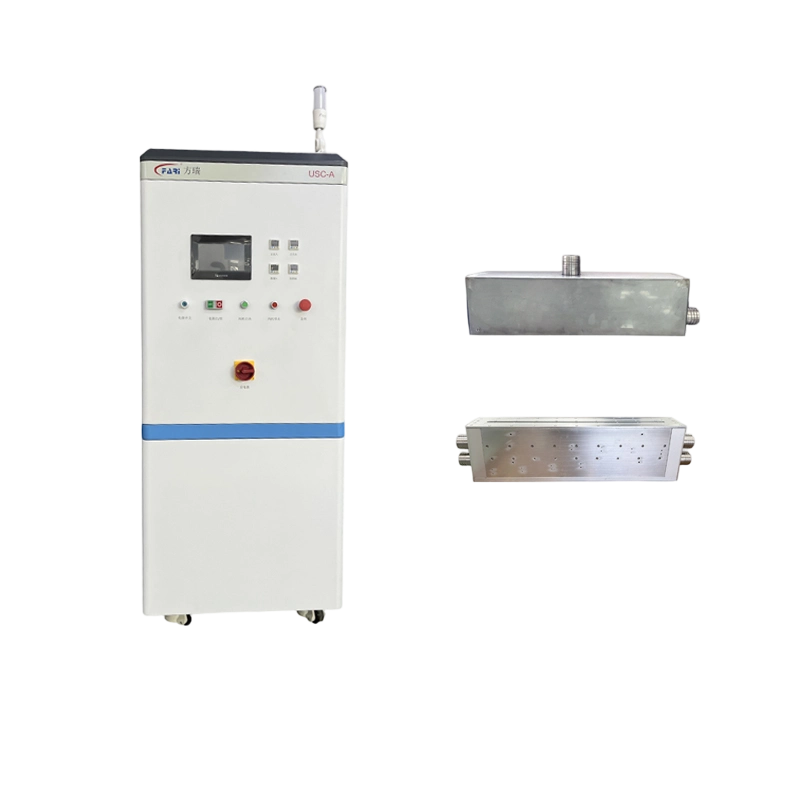
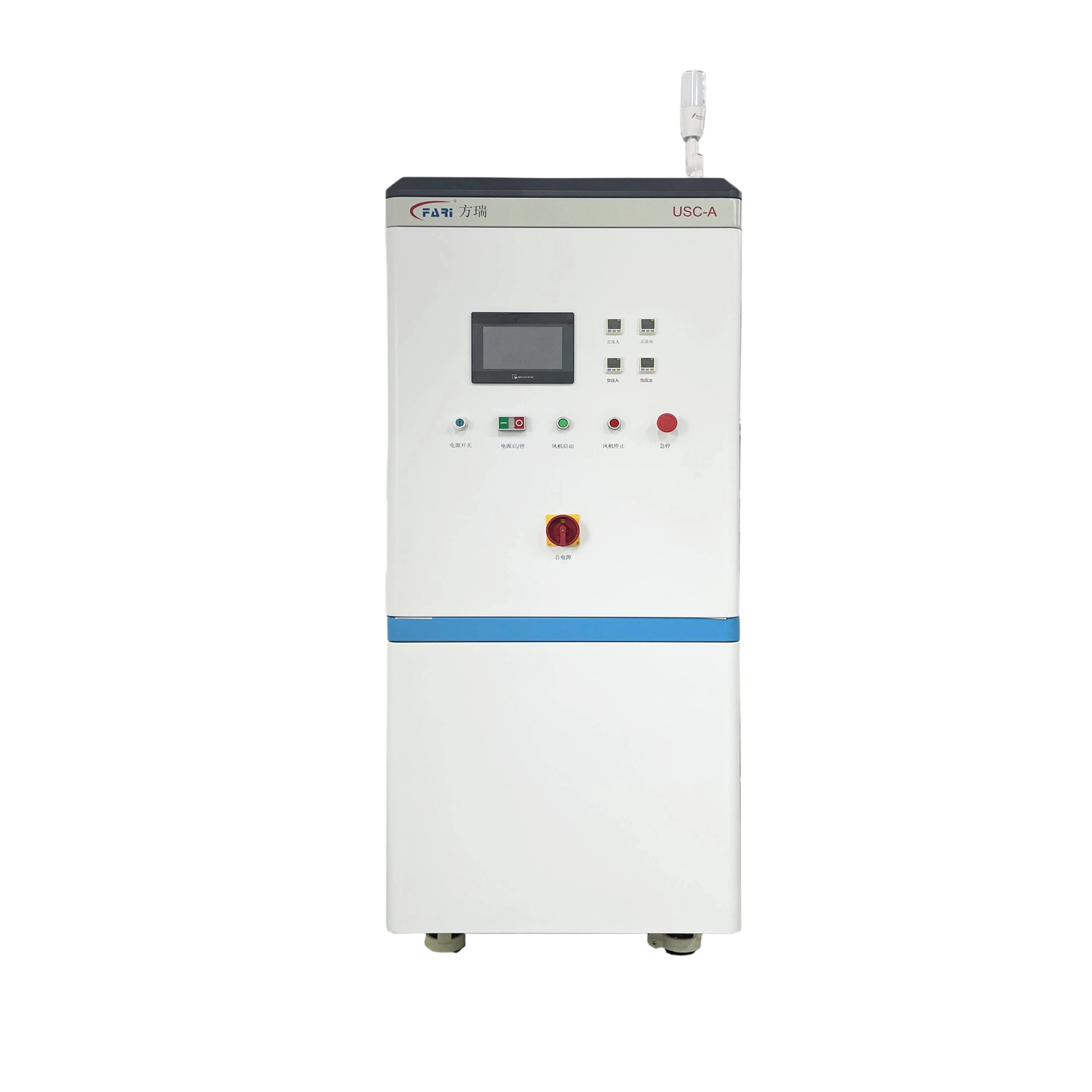
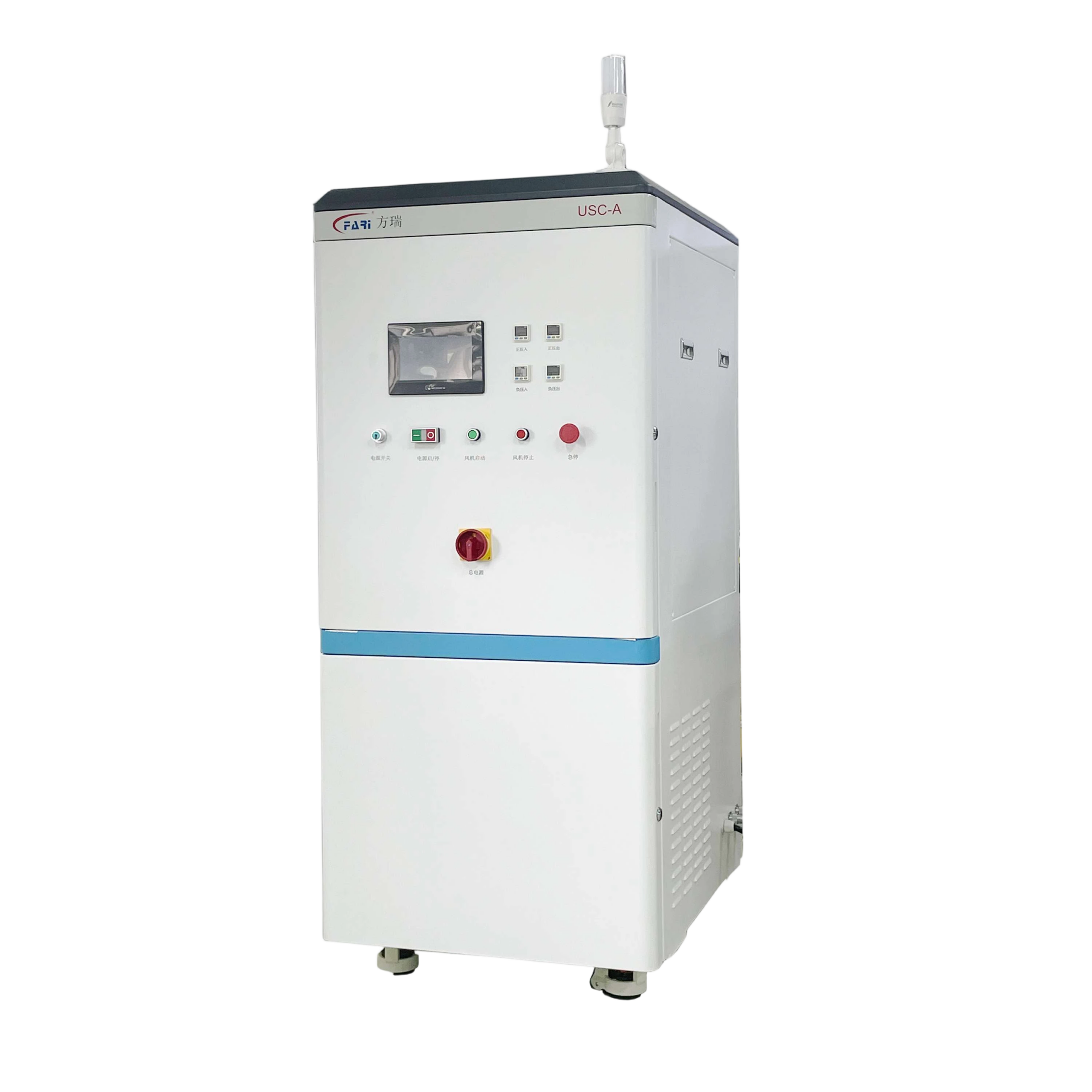


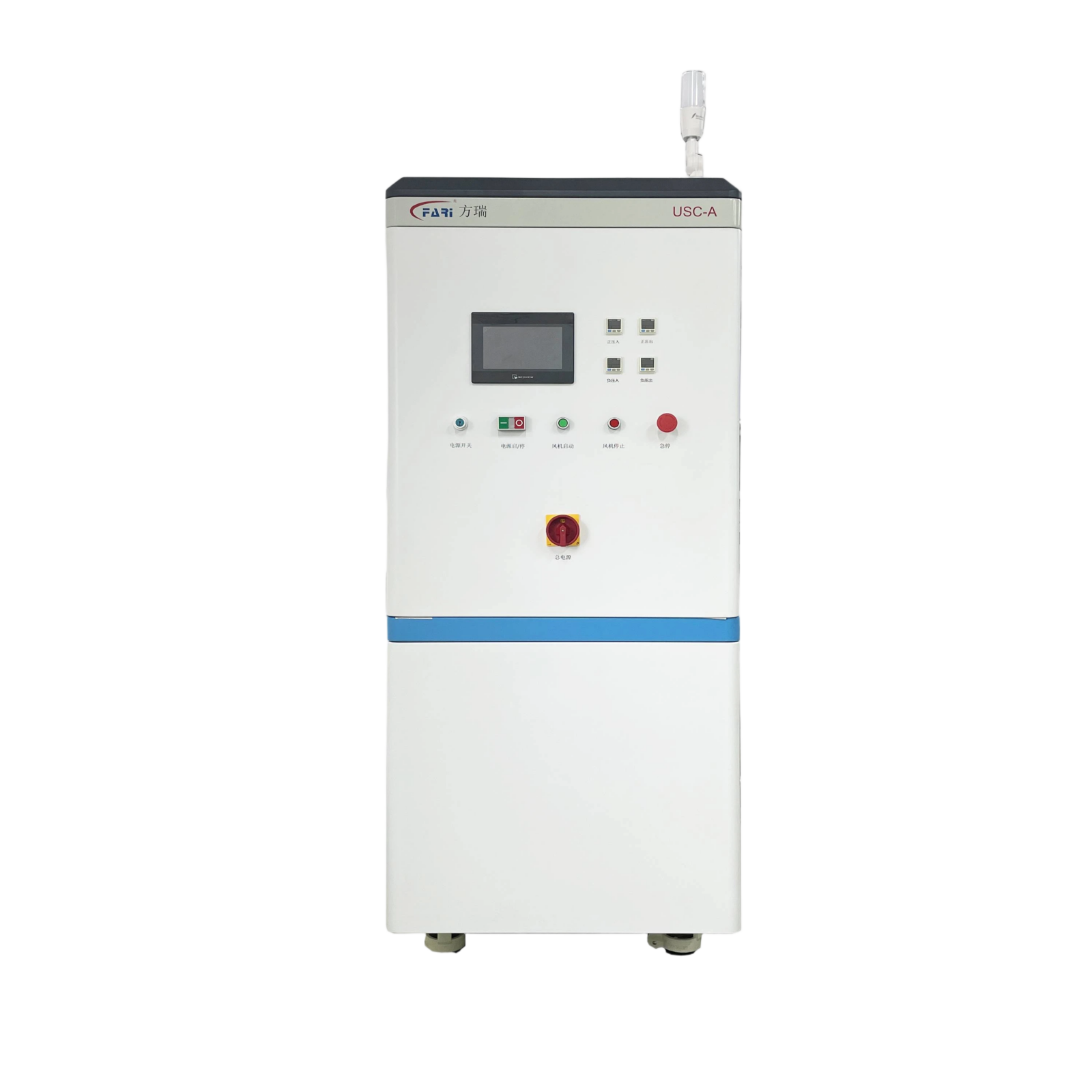
The USC dry ultrasonic dust cleaning system is engineered for precision particle removal using high-frequency vibration and controlled airflow. It enables stable, non-contact cleaning of sensitive substrates in processes where surface integrity and dimensional accuracy are critical.
| Model | Effective Width (mm) | Inlet Air (P) | Suction (V) | ||
| Pressure (kPa) | Flow Rate (m3/h) | Pressure (kPa) | Flow Rate (m3/h) | ||
| 2UV / U2V | 100 | 18 | 210 | -3 | 230 |
| 200 | 18 | 260 | -3 | 280 | |
| 300 | 18 | 320 | -3 | 350 | |
| 400 | 18 | 380 | -3 | 420 | |
| Operating Voltage | 380V AC | ||||
| Facility Air Pressure | 10–28 kPa | ||||
| Distance from Dust Removal Unit to Workpiece | ≤5 mm (recommended 1.5 mm) | ||||
| Removal Efficiency | 97% for 1.6 µm silicon dust; 98% for 2.6 µm silicon dust | ||||
| Monitoring Functions | Air pressure, temperature, filter cartridge, fan status | ||||
| Outlet Air Temperature | <50°C | ||||
| Noise Level | <85 dB | ||||
| Operating Environment | Cleanroom below Class 10,000; exhaust pipe reserved: Ø65 mm | ||||

Process gas is energized and converted into a reactive plasma containing ions, electrons, and radicals.

Energetic plasma species interact with surface molecules and contaminants under controlled vacuum conditions.

Reactive ions and radicals break down organic residues and surface contaminants through controlled chemical reactions.

The reaction products are converted into volatile compounds and enter the gas phase.

Gaseous by-products desorb from the surface and are evacuated, leaving a clean, activated material surface.


English

Spanish
Rogatus ad ultimum admissusque in consistorium ambage nulla praegressa inconsiderate