


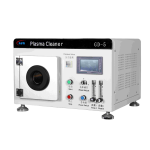
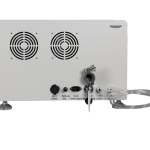
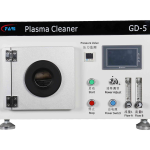
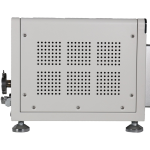
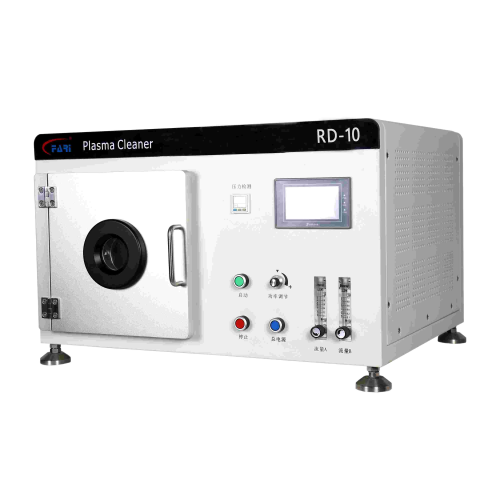
The GD-5 is Fari Plasma's smallest vacuum unit — a benchtop plasma cleaner built for lab benches and small-batch runs. A 300W adjustable generator, PLC touchscreen, dual gas channels, and a 316 stainless steel/aluminum chamber operate inside a 5L volume, using the same vacuum plasma treatment mechanism found on larger production systems.

| Product Name | Vacuum Plasma Cleaner |
| Model | GD-5 |
| Control System | PLC + Touch Screen |
| Plasma Frequency | 40 kHz / 13.56 MHz |
| Power Supply | AC 220V (±10V) |
| Generator Power | 300 W (adjustable) |
| Gas Lines | 2-channel float flow control |
| Process Control | Automatic / Manual |
| Chamber Inner Size | Φ150 × 280 mm |
| Load Area | 120 × 230 mm (W × L) |
| External Dimensions | 560 × 550 × 400 mm (L × D × H) |
| Chamber Volume | 5 L |
| Vacuum Level | 10–30 Pa |
| Compatible Gases | Argon, Oxygen, Nitrogen, Air, H2+N2 (mixed) |
A 120 × 230 mm load area suits coupons, small parts, and lab samples rather than full production trays, and reaching 10–30 Pa needs pump-down time before each cycle.
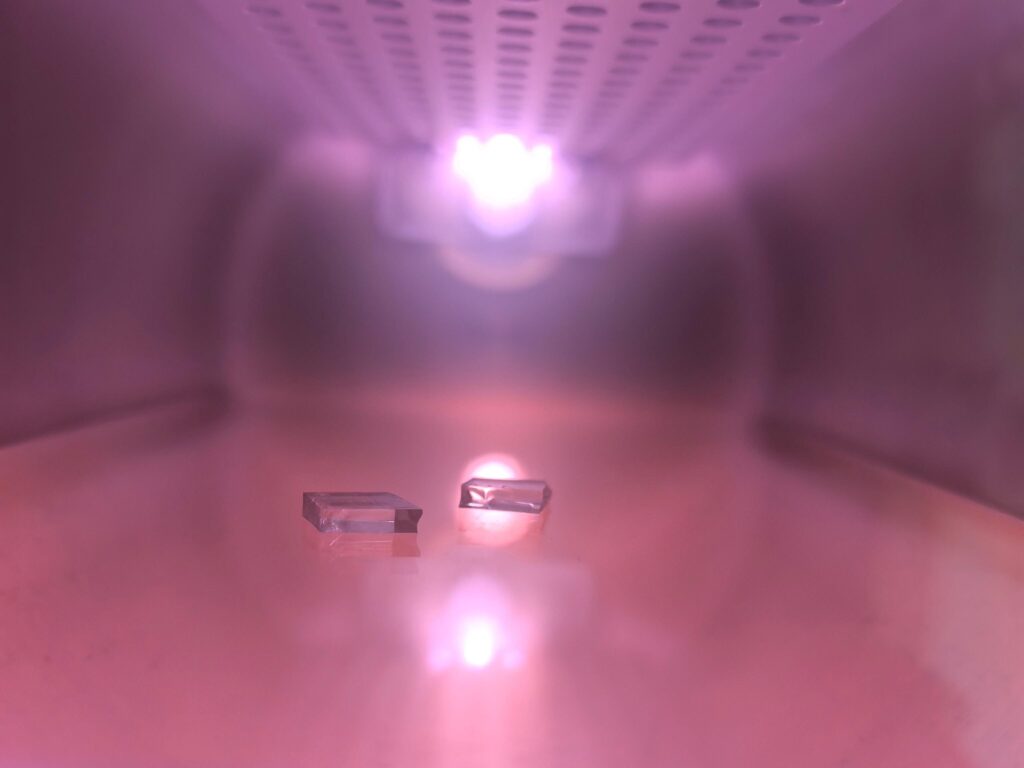

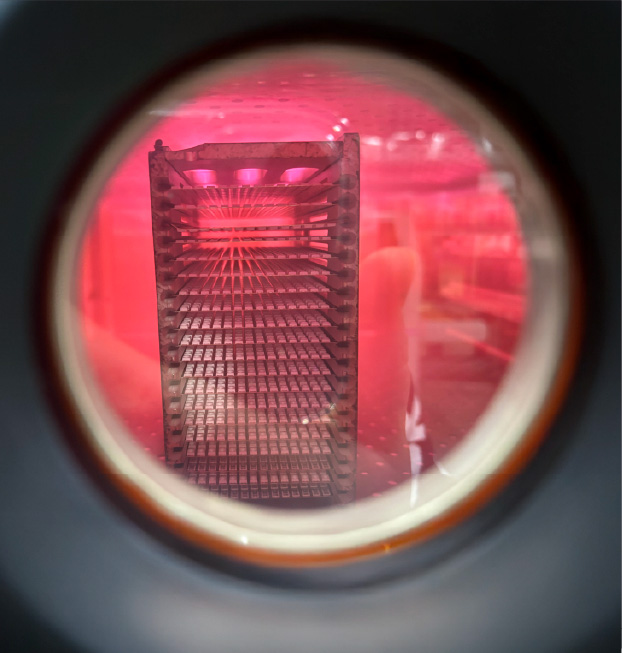
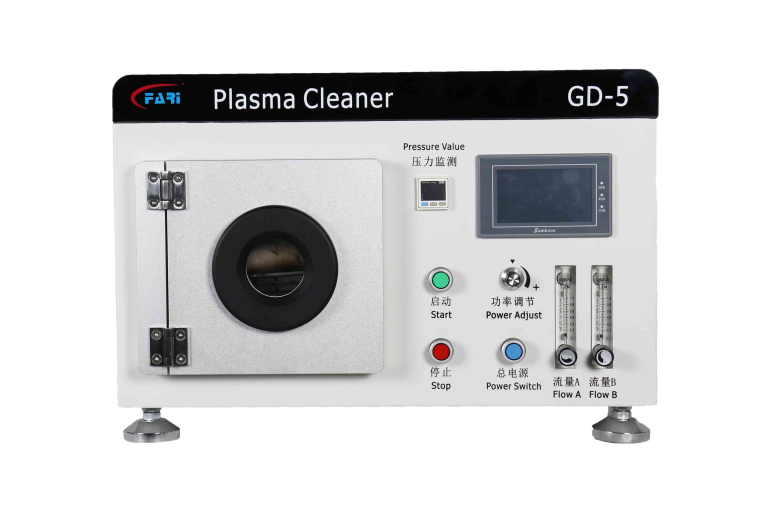
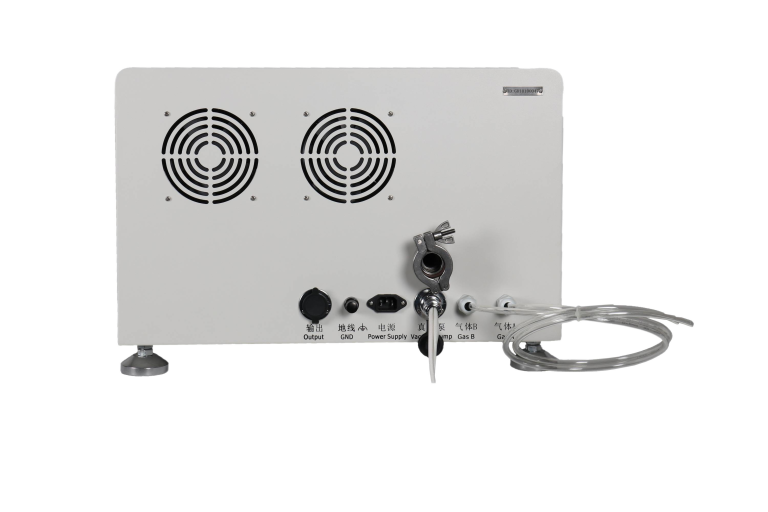
Gas lines, needle valves, and flow meters are integrated into the chamber as standard. A vacuum pump is confirmed separately during technical evaluation to match your target pressure and space constraints.
Oxygen plasma processing suits photoresist residue and biomedical substrate cleaning, and the O2 plasma cleaner variant runs oxygen-only processing on the same footprint. Exact cycle time depends on pump-down speed and contamination level, so technical evaluation confirms the process settings for your material.

Photoresist residue and biomedical substrate cleaning, run near the low end of the 10–30 Pa range for gentle, uniform contact.

Metal and glass surfaces ahead of bonding, using higher generator output for a stronger clean.

Nitrogen or H2+N2 mixes for activation on polymer samples where oxidation must stay limited.
Basic units typically run a single rotameter, a plain aluminum chamber, and keypad control storing one recipe.
The GD-5 runs two independent gas channels with needle valves and float meters, a corrosion-resistant 316SS/aluminum chamber, and PLC-driven touchscreen control — the same chamber construction standard used across plasma cleaning chamber systems.
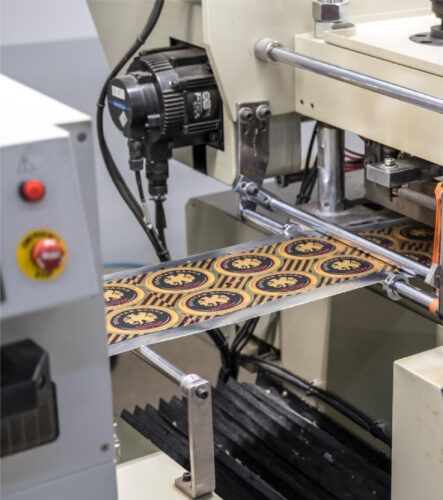
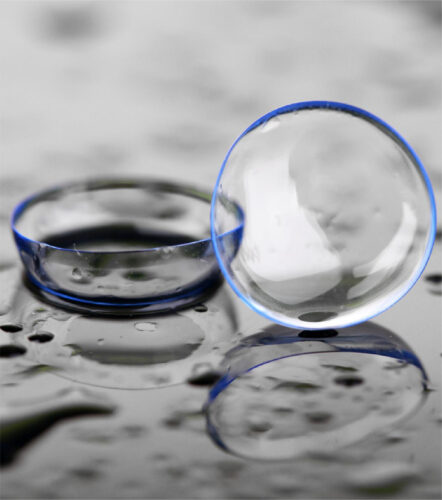
Plasma cleaners overcome this challenge by using high-speed, high-energy plasma to chemically and physically modify the surface. This process optimizes the material's surface, creating an active layer that is essential for successful subsequent operations like printing, bonding, and coating.
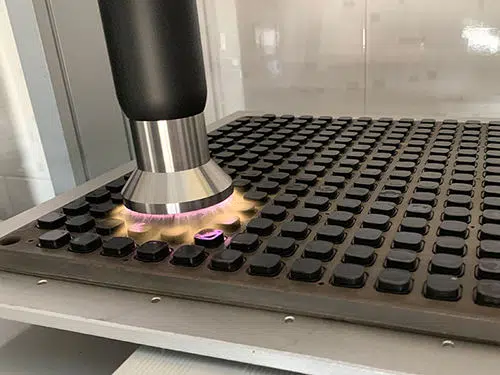
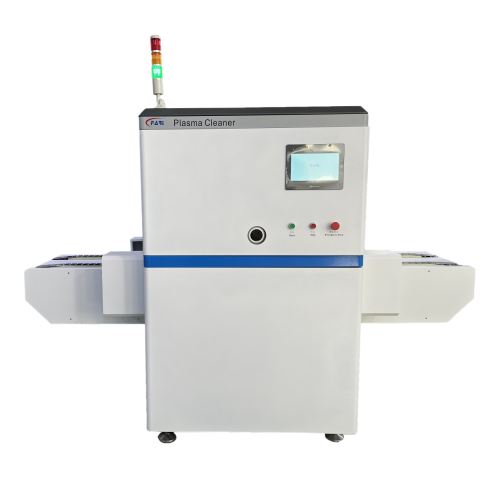
For higher power density rather than more volume, the high-power vacuum plasma treatment line adds generator output at similar chamber scale. For continuous-line work, an inline plasma cleaner moves parts through treatment without reloading a chamber, and compact inline plasma surface activation scales that down to a smaller integrated cell — trade-offs weighed in inline plasma cleaner pros and cons.
| Model | Chamber Volume | Load Area | Best-Fit Batch Size |
|---|---|---|---|
| GD-5 (this unit) | 5 L | 120 × 230 mm | Lab samples, coupons, single small parts |
| Lab vacuum system | Larger chamber | — | Bigger samples, expanded lab throughput |
| 125L batch system | 125 L | — | Multiple parts per load, batch processing |
| 600L system | 600 L | — | High-volume production batches |
Each GD-5 is inspected, calibrated, and test-run before shipment, with power output, gas flow, and plasma parameters recorded by serial number for traceability. Request GD-5 pricing with your sample material and load size, or browse the full vacuum plasma cleaners range for a different chamber size.

Coupon testing for adhesion promotion before committing to production tooling.

Lead frame or wafer-adjacent sample cleaning where load size stays under 120 × 230 mm.
Prototype and pilot-batch cleaning ahead of qualifying a production-scale chamber.








English

Spanish
Rogatus ad ultimum admissusque in consistorium ambage nulla praegressa inconsiderate