
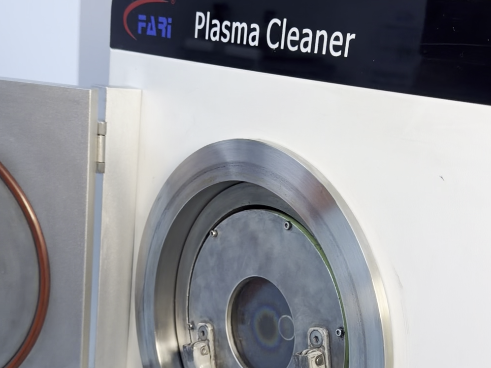
Diamond powder may look clean to the naked eye, but its surface condition can determine whether it disperses evenly in a slurry, accepts a metal coating, or forms a stable interface inside a composite.
After synthesis, crushing, grinding and classification, diamond micropowder can carry graphite-like carbon, processing oils and organic contamination. Fine and nanoscale particles also have a strong tendency to agglomerate, while the chemically inert diamond surface provides relatively few active sites for subsequent bonding.
For these applications, rotary drum vacuum plasma treatment provides a dry surface-modification route that combines contamination removal, surface activation and controlled micro-etching without immersing the powder in liquid chemicals.
The challenge is not the hardness of the diamond itself. It is the chemistry and cleanliness of the outermost surface.
Grinding, high-temperature synthesis and downstream handling can leave graphitic carbon, lubricants and organic residues on diamond particles. These surface contaminants can interfere with metal plating, slurry preparation and the interface between diamond and a surrounding matrix.
For thermally conductive diamond-metal composites, an unstable interface can reduce the effectiveness of the final composite. In plated diamond tools, weak adhesion can also contribute to premature particle loss.
As particle size decreases, surface area increases sharply. Van der Waals forces become increasingly important, so fine diamond powder can form hard agglomerates and become difficult to disperse uniformly.
A hydrophobic or contaminated surface also makes water-based slurry preparation more difficult, increasing the risk of floating powder, sedimentation or uneven dispersion.
Diamond is chemically stable and naturally has limited reactive surface sites. Direct copper or nickel plating may therefore depend heavily on the cleanliness and activation state of the surface.
Plasma treatment can prepare that interface by removing weak boundary layers and modifying the outer surface before subsequent plating or composite processing.
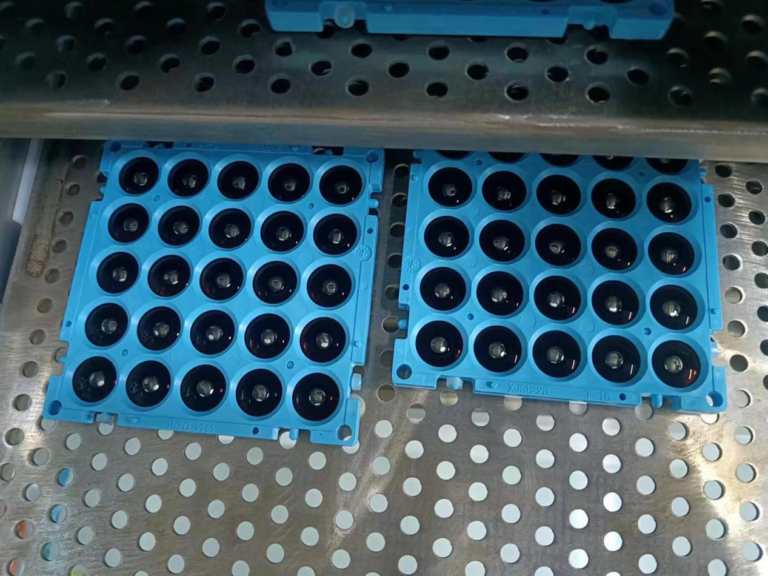
A conventional stationary tray is not ideal for loose powder. Particles at the top receive direct plasma exposure, while material underneath can remain shielded.
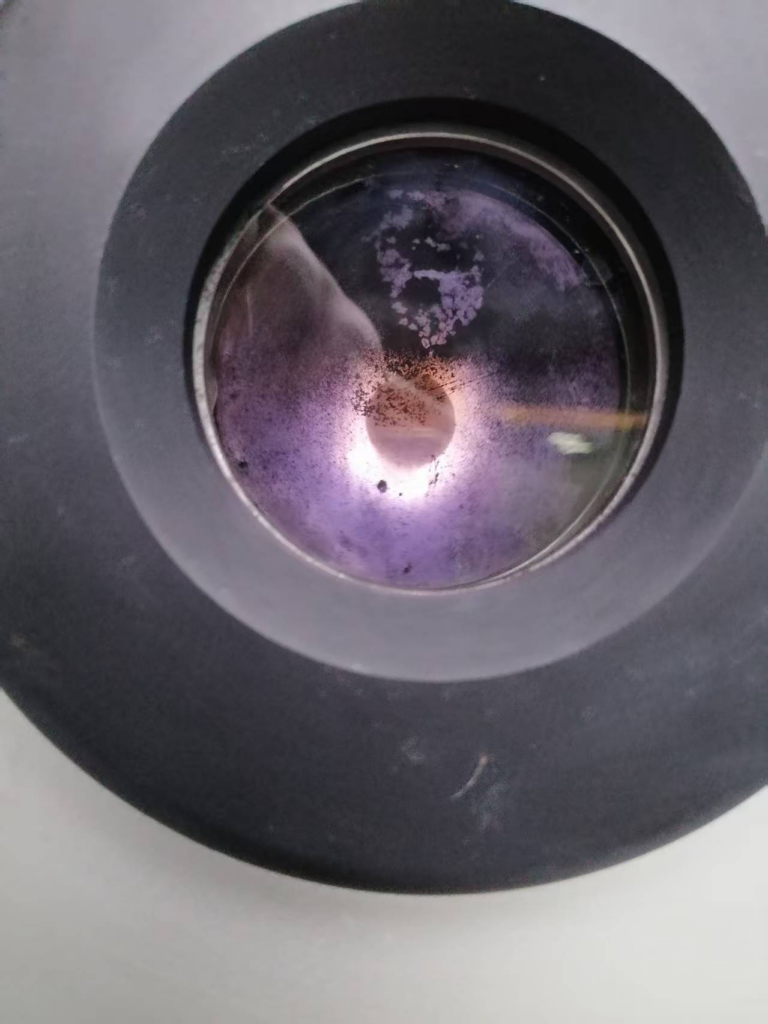
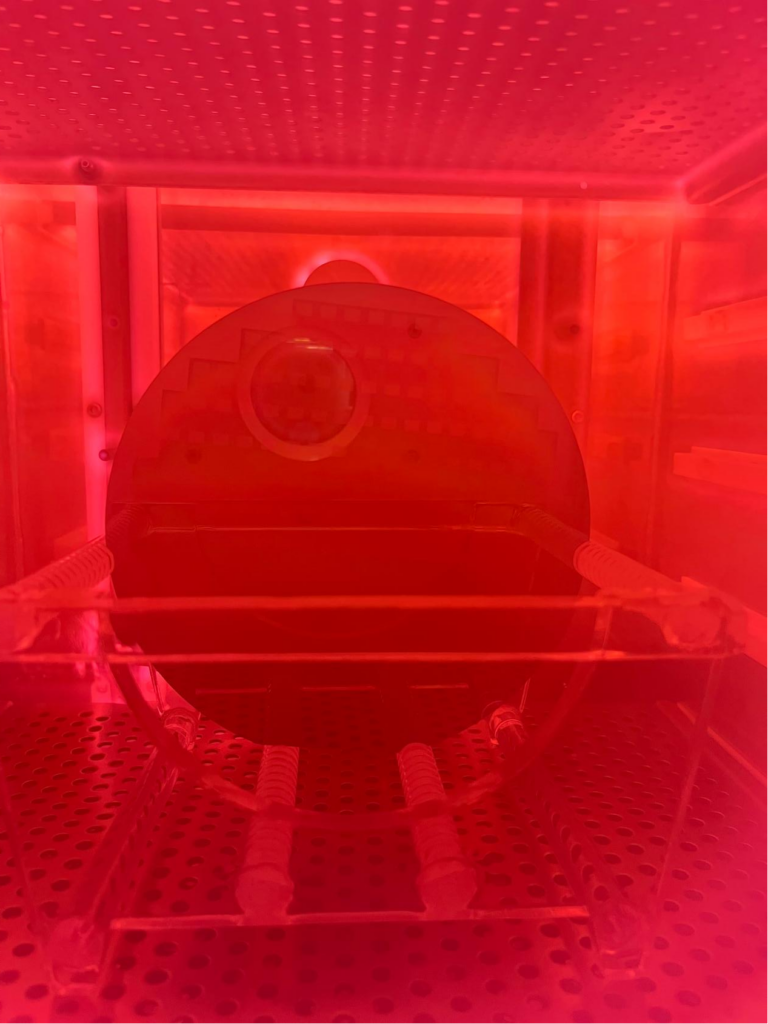
A rotary drum solves this problem by continuously lifting, dropping and turning the powder during the treatment cycle. Individual particles are repeatedly exposed to the plasma environment instead of remaining buried beneath a stationary powder bed.
Inside the vacuum chamber, process gas is introduced and energized into plasma containing ions, electrons and reactive species. These species interact with only the outermost surface of the powder.
You can read more about the basic mechanism in our guide to plasma cleaning technology.
Oxygen-containing plasma is commonly used when the main target is organic contamination. Reactive oxygen species can break down oils and carbon-based residues into volatile reaction products that are removed from the vacuum chamber.
For more detail on the chemistry, see how oxygen plasma cleaning works.
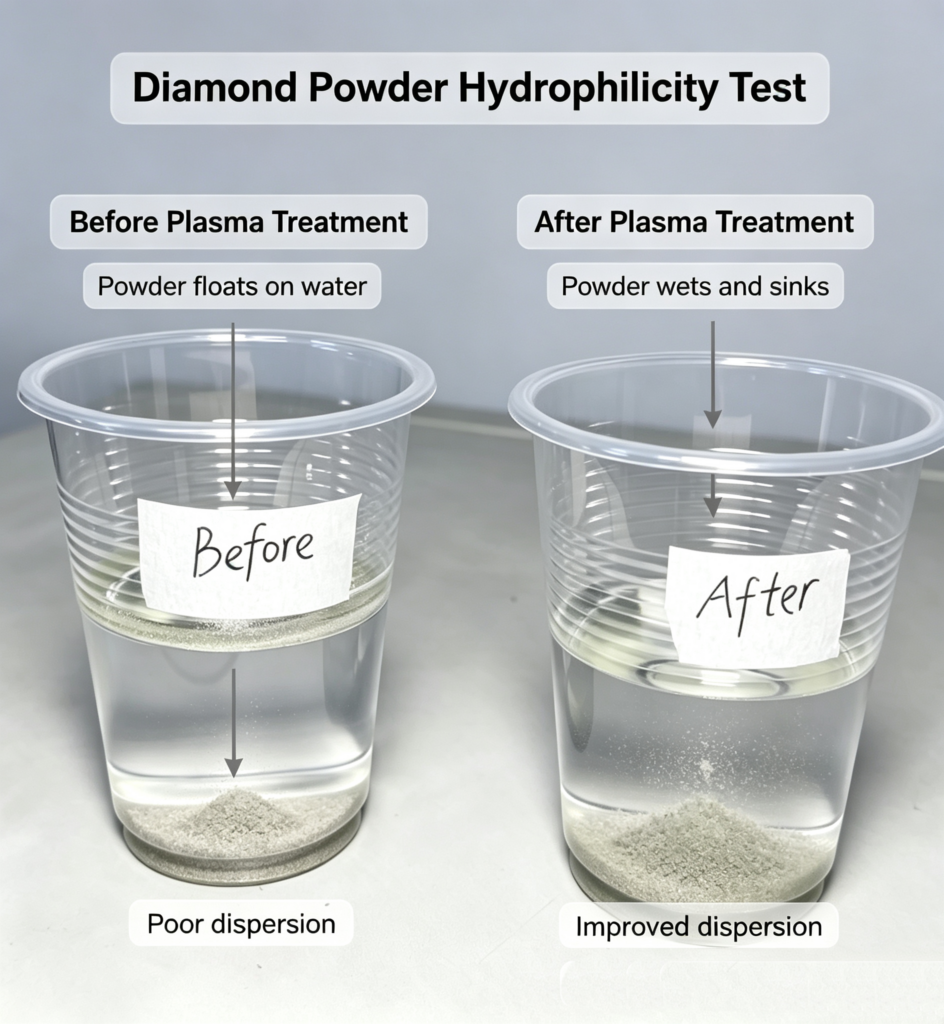
Plasma activation can introduce oxygen-containing functional groups at the particle surface and increase its affinity for polar liquids.
The practical result is improved wetting during slurry preparation. Instead of remaining on the water surface or forming persistent agglomerates, treated powder can wet and disperse more readily.
Plasma cleaning removes weak contamination layers before copper, nickel or other coating steps. Controlled ion bombardment can also produce very mild microscopic surface modification that supports better mechanical and interfacial contact.
This makes plasma treatment especially relevant when diamond powder will be used in plated abrasives or metal-matrix thermal-management materials.
Acid cleaning and coupling-agent processes can be effective, but they also introduce another liquid process that must be washed, dried and controlled for residues.
Vacuum plasma is a dry process. For applications where powder purity is important, this avoids introducing cleaning liquid, dissolved salts or organic coupling-agent residues during the plasma step itself.
Plasma can only modify surfaces that it reaches. With a deep stationary powder layer, particles underneath the surface are shadowed by the material above them.
In a rotating chamber, powder continuously tumbles through the active plasma zone. This helps expose different sides of each particle and improves batch uniformity.
FARI’s RD-10 rotary drum vacuum plasma cleaner is specifically designed for powders, particles and irregular components that require continuous rotation during treatment.
More plasma exposure does not automatically mean a better result. Surface activation eventually reaches a practical saturation point, while excessive exposure can produce unnecessary etching.
Plasma activation is not necessarily permanent. A freshly treated high-energy surface can gradually adsorb airborne organic contamination during storage.
For hydrophilic diamond powder, the supplied application data indicates that the effect may remain useful for roughly one to three months under ideal dry, sealed storage conditions. For the most repeatable results, however, it is better to move into slurry preparation, plating or the next process step as soon as practical.
With an appropriately developed low-temperature plasma recipe, treatment is concentrated at the outer surface rather than the bulk crystal. Power, treatment time, gas chemistry and powder loading still need to be qualified for the specific particle size and application.
Oxygen-containing plasma can react with carbonaceous surface contamination and organic residues. The required plasma dose depends on the amount and type of contamination present.
Common causes include excessive powder loading, insufficient drum rotation or unstable process conditions. All three can create uneven plasma exposure within the batch.
It may work for a very thin powder layer, but deeper stationary layers create shadowed regions. For loose powders that need uniform treatment throughout the batch, a rotary drum is generally the more appropriate configuration.
The correct configuration depends on particle size, batch weight, contamination type and the process that follows plasma treatment.
If you are evaluating plasma treatment for diamond powder, send FARI your particle size range, batch quantity and target result. Our engineers can help determine whether a rotary system and specific gas chemistry are appropriate for the application.
Contact FARI Plasma to discuss your powder surface-treatment requirements.


English

Spanish
Rogatus ad ultimum admissusque in consistorium ambage nulla praegressa inconsiderate