

A smartphone camera lens can be visually spotless and still carry enough molecular-level contamination to interfere with coating or adhesive bonding.
During optical-lens production, polishing residue, mold-release agents, fingerprints and trace organic VOC contamination can remain on the surface. These residues are especially important before AR coating, AF coating or adhesive assembly because the next layer must interact directly with the lens surface.
Low-temperature plasma provides a dry precision-cleaning and activation step for glass and polymer optics. For optical manufacturing applications, FARI also provides dedicated plasma treatment solutions for energy and optics.
Ultrasonic and wet cleaning remain important parts of optical manufacturing, but not every contamination problem is visible or easily removed by washing.
A nanometer-scale organic film can remain after a lens appears macroscopically clean. That thin boundary layer can affect the interface between the lens and the coating or adhesive applied afterward.
Polishing compounds, oils, handling residue and mold-release materials can remain after previous cleaning steps.
Plasma treatment targets thin surface contamination without using a wiping cloth that could mechanically contact the optical surface.
Anti-reflective and anti-fingerprint coatings depend on a clean, consistent substrate.
If contamination or surface-energy variation remains across the batch, coating behavior can become less repeatable. Plasma surface preparation gives the coating process a more controlled starting surface.
During module assembly, adhesive must spread consistently around the bonding area between optical elements and supporting structures.
A low-energy or contaminated surface can cause incomplete wetting, localized gaps or trapped bubbles. Plasma surface activation can improve wettability before dispensing.
Two lenses can look identical while presenting different surface conditions after cleaning and handling.
A controlled plasma recipe adds a repeatable final surface-preparation stage before a critical coating or bonding process.
Every additional wet-cleaning step introduces liquid handling, rinsing and drying requirements.
Plasma is a dry process, so it can be positioned close to coating or assembly without adding another rinse-and-dry sequence.
Plasma treatment combines chemical and physical surface interactions.
Oxygen-containing plasma is particularly useful when the main contaminants are organic. Reactive oxygen species break down carbon-based residues into smaller volatile reaction products.
See oxygen plasma cleaning for a more detailed explanation of this process.
Argon plasma provides stronger physical ion-bombardment characteristics and can be useful where the surface-cleaning objective requires more physical removal rather than oxidative chemistry.
The final gas recipe should be selected according to the lens material, coating stack and contamination rather than using one gas for every optical component.
Once weak organic layers are removed, plasma can increase the surface energy of the lens.
This supports more uniform wetting by compatible coatings and adhesives and gives the next manufacturing step a cleaner interface.
AR and AF layers are thin functional coatings, so the condition of the underlying optical substrate matters.
Plasma pretreatment can help remove organic contamination that could otherwise contribute to local coating defects or weak adhesion.
It is important to distinguish this from solving every coating defect. Plasma cannot correct a scratched substrate, an incorrect coating formulation or a malfunctioning deposition system. Its role is to prepare the substrate so contamination and poor surface energy are less likely to become the limiting factor.
Camera modules also contain adhesive interfaces where optical parts are bonded to holders or supporting structures.
Activation of the lens edge can improve adhesive spreading and reduce the likelihood that contamination remains trapped at the interface.
This makes plasma particularly useful immediately before UV adhesive dispensing or other precision bonding steps.
Yes, but the recipe should not be identical for all three materials.
Glass tolerates different plasma conditions from polycarbonate or PMMA. Polymer optics generally require closer control of plasma dose so that cleaning and activation are achieved without excessive surface etching.
The source application data uses approximately ≥42 dyn/cm for treated glass and around 40–44 dyn/cm for PMMA or PC as possible surface-energy targets under suitable conditions. These figures should be treated as process-development targets rather than universal guarantees.
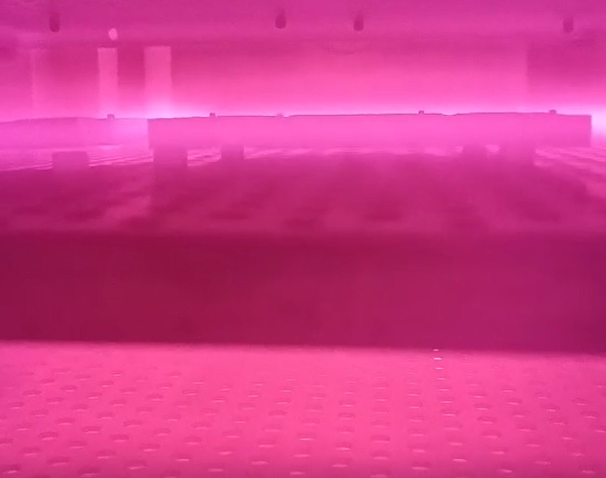
When the process is correctly developed, the treatment is limited to a very thin surface region and is intended to clean or activate the interface without changing the bulk lens geometry.
For production qualification, optical transmission, haze, coating behavior and any imaging-related quality criteria should still be measured before and after treatment.
The best configuration depends on how the lenses move through the factory.
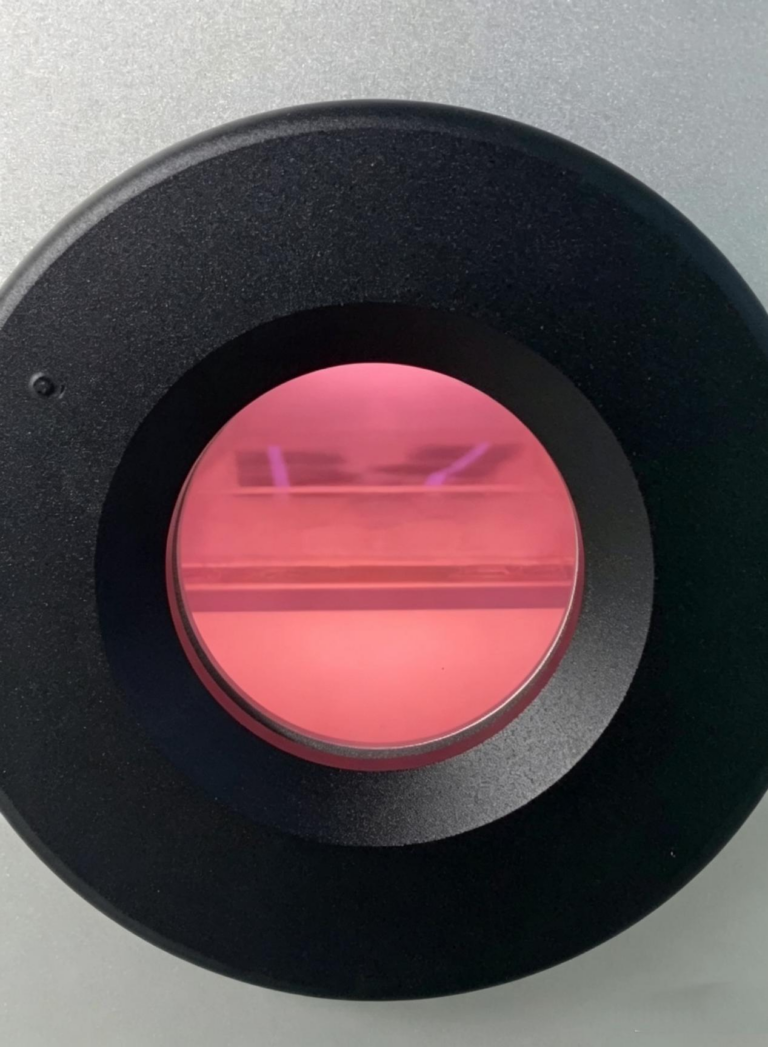
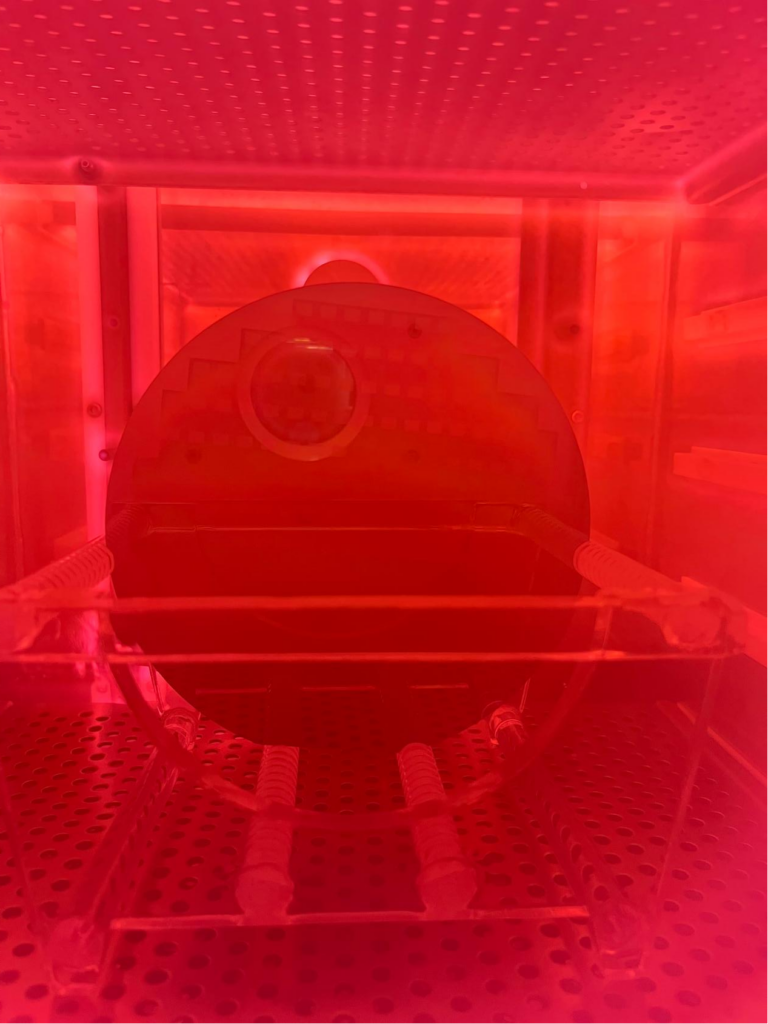
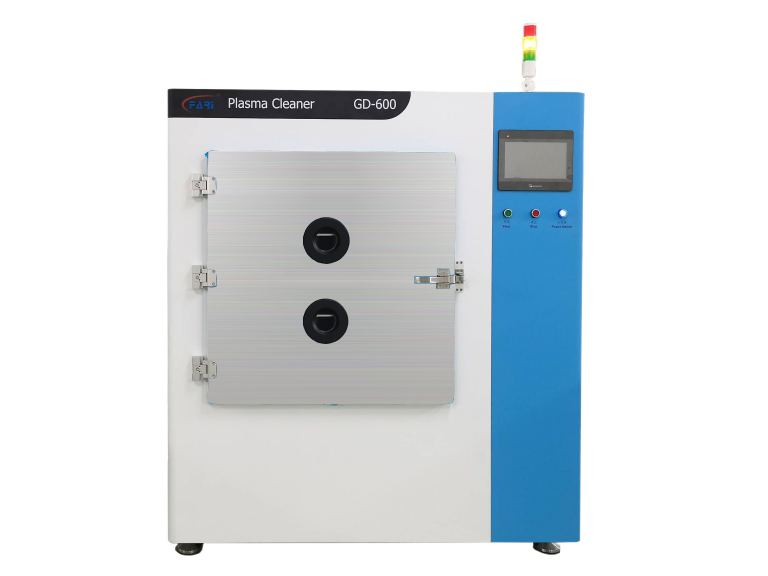
Vacuum plasma is well suited to batch processing when multiple lenses or trays require controlled treatment inside one chamber. The enclosed environment can provide uniform treatment across exposed surfaces.
Atmospheric plasma can be integrated into an automated line when the target region is accessible to the treatment head and continuous processing is more important than batch chamber exposure.
For a clearer comparison, read how vacuum plasma treatment works.
A typical process can place plasma close to the downstream step that depends on the activated surface:
The shorter the delay between activation and the next operation, the easier it is to control recontamination from storage and handling.
Plasma is a non-contact process, so there is no wiping action across the optical surface. The recipe still needs to be qualified for the specific lens material and coating stack.
It can address defects caused by organic contamination or poor surface preparation. It cannot correct defects caused by substrate damage, coating chemistry or deposition-equipment problems.
Proper plasma cleaning is designed so that volatile reaction products are removed from the treatment region. Vacuum systems evacuate them through the pumping system, while atmospheric systems carry them away in the process flow.
The shortest practical time is preferred. Activated surfaces gradually adsorb airborne contamination and lose some of the increased surface energy produced by treatment.
Optical material, coating type, adhesive, tray design, required throughput and contamination source all influence the final process recipe.
If you are evaluating plasma cleaning for smartphone camera lenses or camera modules, contact FARI Plasma with your lens material, part size and downstream process so the treatment can be matched to the application.



English

Spanish
Rogatus ad ultimum admissusque in consistorium ambage nulla praegressa inconsiderate