


Blog
Get The Latest Industry Trends
-
 Plasma BasicsOxygen plasma is ionized oxygen gas — a mix of atomic oxygen, O⁺ and O₂⁺ ions, ozone, and ultraviolet photons — generated by applying RF or other electrical energy to O2 gas inside a vacuum chamber or an atmospheric plasma head. It's the most widely used plasma chemistry in surface treatment because it's cheap, available anywhere compressed gas or an oxygen generator can supply it, and reactive enough to clean, activate, or etch almost any organic-contaminated surface. It also has limits — it oxidizes copper and silver, over-treats thin polymer films, and can't reach shadowed geometry at atmospheric pressure — which is where argon, air, or nitrogen take over.03 Sep, 2026Oxygen Plasma Cleaning: How It Works and When to Use It
-
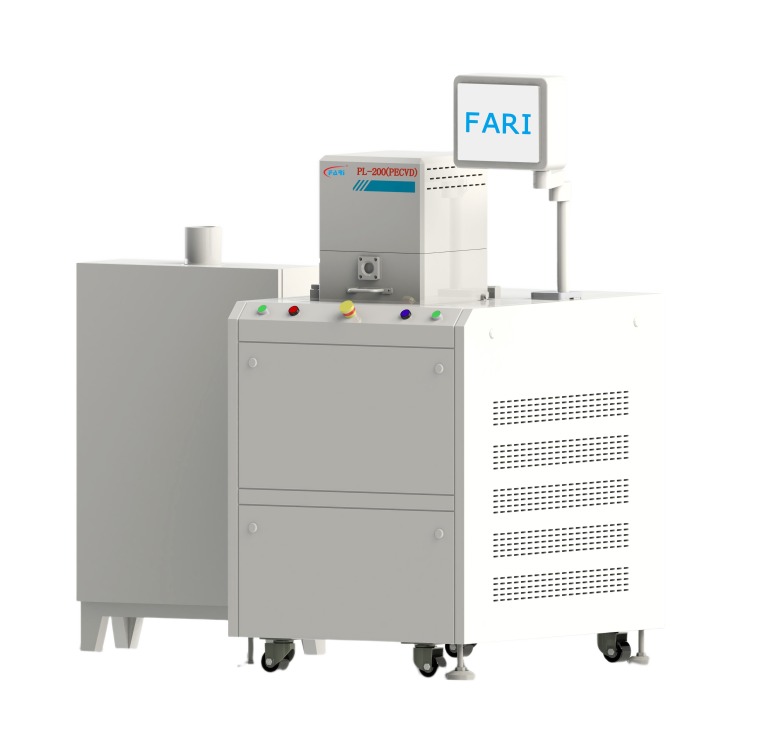
Plasma BasicsPECVD (plasma-enhanced chemical vapor deposition) uses an electrically generated plasma to activate reactant gases so a thin film builds up on a substrate at temperatures far lower than conventional thermal CVD requires. That single mechanism — replacing heat with plasma energy as the activation source — is the PECVD working principle, and it's why plasma-enhanced CVD shows up wherever engineers need to deposit dielectric, passivation, or optical films on substrates that can't tolerate a high-temperature furnace step.02 Sep, 2026PECVD Explained: How Plasma-Enhanced CVD Deposition Works
-
Plasma BasicsPlasma applications span a much wider range than most people expect. The same ionized gas that lights up a neon sign also cleans microchips, activates plastic before printing, sterilizes medical instruments, and etches patterns onto silicon wafers. Plasma occurs naturally in lightning and stars, gets generated intentionally in laboratories and factories, and shows up in consumer electronics like plasma TVs — spanning natural phenomena, physics, industrial surface treatment, and medicine.01 Sep, 2026Plasma Applications: Where Plasma Surface Treatment Is Used Across Industries
-
Plasma BasicsA plasma cleaner turns ordinary gas into a reactive, ionized state and directs it at a material surface to remove contaminants or raise surface energy — without water, solvents, or wiping. Engineers usually reach for one when a bond, coating, or ink layer that should adhere suddenly doesn't, and the culprit turns out to be dust, oils, or mold-release residue sitting on the part at a scale manual cleaning can't reach.28 Aug, 2026Plasma Cleaner Guide: What It Is and How It Works
-
Plasma Basics"Plasma cleaner" and "plasma cleaning chamber" get used as if they're the same thing, and on a spec sheet that mix-up makes it hard to know what you're actually buying. One is the whole machine; the other is a single component inside it — the sealed vessel where parts sit and plasma actually forms and contacts the surface.27 Aug, 2026Plasma Cleaning Chamber Guide: What It Is, How It Works, and How to Choose One
-
Plasma BasicsMost plastics come off the mold with a surface that actively resists whatever you try to do to it next. Adhesives peel, ink beads up and smears, paint flakes off in sheets. The reason is almost never a bad adhesive or a cheap ink — it's the plastic itself. Polymers like polypropylene, polyethylene, and PTFE have chemically inert, low-energy surfaces that don't want to bond with anything.26 Aug, 2026Plasma Treatment for Plastics: How It Improves Bonding, Printing and Coating