
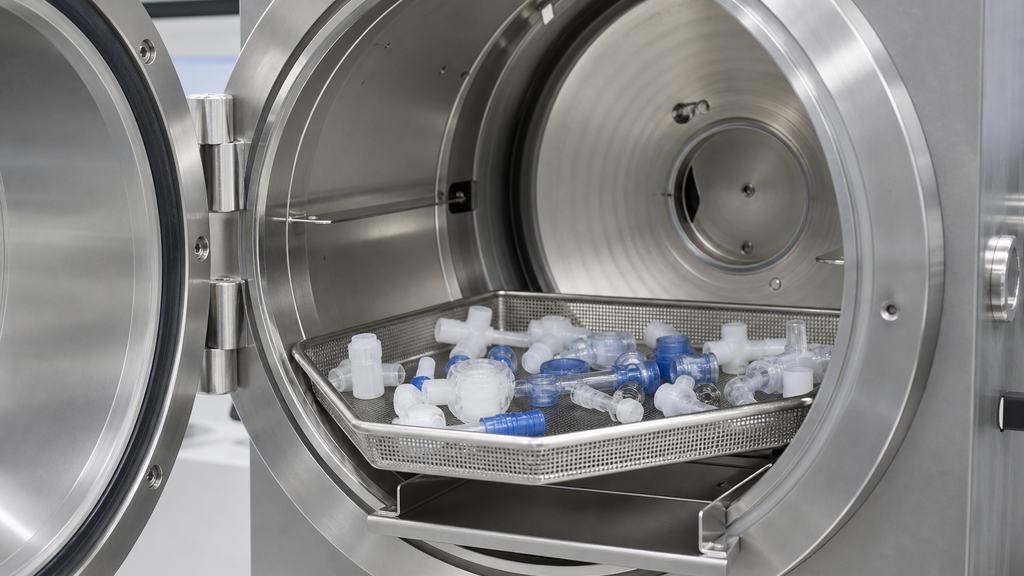
“Plasma cleaner” and “plasma cleaning chamber” get used as if they’re the same thing, and on a spec sheet that mix-up makes it hard to know what you’re actually buying. One is the whole machine; the other is a single component inside it — the sealed vessel where parts sit and plasma actually forms and contacts the surface.
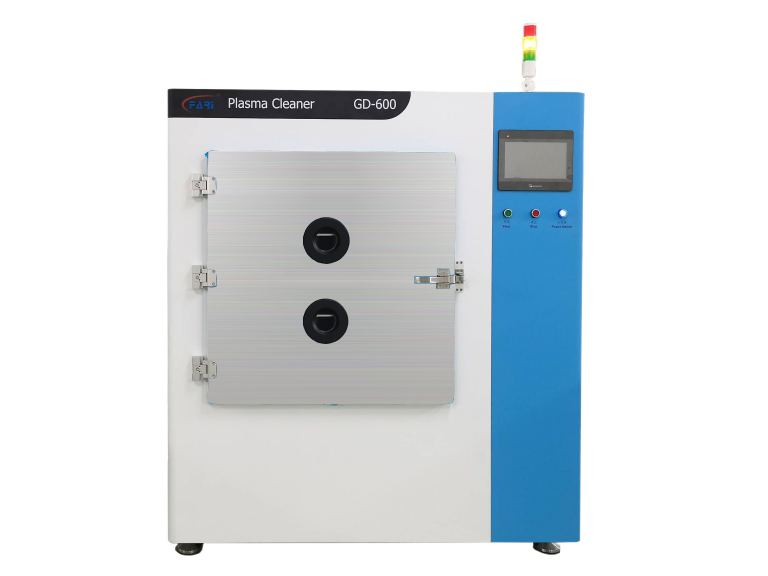
A plasma cleaning device is the complete system that generates plasma and applies it to a part. It’s built from several subsystems working together: a gas supply (oxygen, argon, nitrogen, or air, depending on the process), a power or RF generator that energizes the gas, a vacuum pump that establishes the low-pressure environment plasma needs to strike reliably, a control system (PLC and touch screen on most industrial units) that sequences the process, and the chamber itself — the enclosure where the part actually sits.
None of these subsystems does much on its own. The generator without gas produces nothing; the chamber without a vacuum pump can’t reach the pressure plasma requires; the control system ties the timing of gas injection, power delivery, and venting together so the cycle runs the same way every time. When someone says “plasma cleaning device,” they’re describing this whole assembly — not just the box the parts go into.
The plasma cleaning chamber is narrower: it’s the sealed enclosure, or process vessel, where the part is loaded and where plasma physically forms and contacts the surface. In a vacuum system this is a rigid metal drum or cylinder that holds pressure down to a few pascals. In an atmospheric inline system there’s no equivalent sealed vessel at all — the plasma is generated in a compact head and applied directly to a moving surface at ambient pressure, which is a fundamentally different mechanical arrangement.
So “cleaner” is the product; “chamber” is the part of that product doing the physical work of containment and exposure. Everything else — the generator, pump, gas lines, control panel — supports what happens inside that one space.
A vacuum plasma cleaning cycle inside the chamber follows a consistent sequence:
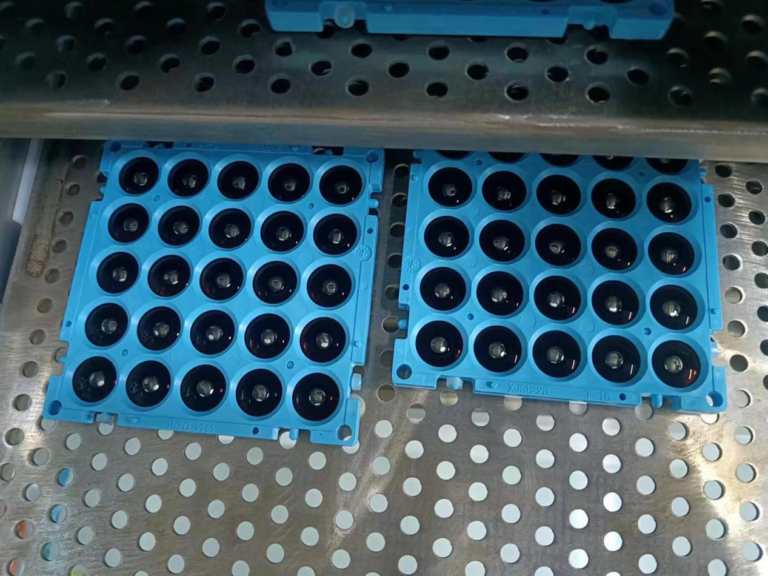
1. Load — parts are placed on trays, racks, or a rotating drum inside the open chamber.
2. Seal and pump down — the door closes and the vacuum pump draws the chamber down to process pressure, removing ambient air and moisture.
3. Gas injection — process gas enters through mass flow controllers (MFCs), which meter flow precisely so the gas mixture stays consistent run to run.
4. Plasma ignition — RF or other power energizes the gas, stripping electrons and creating the reactive ion/radical mixture that does the cleaning or activation work.
5. Surface interaction — reactive species bombard the exposed surfaces, breaking down organic contaminants or altering surface energy, depending on the gas chemistry used.
6. Vent and unload — gas flow and power cut off, the chamber vents back to atmospheric pressure, and the door opens for part removal.
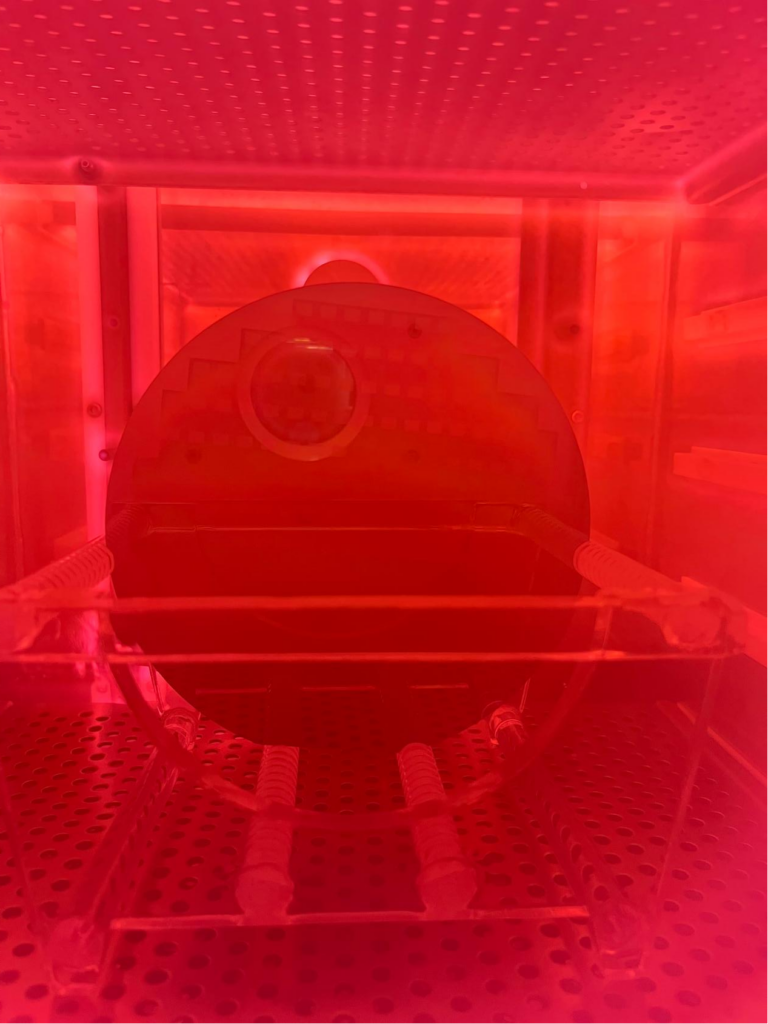
Several physical elements sit inside or feed directly into the chamber:
To make this concrete, here are the example specifications for the RD-200, a large vacuum drum plasma cleaner. These numbers describe that one model — not a universal standard for every chamber:
| Spec | RD-200 Value |
|---|---|
| Chamber size | Φ610 × 700 mm |
| Chamber volume | 200 L |
| Plasma power (adjustable) | 1–5 kW |
| Gas channels | 2, with MFC |
| Vacuum level | 10 Pa |
| Drum rotation speed | 1–10 turns/min |
| Control system | PLC + touch screen |
| Power supply | AC380V (±10V) |
Chambers aren’t all the same shape. Benchtop/batch chambers are compact, single-load vessels suited to lab-scale or small-batch work — load a tray, run a cycle, unload. Rotary drum chambers, like the RD-200 above, tumble a larger volume of small parts so plasma reaches surfaces on all sides rather than just the top of a stationary tray. Multi-tray systems stack several fixed trays inside one larger chamber to process more parts per cycle without rotation.
Atmospheric systems sit outside this classification entirely, because they don’t use a sealed chamber at all. Instead of loading parts into an enclosed vessel, an atmospheric plasma surface treatment system runs a plasma head over a moving part or web at ambient pressure — no pump-down, no vent cycle, and no chamber volume to size. That distinction matters when deciding what to buy: if parts move on a conveyor or web line, “what size chamber do I need” may be the wrong question, because the process may not need a chamber at all.
| Factor | Vacuum (chamber-based) | Atmospheric (no chamber) |
|---|---|---|
| Treatment uniformity | High — sealed environment, controlled gas mix | Good on exposed surfaces facing the plasma head |
| Complex part geometry | Handles internal cavities, undercuts, tumbled parts well | Best for flat or single-sided surfaces |
| Cycle isolation | Each batch fully isolated by pump-down/vent | Continuous, no isolation step between parts |
| Speed / line integration | Batch cycle time adds a pump-down and vent step | Runs inline with conveyors or web lines, no cycle interruption |
The range of parts loaded into a vacuum chamber spans several industries. Electronics manufacturers run PCB assemblies and lead frames through vacuum cleaning before wire bonding or encapsulation, where residual flux or mold-release film would otherwise cause adhesion failures. Battery makers load cell components for surface preparation before assembly — see Plasma Treatment for Lithium Battery Manufacturing for how that process fits into a production line. Small plastic and rubber parts, including toy components, go through the same chamber-based cleaning or activation before printing or bonding — PP Toy Plasma Treatment for Better Printing & Bonding covers that application. Medical device manufacturers load connectors, catheter components, and small molded parts where cleanliness before assembly or coating is a functional requirement, not just a cosmetic one.
Chamber walls, electrodes, and tray racks accumulate residue over repeated cycles, and that buildup can eventually affect plasma distribution if left unaddressed. Periodic wipe-down and self-clean cycles are standard practice on vacuum systems, though the right interval depends on gas chemistry, part material, and duty cycle rather than a single fixed schedule. Before any system ships, it’s worth confirming what quality checks were run: reputable manufacturers perform visual, electrical, and functional inspection, calibrate power and gas flow, and record serial-numbered test data for traceability — that’s a sign the unit was verified before it left the factory, not a substitute for an ongoing maintenance routine once it’s running.
Before comparing models, work through these factors:
If a process needs higher power or a larger vacuum-intensive footprint than a benchtop unit can deliver, High-Power Vacuum Plasma Treatment covers that end of the range. For a packaged system built around the chamber concepts described above — sealed vessel, calibrated gas and power delivery, tray or drum loading — see Plasma Cleaning Chamber Systems. Matching chamber size and power to the actual part batch avoids paying for capacity that won’t be used — or under-sizing a system that then can’t keep up with production. Anyone unsure which configuration fits their parts can contact us with batch size, material, and target surface effect for help narrowing it down.
A plasma cleaning device is the complete system — gas supply, power/RF generator, vacuum pump, control system, and the chamber itself — that works together to generate plasma and expose parts to it. The chamber is one component inside that larger system, not the whole device.
It’s the sealed enclosure where parts are loaded and where plasma actually forms and contacts the surface for cleaning, activation, etching, or ashing. The chamber isolates the process so gas mixture, pressure, and power stay controlled during each cycle.
Parts load in, the door seals, a vacuum pump draws the chamber to process pressure, metered gas enters through mass flow controllers, power ignites the plasma, reactive species treat the surfaces, then the chamber vents back to atmospheric pressure for unloading.
A plasma cleaner is the full product — generator, pump, controls, and chamber together. The chamber is just the enclosure inside that product where parts sit and plasma contacts them. Every plasma cleaner has a chamber (or, for atmospheric types, an equivalent open treatment zone), but the chamber alone isn’t a functioning cleaner.
Vacuum plasma seals parts inside a chamber pumped down to low pressure, giving highly uniform treatment on complex geometries. Atmospheric plasma runs at ambient pressure with no sealed chamber, applying plasma directly to moving surfaces inline — faster to integrate on a conveyor or web line, but generally limited to exposed, simpler surfaces.
It depends on part dimensions and batch quantity per cycle. A benchtop chamber suits lab-scale or small-batch runs, while a larger drum (for example, 200 L on a rotary design) suits higher-volume production. Match chamber volume to the actual batch size rather than the largest available option.
Common process gases include oxygen (organic contaminant removal), argon (physical/ion-driven cleaning), nitrogen, and air, sometimes in combination through multiple gas channels with independent flow control. The right gas depends on the material and the surface effect being targeted.
There’s no single fixed interval — buildup depends on gas chemistry, part material, and how many cycles run per day. Periodic wipe-down of chamber walls and electrodes, plus self-clean cycles, is standard practice; clean when treatment consistency starts to drift.
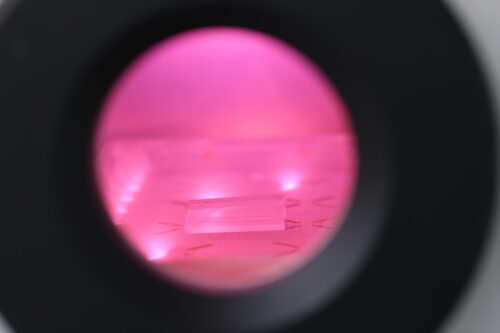
Oxygen plasma typically glows pink or purple because excited oxygen atoms and molecules emit light at specific wavelengths as electrons drop back to lower energy states. The exact hue can shift slightly with pressure and power, but the characteristic glow is a normal visual indicator that plasma has ignited.
Cost depends on chamber size, power range, gas channel count, and automation requirements, so there’s no single universal figure.
Plasma cleaning is a dry, non-chemical process that removes contaminants at the molecular level without solvents, so it avoids the residue and material-swelling risks of wet chemical cleaning. That said, gas type, power, and exposure time still need to match the material — overly aggressive settings can affect delicate polymers, so process parameters should be tuned to the part.



English

Spanish
Rogatus ad ultimum admissusque in consistorium ambage nulla praegressa inconsiderate