

Plasma treatment for dialysis tubes is a dry surface-preparation step for medical tubing made from polyurethane (PU), PVC, TPU, silicone, PE or PP-based materials. It can remove trace organic contamination and increase surface wettability before bonding, coating, printing or selected assembly operations. For regulated products, the treatment is one part of a validated process—not a replacement for biocompatibility, sterilization or device qualification.
Dialysis tubing has to remain flexible, kink-resistant and chemically compatible with blood and dialysate. Those same properties often make the surface low-energy and difficult to bond. A tube can look clean while still carrying mold release, processing oil, dust or a weak boundary layer that interferes with adhesive wetting.
PU, PVC, TPU, silicone and polyolefin tubing are comparatively inert at the surface. Small changes in resin grade, extrusion conditions, additives and storage can change surface energy and bond results. The problem becomes visible as open seams, variable pull strength, coating holidays, ink adhesion failures or rework after assembly.
Solvent wiping, water washing and mechanical abrasion can help in some lines, but each has trade-offs. Solvents may create residue, ventilation and handling requirements. Water processes add drying and contamination controls. Abrasion can deform a thin wall or create particles. Plasma is useful when the root cause is a surface interface that needs controlled cleaning or activation.
Our overview of what plasma surface treatment actually changes provides the wider process context.
An atmospheric jet or a low-pressure chamber creates reactive species that interact with the outermost surface. Depending on the gas and dose, the process can:
The intended mechanism matters. Read the distinctions among plasma cleaning, activation and etching before selecting a recipe. High power is not automatically better, especially for thin-wall polymers or sensitive coatings.
Plasma can prepare a connector insertion zone, a tubing end or a defined overlap before adhesive dispensing. The bond test should match the actual connector material, adhesive, cure schedule and sterilization exposure.
Surface activation may improve wetting of selected coatings, hydrophilic layers or identification inks. The coating supplier should confirm that the activated surface is compatible with its formulation and that the desired surface property survives later processing.
External treatment is straightforward with a nozzle. Internal lumens and small diameters require a dedicated fixture, gas-flow design or chamber process to avoid shadowing. Uniformity must be demonstrated along the full length and circumference; it should never be assumed from a single contact-angle reading.
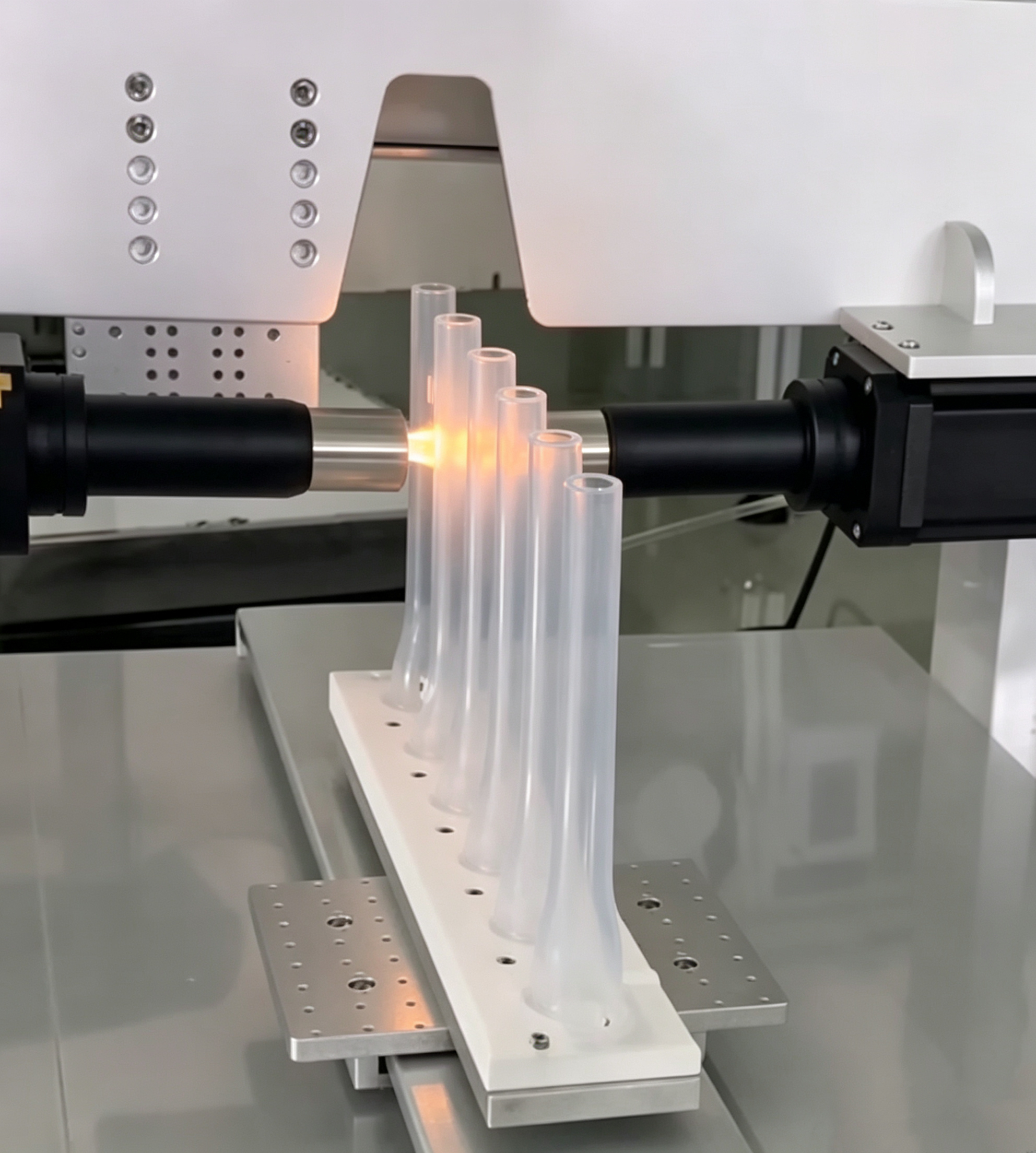
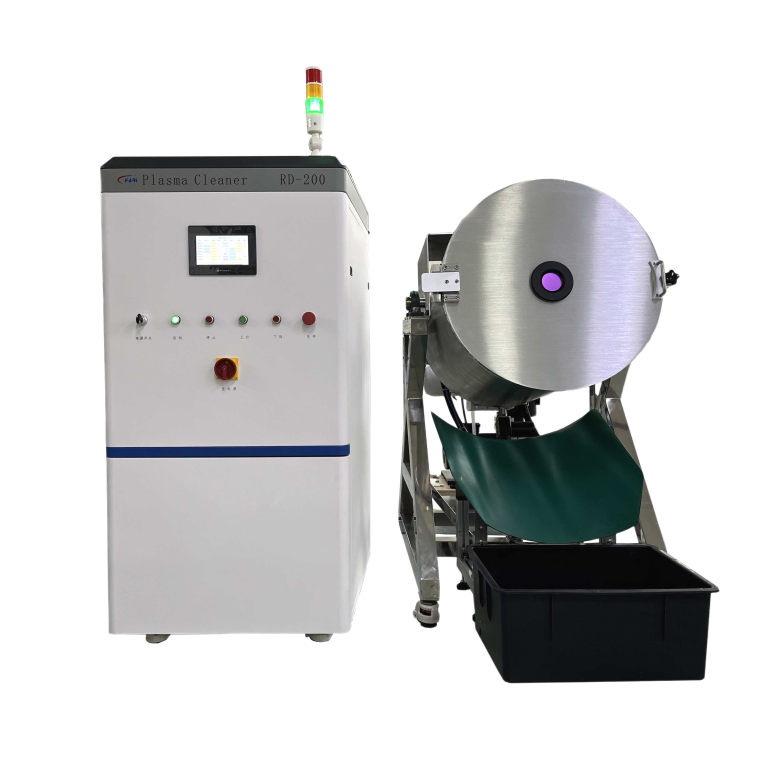
Inline or offline systems can be integrated before bonding, spraying or assembly. A production design should control tube presentation, nozzle distance, line speed, exhaust, guarding and the time between treatment and the next step. Review atmospheric versus low-pressure plasma when choosing a delivery format.
Start with untreated controls and representative lots of each tube material. Screen the process window with surface-energy measurements, then confirm the intended function: peel or pull strength, coating adhesion, print durability, leak performance or assembly torque. For medical products, add chemical characterization, particulate assessment, aging and sterilization studies as required by the quality system.
Surface energy can change after treatment. Keep the delay to bonding or coating controlled and define packaging and storage conditions. The testing approaches described in dyne ink, contact-angle and XPS comparisons can help build a measurement plan, but none replaces a finished-device test.
Claims about “zero residue,” “no material change” or a fixed shelf life should be supported by the exact tube construction, gas, power, time and downstream sterilization cycle. A documented process window is more useful than a universal number.
PU, PVC, TPU, silicone, PE and PP-based tubing can be evaluated, but each formulation responds differently. Additives, colorants, wall thickness and surface finish must be included in the trial.
A qualified low-dose process is designed to limit bulk-material effects, yet compatibility must be demonstrated. Verify mechanical properties, extractables or other applicable biocompatibility endpoints after the complete process and sterilization cycle.
There is no universal storage period. Aging depends on polymer chemistry, treatment conditions, packaging and contamination exposure. Bond or coat as soon as practical, then establish the maximum delay with data.
It can be possible with a suitable chamber, electrode arrangement or gas-flow fixture. Internal coverage and temperature must be measured on the actual lumen geometry.
That depends on the tubing, treatment and sterilization method. Confirm performance after ethylene oxide, steam, radiation or another intended cycle rather than assuming the plasma step is unaffected.
FARI Plasma can review the tube resin, lumen geometry, bond or coating step and sterilization route to define a practical sample plan. Explore our medical-device plasma case study, browse plasma treatment systems or contact us with representative tubing and acceptance criteria.



English

Spanish
Rogatus ad ultimum admissusque in consistorium ambage nulla praegressa inconsiderate