
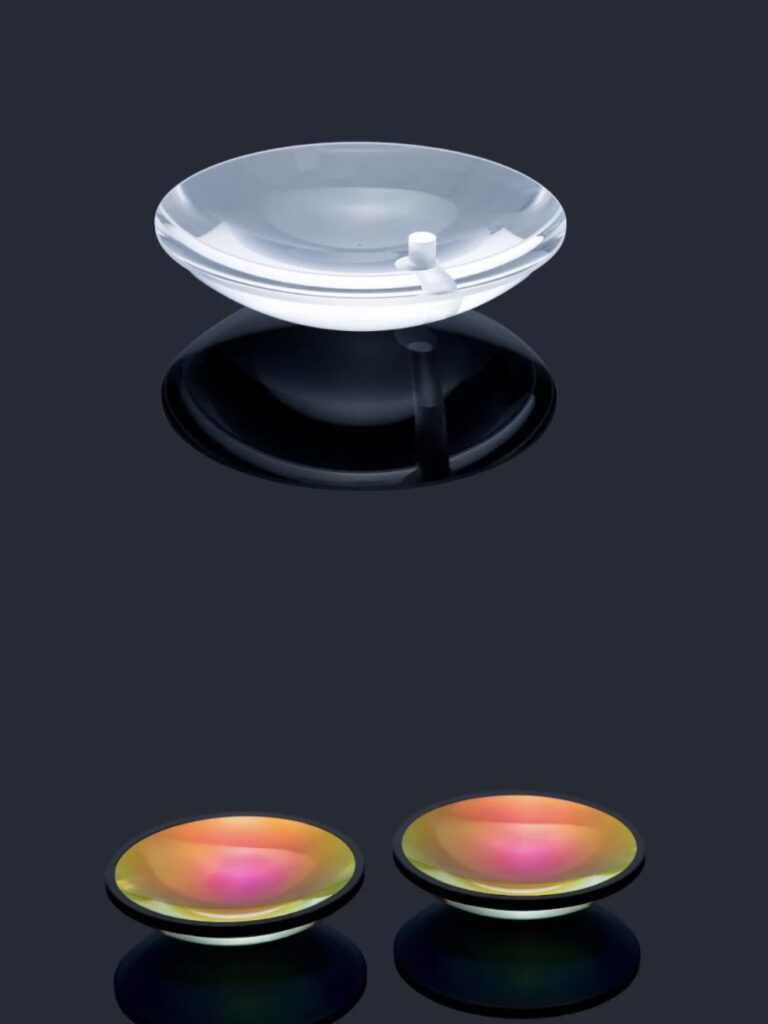
Plasma treatment for organic films on optical glass can support controlled cleaning, rework and surface preparation before recoating. It is useful when a failed organic layer must be removed, when a coating process needs a clean glass interface, or when a thin film is leaving a weak boundary layer. Optical quality depends on stopping at the correct endpoint: more power or time is not automatically better.
Organic contamination and aged coatings can reduce transmission, increase haze, create rainbow fringes or interfere with a new coating. Solvent stripping may swell a polymer, leave residue or require multiple rinses. Mechanical methods can scratch a precision surface. Plasma offers a dry route, but the process must be tuned to the film thickness, glass finish and optical acceptance limits.
Our explanation of plasma surface treatment describes why cleaning and activation are different from aggressive etching.
In a vacuum chamber or atmospheric system, energetic species can oxidize organic material, break surface bonds and assist removal through the exhaust path. The process may also add polar groups to clean glass before a new coating. The desired endpoint should be stated clearly:
Review cleaning, activation and etching differences before choosing the mechanism. Once the organic layer is consumed, continued ion exposure can increase roughness, haze or scatter.
Vacuum RF plasma generally offers a uniform, low-pressure environment and is often easier to control for delicate, complex or batch-loaded optics. Atmospheric nozzles can be attractive for inline tracks and fast handling, but local dose, standoff and thermal effects require careful control on thin films. The atmospheric-versus-low-pressure comparison can help frame the equipment choice.
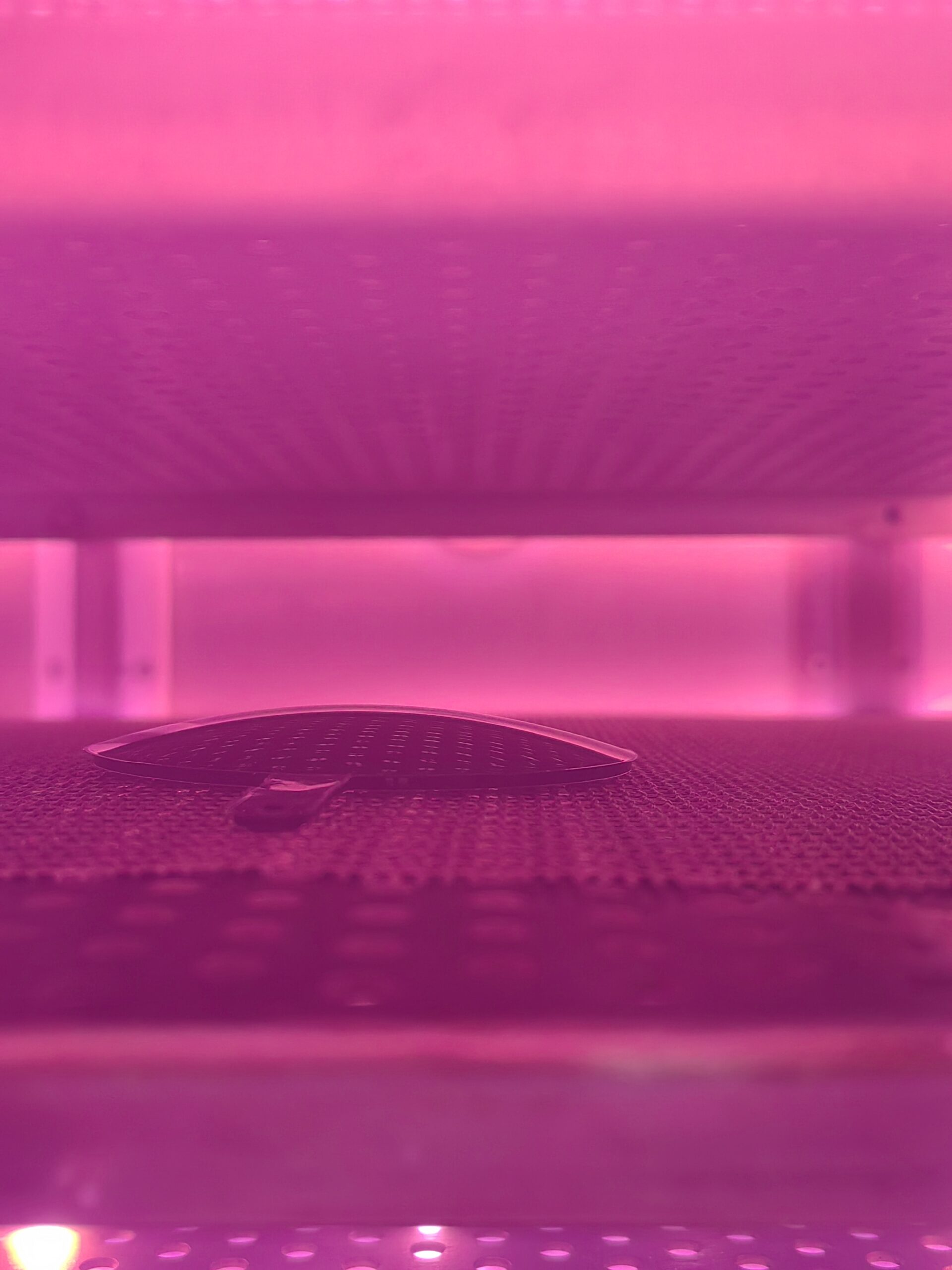
Start with a dose matrix that varies gas, power, pressure, time and part temperature. Inspect transmission, haze, color, reflectance, surface roughness and coating adhesion after each condition. A visual “clean” appearance is not enough; a surface can appear clear while still carrying a weak organic layer or microscopic damage.
Gas chemistry changes the balance between organic removal and glass modification. Compare air, oxygen, argon and nitrogen using the plasma gas-selection guide. Keep the delay before recoating controlled because activated surfaces can age or collect contamination.
Rainbow patterns can indicate a residual thin film whose thickness varies across the optic, or they can signal a new surface-roughness or refractive-index change after over-treatment. Do not simply extend the cycle. Use microscopy, ellipsometry or another suitable method to distinguish incomplete stripping from substrate damage, then adjust dose and endpoint control.
Surface-energy checks can support a coating trial, but they are not an optical-quality measurement. See how dyne ink, contact angle and XPS differ and pair those tests with optical data.
It depends on the gas, dose, storage and the coating chemistry. Recoat as soon as practical and establish the maximum delay experimentally rather than using a universal 30- or 60-minute claim.
It can be evaluated for organic-film removal, but the cycle must stop before glass haze, roughness or scatter exceeds the optical specification. Film thickness and formulation determine the endpoint.
No. Plasma processes have a useful window and may reach a cleaning or activation plateau. Excess dose can damage a bare glass surface or change a thin film.
A qualified low-dose process can minimize substrate effects, but no material should be assumed invulnerable. Measure roughness, haze, transmission and scatter on the actual optic after treatment.
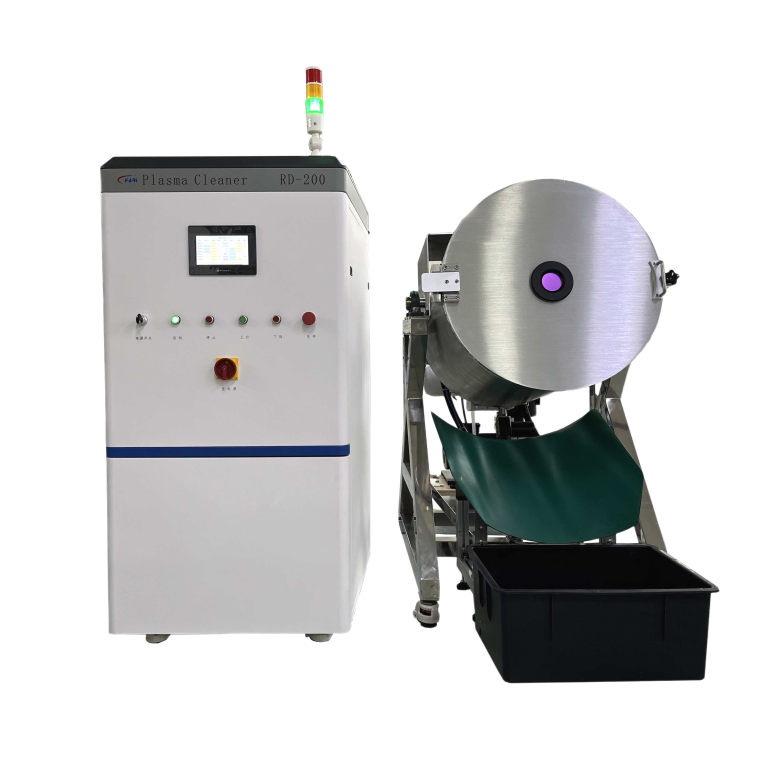
FARI Plasma can help define an endpoint using the actual film, glass type and optical acceptance criteria. Browse plasma treatment systems, review our application areas or contact us with haze, transmission, film thickness and recoating details.



English

Spanish
Rogatus ad ultimum admissusque in consistorium ambage nulla praegressa inconsiderate