
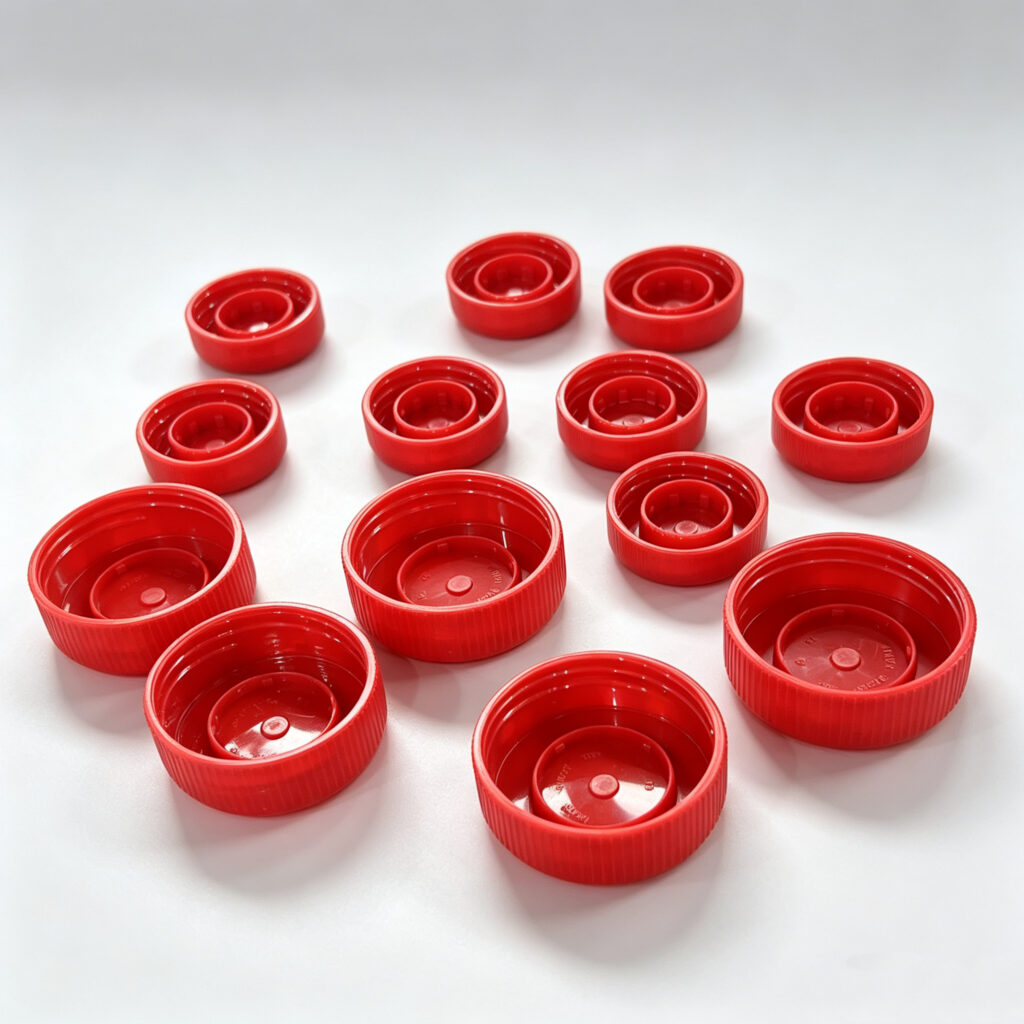
Plasma activation for plastic bottle caps can improve wetting and adhesion on PP, PE, HDPE, PET, ABS and selected TPE components before gluing, labeling, sealing or printing. Bottle caps are low-energy molded parts, and mold-release residue or handling contamination can make a cap look clean while labels, sealants or inner components later lift or leak.
Typical problems include an inner-cap joint that opens, a seal ring that does not bond evenly, a pressure-sensitive label that lifts during transport, or ink that scratches off. Sanding can mark the appearance. Primers and solvent wipes add consumables, drying time and operator variation. A localized dry plasma step can target the exact groove, label panel or print area.
For a related packaging example, see how plasma supports ink and coating adhesion in packaging.
An atmospheric nozzle directs a controlled plasma stream onto the selected surface. Reactive species can remove trace organics and introduce polar functionality, improving adhesive or ink wetting. The process is not a substitute for a suitable adhesive, cap design or seal geometry. See the difference between cleaning, activation and etching when defining the intended outcome.
Use a fixture that controls cap rotation, nozzle distance and treatment width. Local treatment helps preserve the rest of the cap surface, but the edge of the active zone must be checked for appearance and coverage.
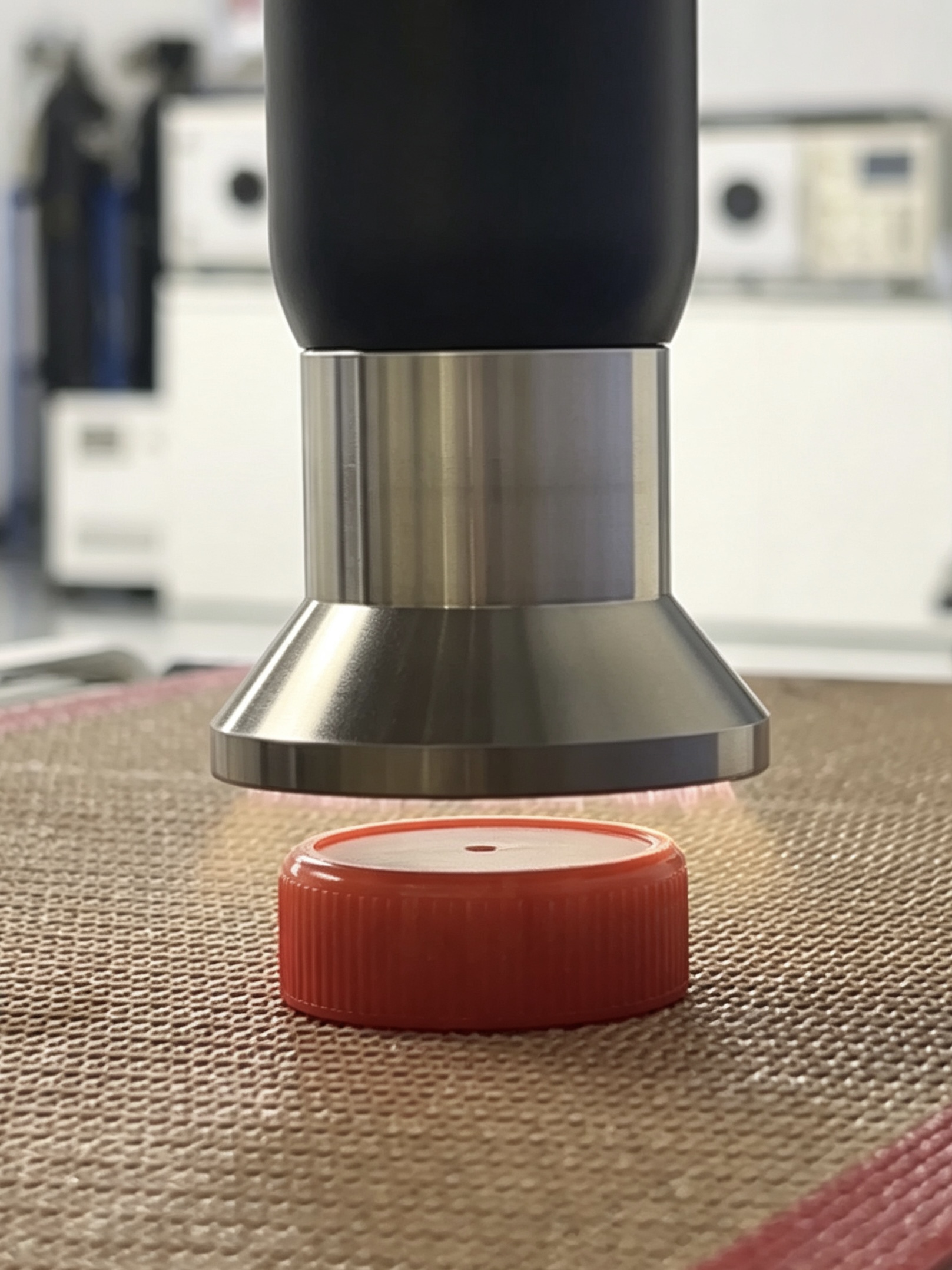
Record gas, power, speed, standoff, cap orientation and time to the next operation. Activation can decay, and additives or mold release can migrate back to the surface. Treat close to gluing or labeling, then establish the maximum delay through testing.
Dry plasma does not automatically make a package compliant for food, beverage or pharmaceutical use. The complete polymer, ink, adhesive, liner, equipment and process must be assessed against the applicable migration, hygiene and quality requirements. Verify any process by-products and maintain suitable exhaust and housekeeping controls.
Compare gases using the plasma gas-selection guide. Screen contact angle or dyne level, then confirm peel, leak, torque, label retention, print rub and aging performance with production materials.
They are common low-energy candidates, but response varies with grade, colorant, slip additive, molding history and contamination. A sample trial is required.
No. Surface properties can decline with time and handling. Bond, label or print as soon as practical and define the validated delay.
A controlled low-dose process can limit visual change, but over-treatment may create gloss, whitening or thermal effects. Inspect the actual cap at the process extremes.
It may reduce or remove a primer step for a qualified adhesive and cap construction. Confirm final bond and aging performance before changing the approved process.
Often, with a stable part presentation and synchronized treatment before the next station. Review robot access, guarding, exhaust and line-speed control.
FARI Plasma can test your cap resin, label or adhesive and recommend a localized treatment layout. Browse a related PP application, explore plasma systems or contact us with the cap drawing and acceptance test.



English

Spanish
Rogatus ad ultimum admissusque in consistorium ambage nulla praegressa inconsiderate