
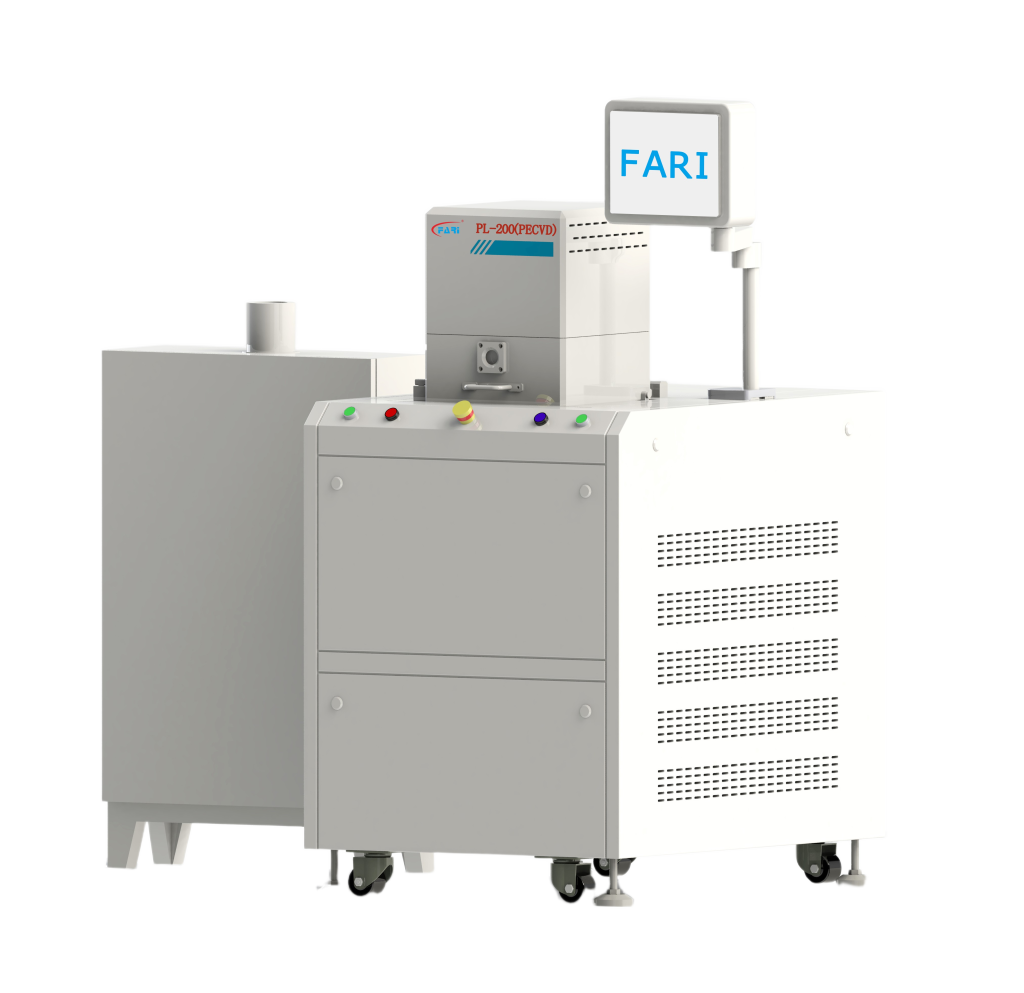
Reviewed by the Fari Plasma engineering team, process engineers who design and validate RF plasma and thin-film deposition hardware — including systems used to deposit SiO2 passivation layers over aluminum interconnects, a process where furnace-level LPCVD temperatures would reflow the metal.
PECVD (plasma-enhanced chemical vapor deposition) uses an electrically generated plasma to activate reactant gases so a thin film builds up on a substrate at temperatures far lower than conventional thermal CVD requires. That single mechanism — replacing heat with plasma energy as the activation source — is the PECVD working principle, and it’s why plasma-enhanced CVD shows up wherever engineers need to deposit dielectric, passivation, or optical films on substrates that can’t tolerate a high-temperature furnace step.
In plain terms: precursor gases are fed into a vacuum chamber, an RF or AC electric field ionizes them into a plasma, and the resulting ions, radicals, and excited molecules react at the substrate surface to grow a solid film, layer by layer. Because plasma supplies much of the energy that would otherwise come from heating the substrate, PECVD can deposit usable films at process temperatures a thermal CVD reactor could never reach on the same part.
The process starts with reactant gases — silane, oxygen, nitrogen, ammonia, or hydrocarbon sources depending on the target film — introduced between two electrodes inside a vacuum chamber, typically held in the 0.1–10 Torr range. An RF discharge, commonly at the industry-standard 13.56 MHz, ionizes a fraction of the gas, creating a plasma rich in free radicals and reactive species that would be difficult to generate through heat alone. Depending on film chemistry and RF power, deposition rates for common PECVD films (SiO2, SiNx) typically run in the range of roughly 10–100 nm/min.
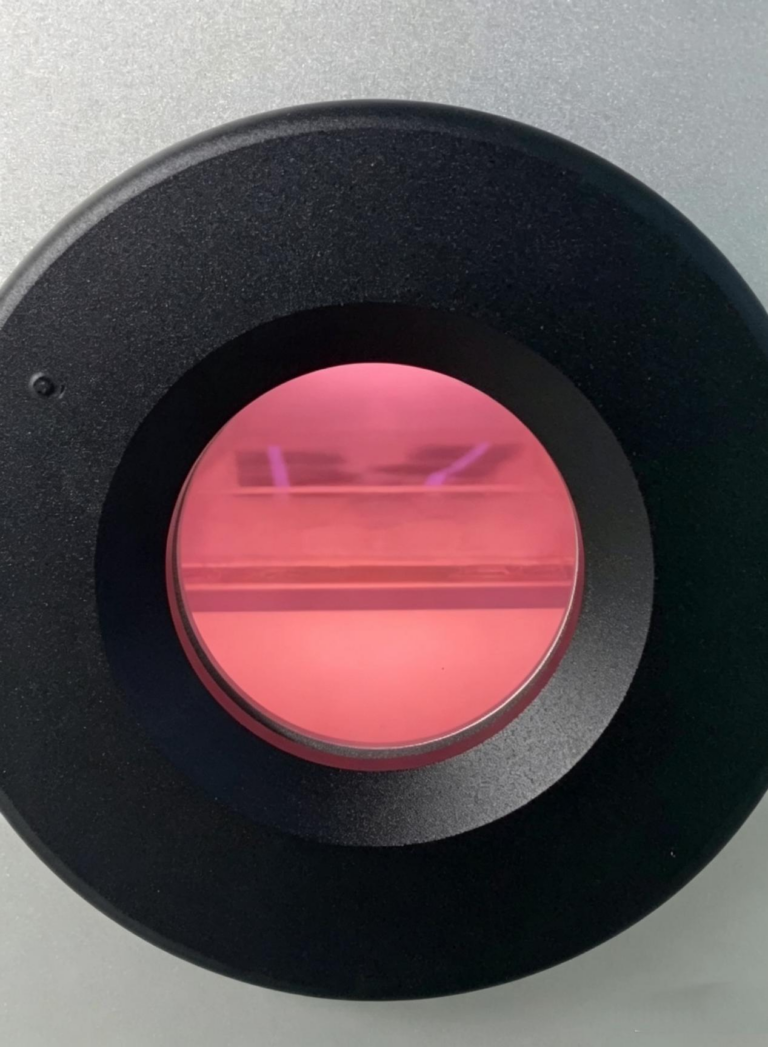
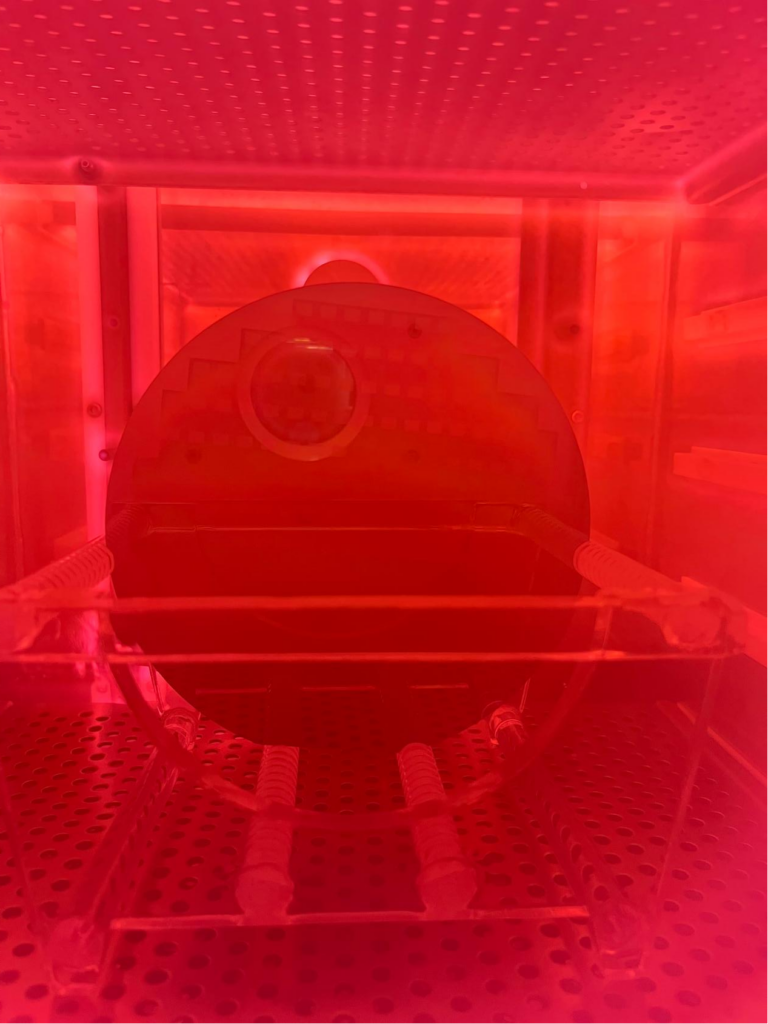
Gas typically enters through a “showerhead” inlet built into the upper electrode, distributing precursor evenly over the substrate, which sits on a heated lower electrode. Chamber layout affects throughput more than chemistry: a single-chamber PECVD system processes one batch or wafer set at a time and suits lab, pilot, and low-to-mid volume runs, while a dual-chamber PECVD system lets one chamber deposit while the other loads or cleans, roughly doubling effective throughput without doubling floor space.
Once ionized species reach the substrate, radicals and ions adsorb onto the surface and react chemically, releasing byproduct gases that are pumped away while the remaining atoms bond into a growing film. Ion bombardment from the plasma sheath also densifies the film as it forms, which is part of why plasma-enhanced CVD films can rival thermally grown ones in quality despite the lower process temperature.
The core trade-off is temperature versus film density. Thermal CVD and LPCVD rely entirely on heat to drive the reaction — typically 700–900°C — which produces very dense, low-defect films but forces substrate temperatures that many polymers, metals, and pre-patterned devices can’t survive. PECVD substitutes plasma energy for most of that thermal budget, running at roughly 200–400°C instead.
| Factor | Thermal CVD / LPCVD | PECVD |
|---|---|---|
| Activation source | Heat only | Plasma + some heat |
| Typical substrate temperature | 700–900°C | 200–400°C |
| Typical deposition rate | ~1–10 nm/min | ~10–100 nm/min |
| Film density/stress control | High density, less tunable | Tunable via plasma frequency/power |
| Substrate compatibility | Limited to heat-tolerant materials | Works with temperature-sensitive substrates |
For a temperature-sensitive substrate — a device with existing metallization, a polymer component, or a pre-formed MEMS structure — PECVD is usually the only CVD variant that fits.
LPCVD (low-pressure CVD) deposits silicon nitride and similar films using heat alone, at the higher temperatures noted above and without a plasma. That gives LPCVD films better density, uniformity, and step coverage, but at slower deposition rates and temperatures that rule out many temperature-sensitive parts. plasma-enhanced CVD trades some of that density and conformality for faster, lower-temperature processing — the right choice when the substrate can’t take an LPCVD furnace cycle.
MPCVD (microwave plasma CVD) generates its plasma with a microwave source rather than RF or AC, and is typically associated with high-density plasma applications such as diamond film growth. plasma-enhanced CVD’s RF/AC-driven plasma is the more general-purpose tool for dielectric and passivation films across semiconductor, MEMS, and optical work; MPCVD is a narrower, higher-energy variant suited to specific high-density film requirements.
PVD (physical vapor deposition — sputtering or evaporation) deposits material by physically ejecting atoms from a source rather than reacting gas-phase chemistry at the surface. PVD coatings are line-of-sight processes, so they struggle with step coverage on complex geometries, undercuts, and high-aspect-ratio features — exactly where PECVD’s gas-phase chemistry fills conformally. PVD remains useful for metal films and reflective coatings; plasma-enhanced CVD is the better fit when conformal coverage over topography matters.
Advantages:
Limitations:
Chamber count and plasma source are the two levers that decide which configuration fits a given process. A Single-Chamber PECVD System suits lab, pilot-scale, and lower-volume production where flexibility matters more than raw throughput. The FR-G800 dual-chamber PECVD system and the PE-200 PECVD thin film system target higher-throughput production runs where continuous deposition matters. When a process calls for a higher-density plasma or different ion energy characteristics than standard RF PECVD delivers, the ICP CVD Plasma Deposition System is the configuration to evaluate instead.
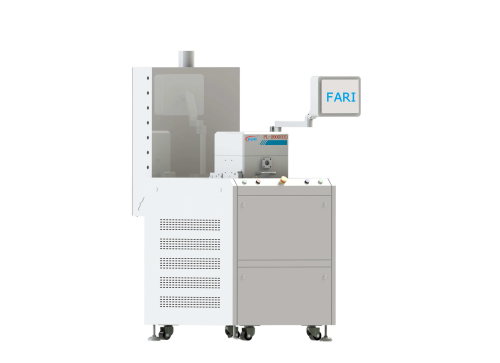
Matching film chemistry, substrate size, and throughput target to the right chamber configuration is easier with a technical conversation than a spec sheet alone — contact us to walk through which setup fits a specific process.
What is PECVD used for?
plasma-enhanced CVD deposits thin dielectric, passivation, and optical films — silicon dioxide, silicon nitride, amorphous silicon, and diamond-like carbon among them — on substrates in semiconductor, MEMS, photovoltaic, optics, and packaging manufacturing, particularly where process temperature has to stay low.
What is the difference between MPCVD and PECVD?
MPCVD generates its plasma with a microwave source, typically for high-density, specialized films such as diamond growth. plasma-enhanced CVD uses an RF or AC discharge and serves a broader range of general-purpose dielectric and passivation film applications.
What are the key differences between LPCVD and PECVD silicon nitride processing methods?
LPCVD relies on heat alone at higher temperatures (roughly 700–900°C), producing denser, more conformal silicon nitride at slower rates. PECVD uses plasma energy to deposit around 200–400°C at faster rates, trading some density and conformality for substrate compatibility.
What are the downsides of PVD coating?
PVD is a line-of-sight physical process, so it struggles with step coverage on complex geometries, undercuts, and high-aspect-ratio features. It also can’t match PECVD’s gas-phase conformality over topography, though it remains effective for straightforward metal and reflective films.
What is the working principle of PECVD?
Reactant gases are ionized by an RF electric field (commonly 13.56 MHz) inside a vacuum chamber held at low pressure, producing radicals and ions that react at the substrate surface. That plasma energy substitutes for much of the thermal energy a conventional CVD process would otherwise require.
What is a PECVD chamber?
It’s the vacuum enclosure holding two electrodes — typically a gas-fed showerhead upper electrode and a heated lower electrode holding the substrate — where the plasma discharge and film-forming chemical reaction both take place.
Is PECVD considered a coating process?
Yes, in the sense that it deposits a thin solid coating onto a substrate, but it’s a chemical vapor deposition method rather than a liquid or physical coating technique — the film forms through a gas-phase chemical reaction activated by plasma.
How much does a PECVD machine cost?
Cost depends heavily on chamber configuration, automation level, and process requirements: lab-scale, single-chamber systems commonly fall in the lower five-to-six-figure range, while production-grade dual-chamber or ICP CVD platforms with full automation and larger chamber volumes can run into six figures and beyond. Reviewing the single-chamber, FR-G800 dual-chamber, and PE-200 systems or contacting the team directly gets a configuration-specific quote.


English

Spanish
Rogatus ad ultimum admissusque in consistorium ambage nulla praegressa inconsiderate