
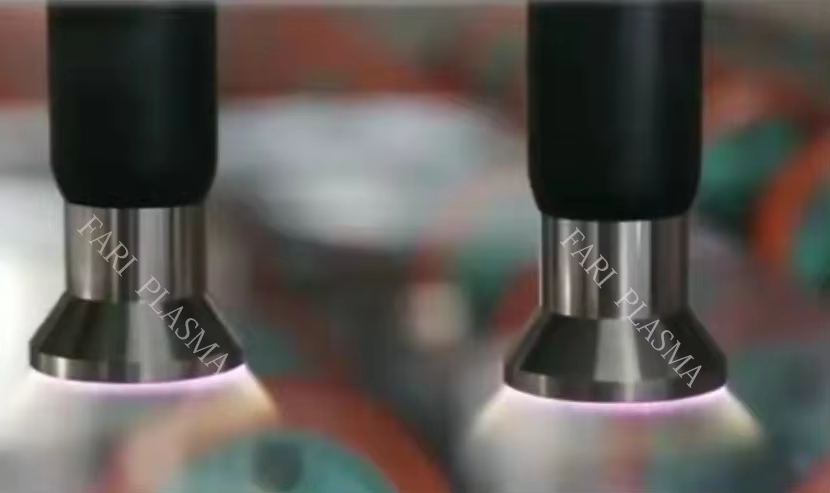
Plasma applications span a much wider range than most people expect. The same ionized gas that lights up a neon sign also cleans microchips, activates plastic before printing, sterilizes medical instruments, and etches patterns onto silicon wafers. Plasma occurs naturally in lightning and stars, gets generated intentionally in laboratories and factories, and shows up in consumer electronics like plasma TVs — spanning natural phenomena, physics, industrial surface treatment, and medicine.
Plasma is the fourth state of matter, alongside solid, liquid, and gas. It forms when enough energy is added to a gas that electrons separate from their atoms, leaving behind a mix of free electrons, ions, and neutral particles. Because plasma carries free charge, it conducts electricity, responds to electromagnetic fields, and can be tuned — through gas type, pressure, and power — to sit anywhere from extremely hot to relatively cool.
That tunability is why plasma covers such a wide range of applications. Plasma state of matter examples run from a bolt of lightning to a fluorescent light bulb to a plasma cleaning chamber, because each is simply a different combination of gas, energy, and pressure producing the same underlying physical state. How free radicals and ions interact with a surface at the molecular level determines whether a given process cleans, activates, etches, or deposits — the mechanics of ionization, reactive species, and surface chemistry behind that behavior are explained in how plasma surface treatment works.
Plasma is the most common state of visible matter in the universe, and it shows up closer to home than most people realize:
Beyond nature and physics, plasma’s most commercially valuable use is modifying material surfaces — cleaning them, changing their surface energy, removing thin layers, or building up thin films — without wet chemicals or solvents. Each process comes with its own mechanism, typical numbers, and trade-off.
Plasma cleaning removes organic residues, oils, and micro-contaminants from a surface using reactive species generated in a vacuum chamber or atmospheric nozzle. Vacuum cycles typically take several minutes per batch to reach process pressure and clean a full load, reaching into recesses and blind holes that atmospheric plasma can’t touch; atmospheric passes complete in seconds per part but only treat exposed surfaces. See plasma cleaning technology explained.
Plasma surface activation raises a material’s surface energy so adhesives, inks, and coatings wet and bond properly. Untreated polypropylene or polyethylene commonly sits around 29–31 dyne/cm; a plasma activation pass typically raises that to 40–54 dyne/cm, enough for most inks and adhesives to wet the surface. The trade-off is that the effect isn’t permanent — surface energy decays over hours to a few days as the material undergoes hydrophobic recovery, so parts need to be bonded, printed, or coated soon after treatment. See plasma surface activation.
Plasma etching uses chemical reaction combined with ion bombardment to remove material layers with micron-level precision, most often on semiconductor wafers and microstructures. Etch rates vary by gas chemistry and power, typically ranging from tens to a few hundred nanometers per minute — pushing the rate higher raises throughput but also increases substrate heating, which raises the risk of damage on thin-film or heat-sensitive materials. See plasma etching process and applications.
Plasma ashing is an oxygen-based process that strips photoresist and organic films after lithography steps in semiconductor manufacturing. Ashing avoids the wafer damage some wet strippers cause, but thick or hardened resist can take longer to fully clear than a wet-chemical strip, so ashing time has to be weighed against resist thickness on a given wafer. See plasma ashing and photoresist removal.
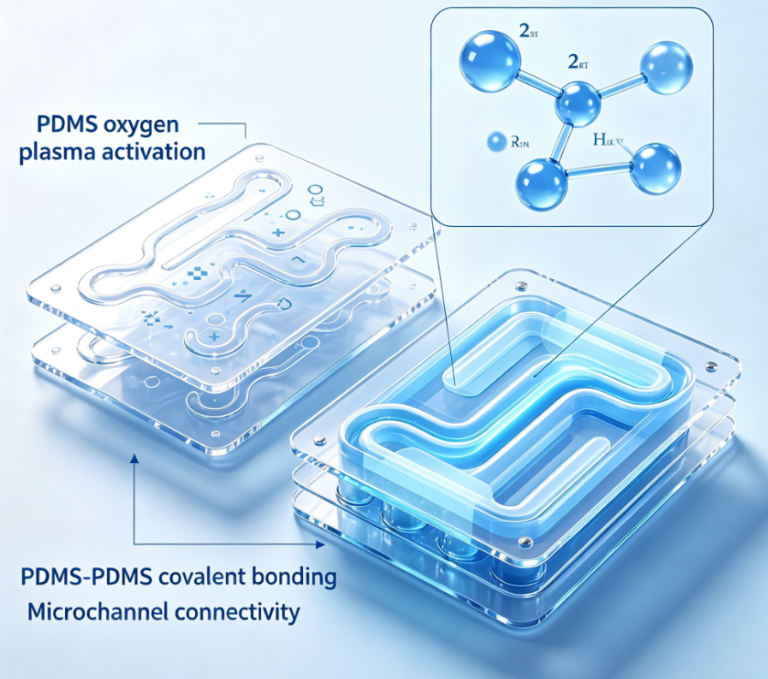
Plasma bonding uses activation chemistry to create adhesive-free bonds between materials such as PDMS and glass. It works reliably on select material pairs, but the bond is only as strong as the surface activation holds — bonding has to happen within the same activation window described above, and it isn’t a substitute for mechanical fastening on load-bearing joints. See plasma bonding explained.
PECVD (plasma-enhanced chemical vapor deposition) builds thin films onto a substrate at lower temperatures than standard CVD — often under 350°C versus 600–800°C or higher for thermal CVD — which suits temperature-sensitive substrates. The trade-off is deposition rate: PECVD generally runs slower than thermal CVD, so thicker films take longer to build. See PECVD explained.
Activation vs. cleaning vs. etching breaks down how each of these mechanisms differs at the surface level, gas by gas.
Industrial plasma treatment supports manufacturing across six major industries:
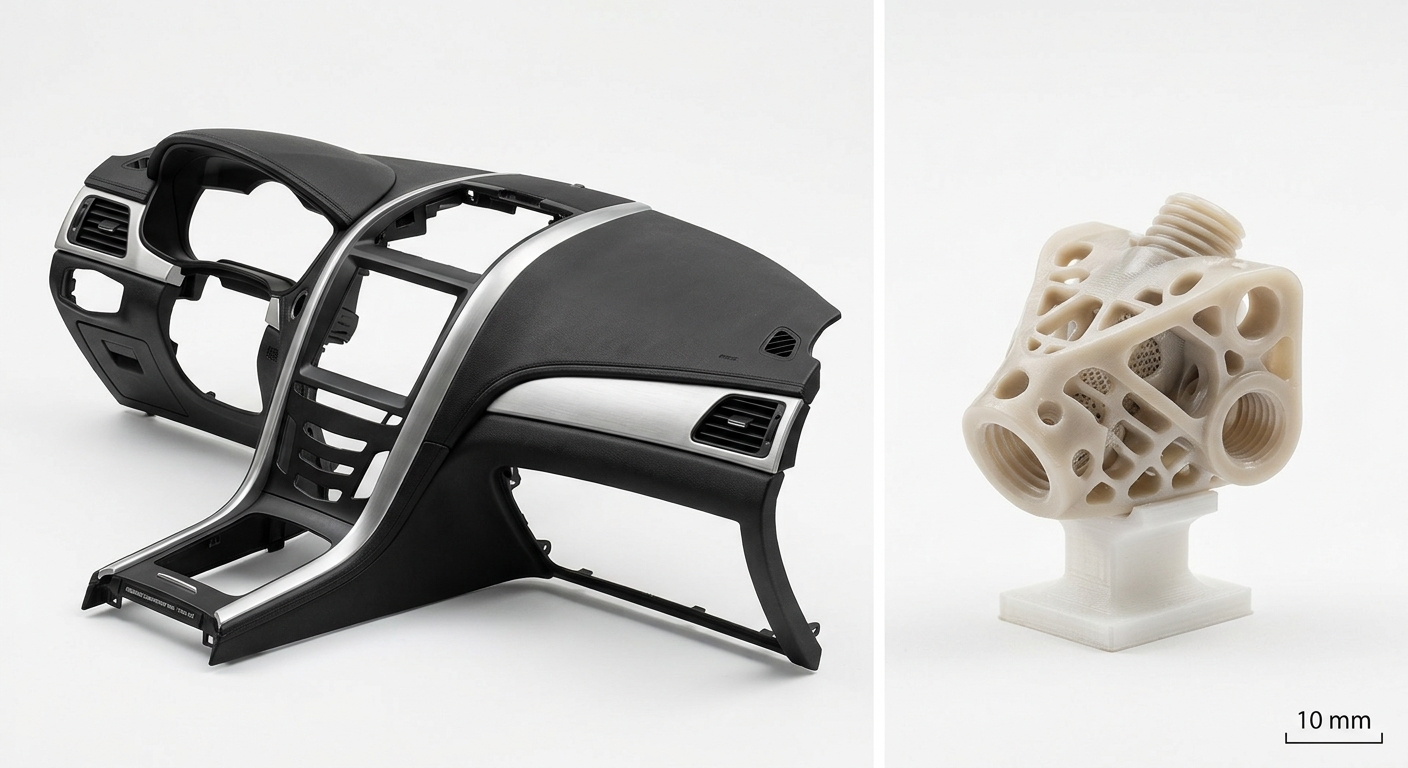
Plasma Cleaner Applications by Industry maps specific plasma processes to material types and production setups across these six sectors.
Plasma’s medical applications generally fall into three categories: sterilizing instruments and device components without heat or harsh chemicals, activating surfaces of implants and devices so coatings or adhesives adhere properly, and — in ongoing research — using cold atmospheric plasma on tissue for wound healing and investigational cancer therapy work. These research applications are still developing and aren’t a substitute for established clinical treatments. Medical plasma treatment covers the cleaning and activation steps used on catheters, implants, and device housings before assembly or coating.
Thermal, high-temperature plasma — lightning, welding arcs, the sun’s corona — reaches temperatures from thousands to millions of degrees and is never something to touch directly. Cold atmospheric and vacuum plasma used in industrial surface treatment runs far cooler, typically at or near room temperature up to about 60°C at the treated surface, which is why it’s built into enclosed chambers or shielded nozzle heads rather than left exposed. Proper ventilation, correctly rated power supplies, and following the equipment’s intended gas and power settings are what keep cold plasma processing manageable in a production environment — the equipment design, not the plasma being inherently harmless, is what makes it low-risk.
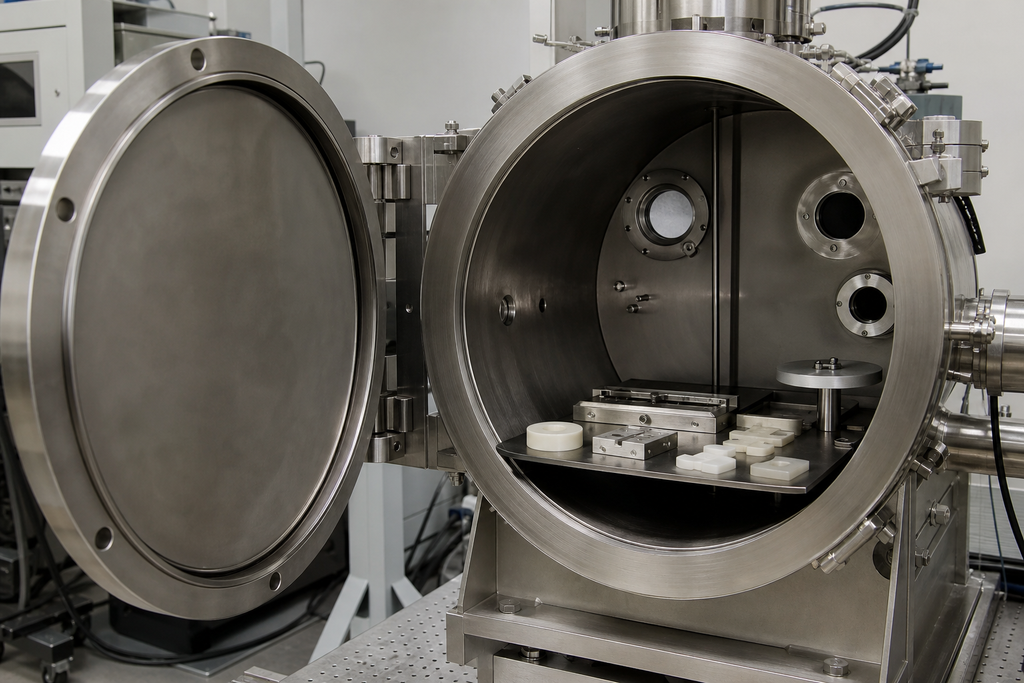
Matching a plasma process to a material starts with two questions: does the part need to go into a sealed chamber (vacuum plasma) or can it move through an open-air line (atmospheric plasma), and is the goal to clean, activate, etch, or deposit? Vacuum plasma gives deeper, more uniform treatment and finer process control, which suits complex geometries, batch loads, and semiconductor-grade precision. Atmospheric plasma runs inline at production speed without a vacuum cycle, which suits high-volume parts moving continuously through a line. Cleaning removes contamination; activation changes surface energy for bonding, printing, or coating (with a limited window before it decays); etching removes material with precision at a rate tuned against heat risk; ashing strips resist films; and PECVD adds thin-film layers at lower temperatures than thermal CVD, at the cost of deposition speed.
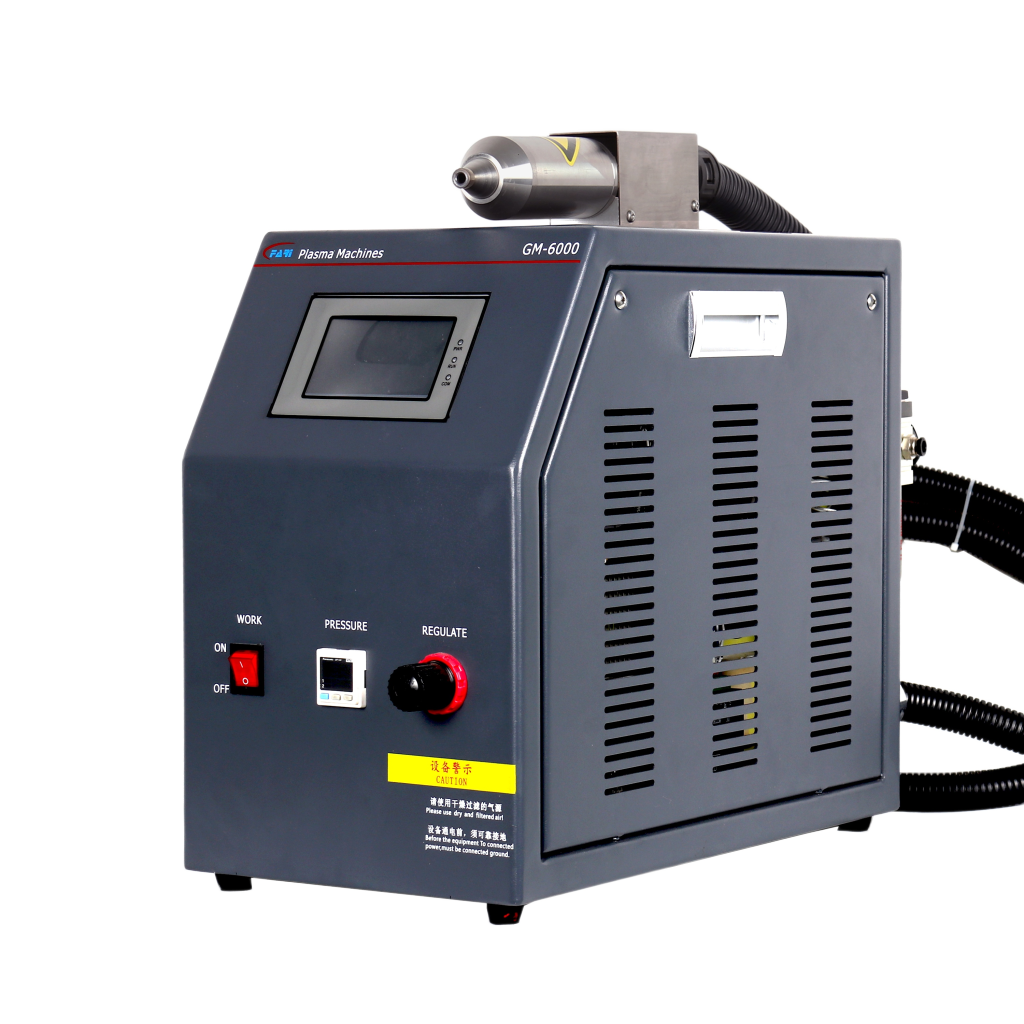
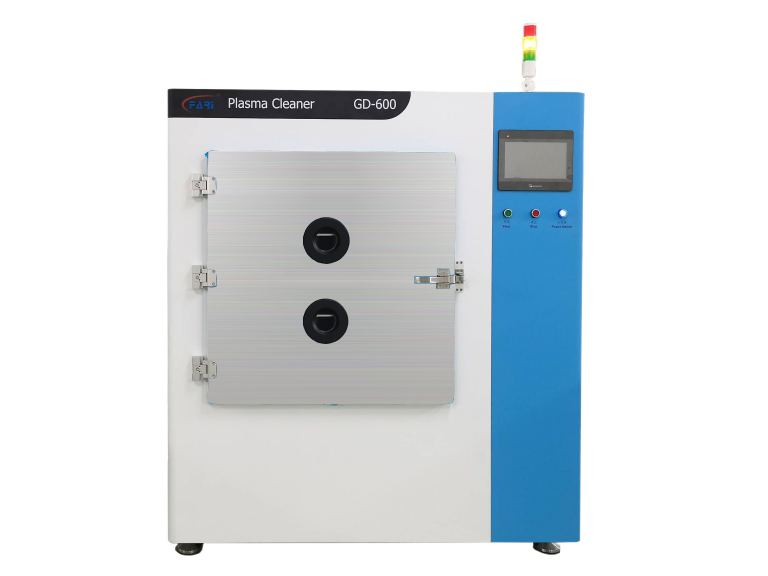
Plasma equipment spans lab-scale vacuum plasma cleaners to inline atmospheric plasma systems, sorted by chamber size, gas configuration, and production speed.
What are some real-life applications of plasma?
Everyday plasma shows up in lightning, neon and fluorescent lights, and plasma TVs. Industrially, plasma is used for cleaning parts before bonding, activating plastic surfaces for printing and adhesion, etching microstructures in semiconductors, and depositing thin films through PECVD.
Can you physically touch plasma?
High-temperature plasma such as lightning or a welding arc is not touchable. Cold atmospheric or vacuum plasma used in industrial equipment runs at much lower temperature and is contained inside chambers or shielded nozzles, so operators aren’t exposed to the active discharge during normal use.
What are 10 examples of plasma?
Lightning, auroras, stars and the sun’s corona, neon signs, fluorescent lights, plasma TVs, welding arcs, plasma cutters, plasma cleaners, and fusion reactor plasma are all examples of the same ionized-gas state occurring at very different scales and temperatures.
What are the medical applications of plasma?
Plasma is used to sterilize medical instruments and device components without heat or harsh chemicals, to activate implant and device surfaces so coatings or adhesives bond properly, and — as an area of active research — cold atmospheric plasma is being studied for wound healing and tissue applications.
What is plasma used for in industry?
In industrial settings, plasma cleans surfaces of organic contamination, activates low-energy plastics and rubbers so they accept inks and adhesives, etches precise patterns into semiconductor wafers, strips photoresist films, and deposits thin coatings through PECVD — all without wet-chemical processing.
Is plasma dangerous?
It depends on the type: thermal plasma like lightning or welding arcs is genuinely hazardous, while cold plasma used in surface-treatment equipment runs much cooler and is contained by design, making it manageable when operated within its intended settings.
What is the difference between atmospheric and vacuum plasma applications?
Atmospheric plasma treats parts inline at ambient pressure, suiting continuous, high-volume production. Vacuum plasma treats parts inside a sealed, evacuated chamber, giving deeper and more uniform treatment with tighter process control, at the cost of a pump-down cycle.
—
Fari Plasma has manufactured vacuum and atmospheric plasma surface treatment equipment since 2011, operating as a direct manufacturer with an ISO 9001–certified process and an in-house applications lab. Send your material, part geometry, and current bonding, printing, or cleaning problem to contact us for a technical evaluation and equipment recommendation.


English

Spanish
Rogatus ad ultimum admissusque in consistorium ambage nulla praegressa inconsiderate