
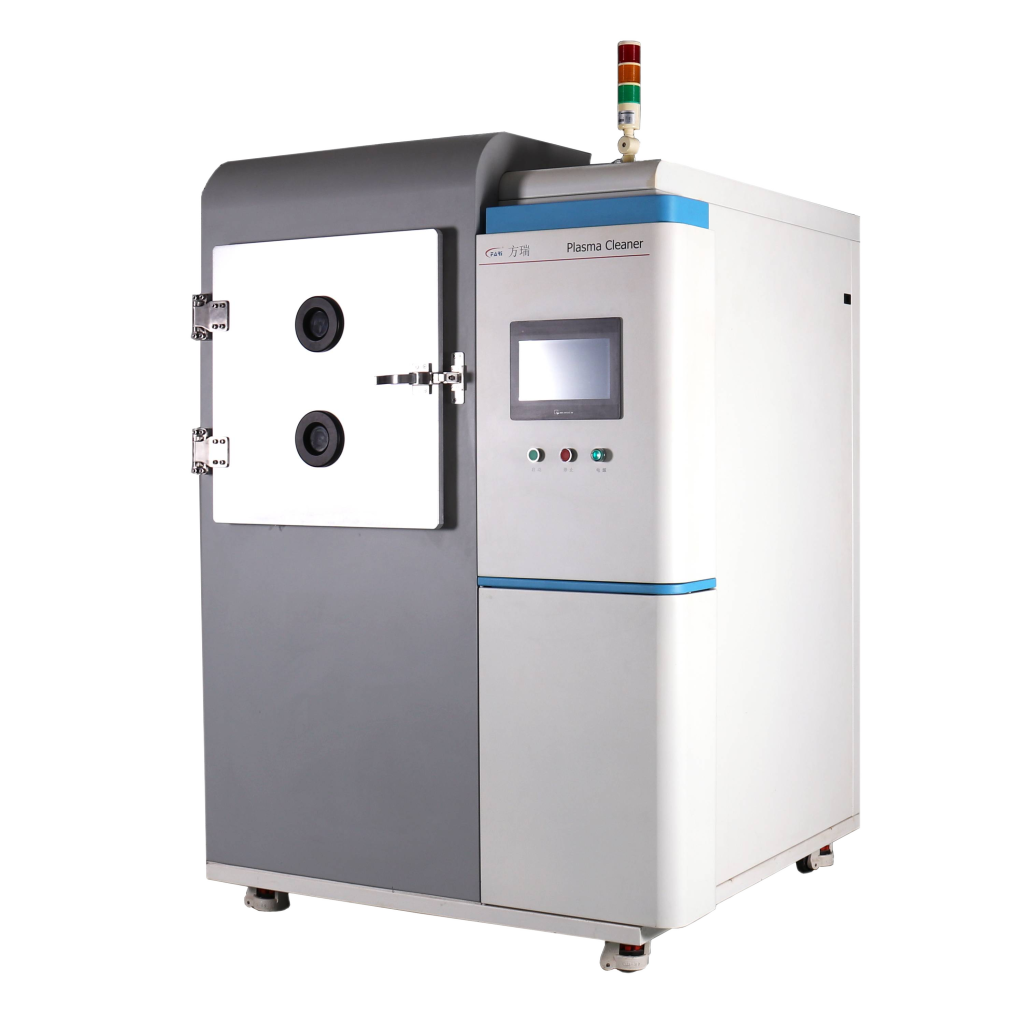
Vacuum plasma treatment generates plasma inside a sealed, low-pressure chamber to clean, activate, etch, or ash a surface without wet chemicals. Some spec sheets call this “vacuum gas plasma treatment” because a process gas is dosed into the chamber before ignition — the two terms describe the same equipment, not two different technologies. Parts are loaded into the chamber as a batch, exposed to plasma under controlled pressure, and unloaded once the cycle finishes.
The process happens inside a closed chamber: air is pumped out to a controlled low pressure, a process gas is metered in, and RF or AC energy ionizes that gas into plasma. The whole load sits inside the chamber for the cycle, so every part sees the same plasma environment at once — unlike a moving line where each part passes briefly under a single treatment head.
This differs from atmospheric plasma treatment, which generates plasma at ambient pressure through a nozzle directed at a part on a moving line. If your part is a continuous web, sheet, or film that needs treatment inline rather than in a batch, that’s usually the better fit.
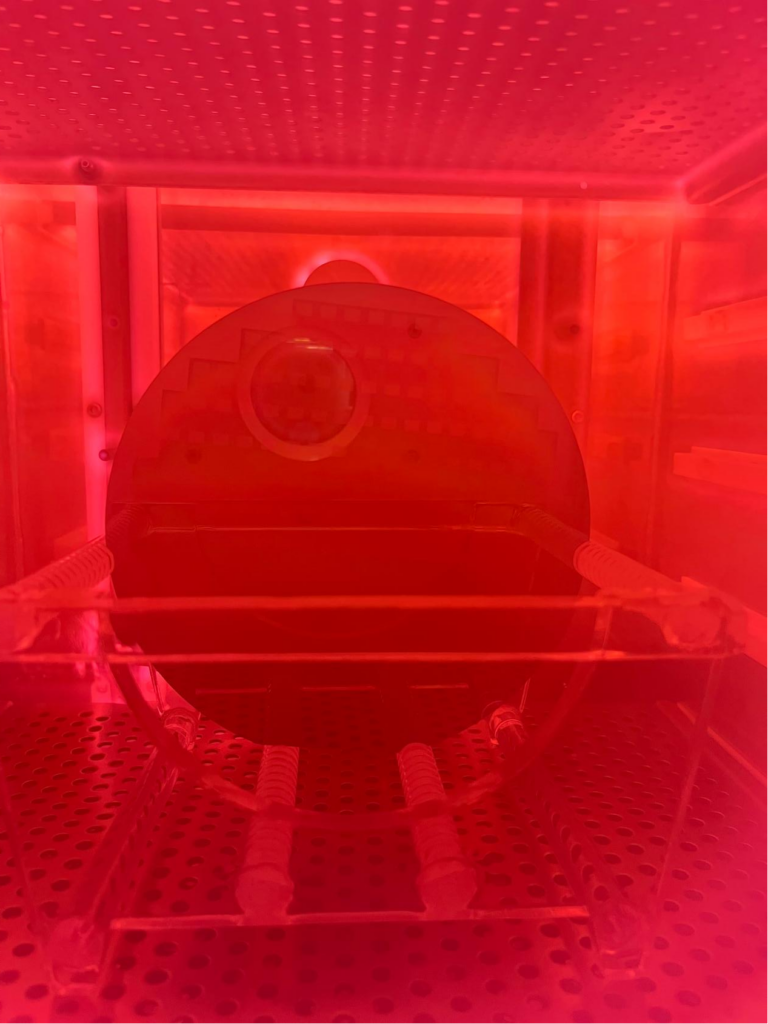
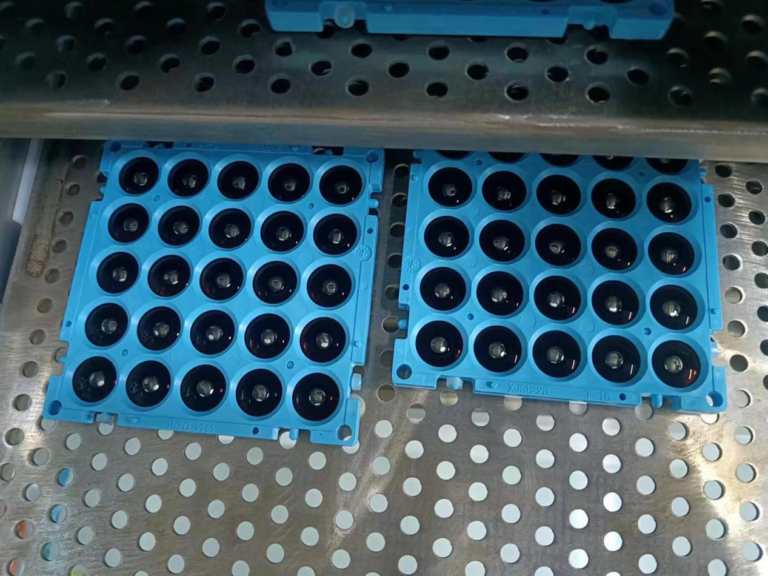
1. Load — parts go into the chamber, either on a fixed tray or a rotating drum.
2. Pump-down — a vacuum pump evacuates the chamber to a target low-pressure level.
3. Gas introduction — a process gas is metered in through a mass flow controller (MFC) for a stable, repeatable ratio.
4. Ignition — RF or AC energy excites the gas into plasma, producing ions, radicals, and UV photons.
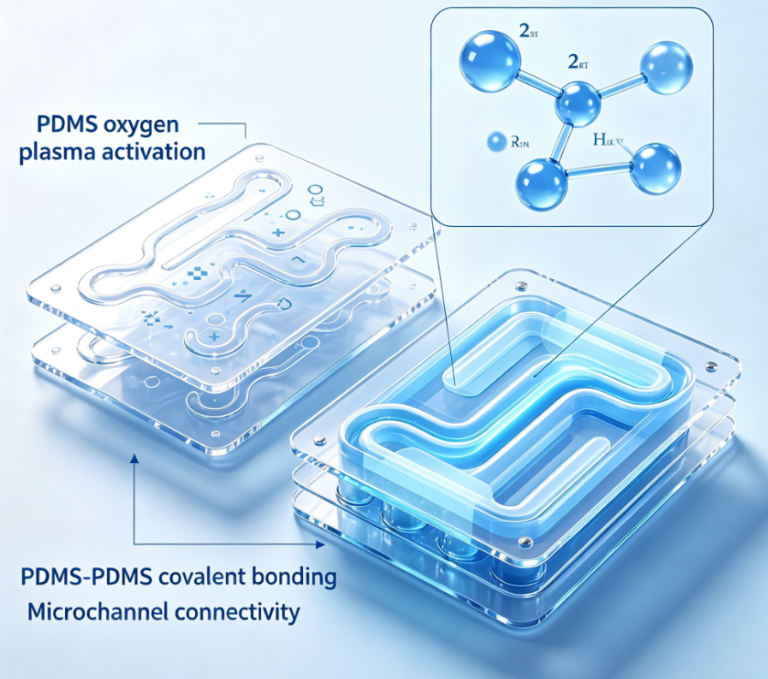
5. Surface interaction — those reactive species strike every exposed surface, breaking down contaminants, modifying surface chemistry, or etching material depending on gas and power settings.
6. Vent and unload — the chamber returns to atmospheric pressure and parts come out.
On the RD-200 rotary drum system, this cycle runs at a vacuum level of 10 Pa with plasma generated at 40 kHz — settings tied to that particular chamber design. Other chamber sizes and power levels run different pump-down targets and frequencies to match their load volume.
At low pressure, gas molecules travel farther between collisions, letting plasma fill the chamber evenly rather than concentrating near a single nozzle exit. That’s the mechanical reason a sealed chamber produces more consistent surface effects across a complex or multi-part load than a directed atmospheric jet, which only treats what passes directly beneath it.
Oxygen is the default for cleaning organic residues and activating polymer surfaces; argon gives a more purely physical bombardment effect; mixed gases combine both behaviors for specific materials. For a closer look at oxygen chemistry specifically, see oxygen plasma cleaning and activation.
If you’re weighing which process — cleaning, activation, or etching — fits your part regardless of chamber type, compare cleaning, activation, and etching in detail.
A sealed chamber earns its complexity when one or more of these apply:
Batch processing brings trade-offs of its own. Pump-down adds time to each cycle before plasma exposure even starts, so a chamber-based process moves at the pace of loading, evacuating, and venting a batch rather than a continuously moving line. Vacuum pumps are mechanical components that need periodic maintenance to hold their target pressure, and matching chamber size to load volume affects how much you can process per cycle. Weigh those against the uniformity gain before committing to a sealed-chamber process. If those trade-offs outweigh the benefit for your part, atmospheric options are worth reviewing first.
For validating a process before committing to a full production chamber, a lab-scale vacuum plasma system handles small batches without the footprint of a production unit. If you’re unsure which path fits your part, talk to our engineering team about your material and geometry before specifying anything.
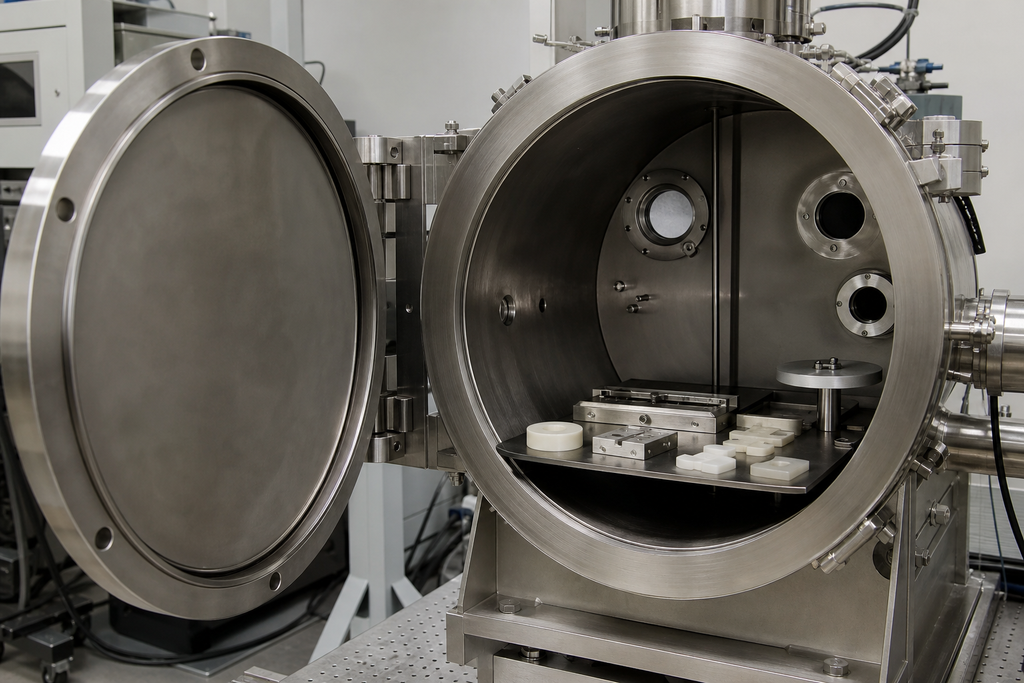
Vacuum plasma is used across plastics, metals, ceramics, and electronic substrates — material classes where either the geometry is complex or the surface effect needs to be uniform across every exposed face. Common users include semiconductor and electronics manufacturers and medical device producers, wherever parts are batch-loaded rather than run on a continuous line.
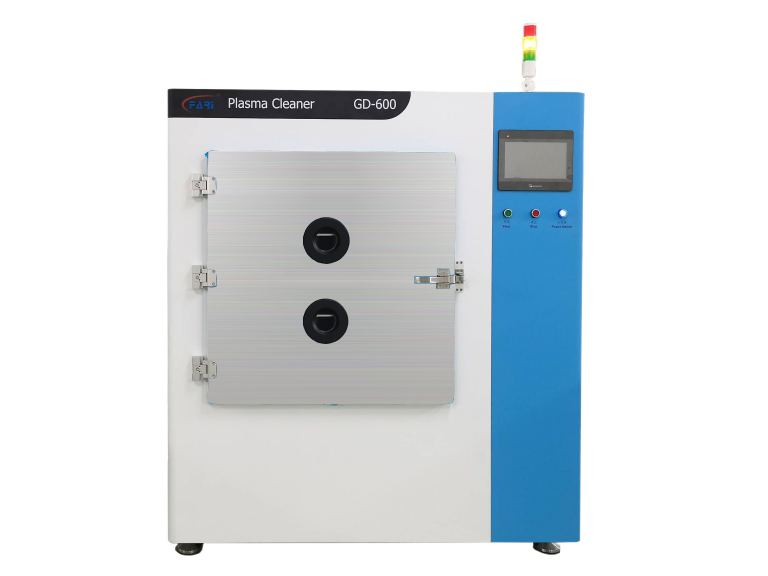
A vacuum plasma system is built around five core elements: the sealed chamber, a vacuum pump for evacuation, an RF or AC generator to ignite the plasma, gas delivery hardware with MFCs, and a PLC-based controller to manage the cycle. High-power vacuum plasma treatment systems use the same basic architecture with added power capacity for more demanding surface prep. If you’re evaluating chamber size or power requirements for your process, contact us to discuss configuration options.
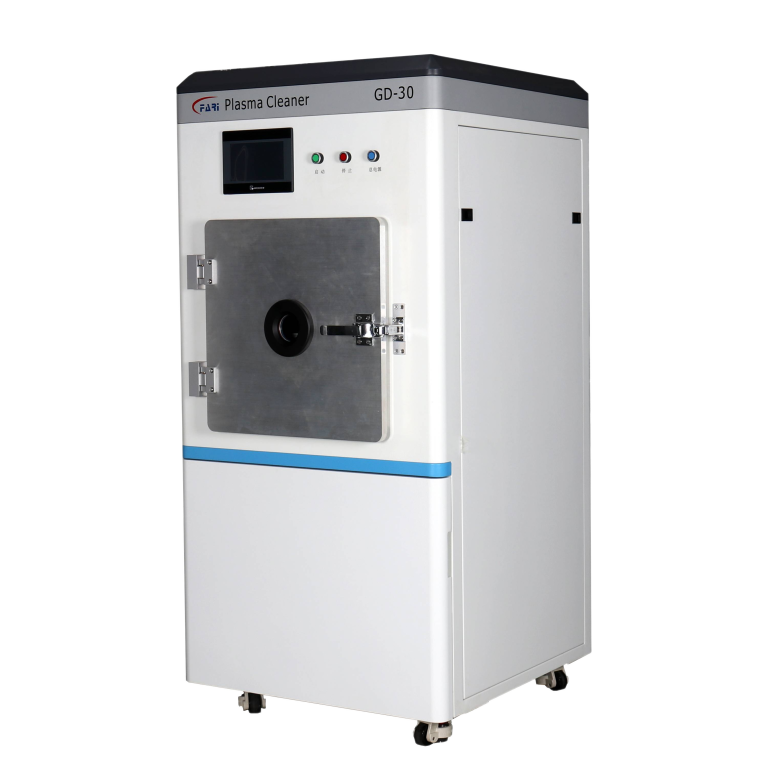
What is vacuum plasma treatment?
It’s a surface treatment process where parts are loaded into a sealed chamber, the air is pumped out, a process gas is introduced, and plasma is ignited to clean, activate, etch, or ash the surface. The chamber keeps every part in the load exposed to the same plasma environment during the cycle.
What is vacuum gas plasma treatment?
It’s the same process as vacuum plasma treatment. The “gas” simply refers to the specific process gas — oxygen, argon, or a mix — metered into the chamber before ignition, rather than treating with ambient room air. Equipment listings use both terms for the same chamber-based systems.
What is the difference between vacuum plasma and atmospheric plasma treatment?
Vacuum plasma happens in a sealed, low-pressure chamber and processes parts in batches, giving more uniform coverage on complex geometries. Atmospheric plasma runs at ambient pressure through a nozzle on a moving line, suited to continuous webs, sheets, or inline production without a pump-down step.
What gases are used in vacuum plasma treatment?
Oxygen is common for cleaning organic residues and activating polymer surfaces; argon provides a more purely physical bombardment effect; mixed gases combine both behaviors for specific materials. Gas choice depends on whether the goal is cleaning, activation, or etching.
Do I need a vacuum chamber, or will atmospheric plasma work for my part?
If your part has complex 3D geometry, cavities, or undercuts, or needs uniform treatment across a whole batch, a vacuum chamber is generally the better fit. If you’re running a flat sheet, film, or continuous strip on a production line, an atmospheric inline system is usually the simpler choice.
Is vacuum plasma treatment safe for plastics and sensitive substrates?
Yes — it’s a dry, low-temperature process that modifies only the outer surface layer without wet chemicals or solvents. Gas type and power settings are adjusted to the material to avoid excessive heating or unwanted surface damage during the cycle.



English

Spanish
Rogatus ad ultimum admissusque in consistorium ambage nulla praegressa inconsiderate