Plasma treatment for lithium battery manufacturing can provide controlled, dry cleaning and surface activation before selected coating, welding, sealing and bonding steps. Its value lies at the interface: current collectors, tabs, housings, pouch-film seal areas, busbars and pack components may look clean while still carrying oils, oxides or low-energy surface layers that reduce process consistency.
Plasma is not a cure for every battery defect. Cell gassing, lithium plating, capacity loss and safety failures have multiple electrochemical, material and process causes. Surface treatment should be used only where an interface mechanism is understood and the full battery process has been qualified.
Lithium battery manufacturing combines metals, polymers, coatings, adhesives and thermal-interface materials. Storage, stamping, slitting, handling and upstream cleaning can leave hydrocarbons, release agents, oxide layers or particles on critical areas. Low or variable surface energy can then affect coating wetting, weld stability, adhesive spreading or seal performance.
Common signals include:
Before adding plasma, use failure analysis to confirm that the interface is contributing to the defect. The same principles described in our guide to adhesive-bonding failure and plasma preparation also apply to many battery assembly joints.
Plasma contains energetic ions, electrons, radicals and excited species. When delivered at a validated dose, these species interact with only the outermost surface. Treatment may remove trace organic contamination, modify a thin oxide or add polar functional groups that improve wetting. See our introduction to plasma surface treatment for the underlying process.
Atmospheric systems treat defined tracks with a jet or rotary nozzle and are well suited to continuous automation. Low-pressure systems expose multiple parts in a chamber and can provide more uniform treatment around complex geometry. The right format depends on part shape, takt time, cleanliness requirements and the surface mechanism; this atmospheric-versus-low-pressure comparison explains the trade-offs.
Copper or aluminum foil may be treated before a compatible coating step to remove trace organic residues and improve liquid wetting. Because foil is thin and later electrochemical performance is sensitive to surface condition, treatment power, gas, web speed and thermal load require careful control. Qualification should include coating uniformity, adhesion, electrical properties and cell-level testing—not surface energy alone.
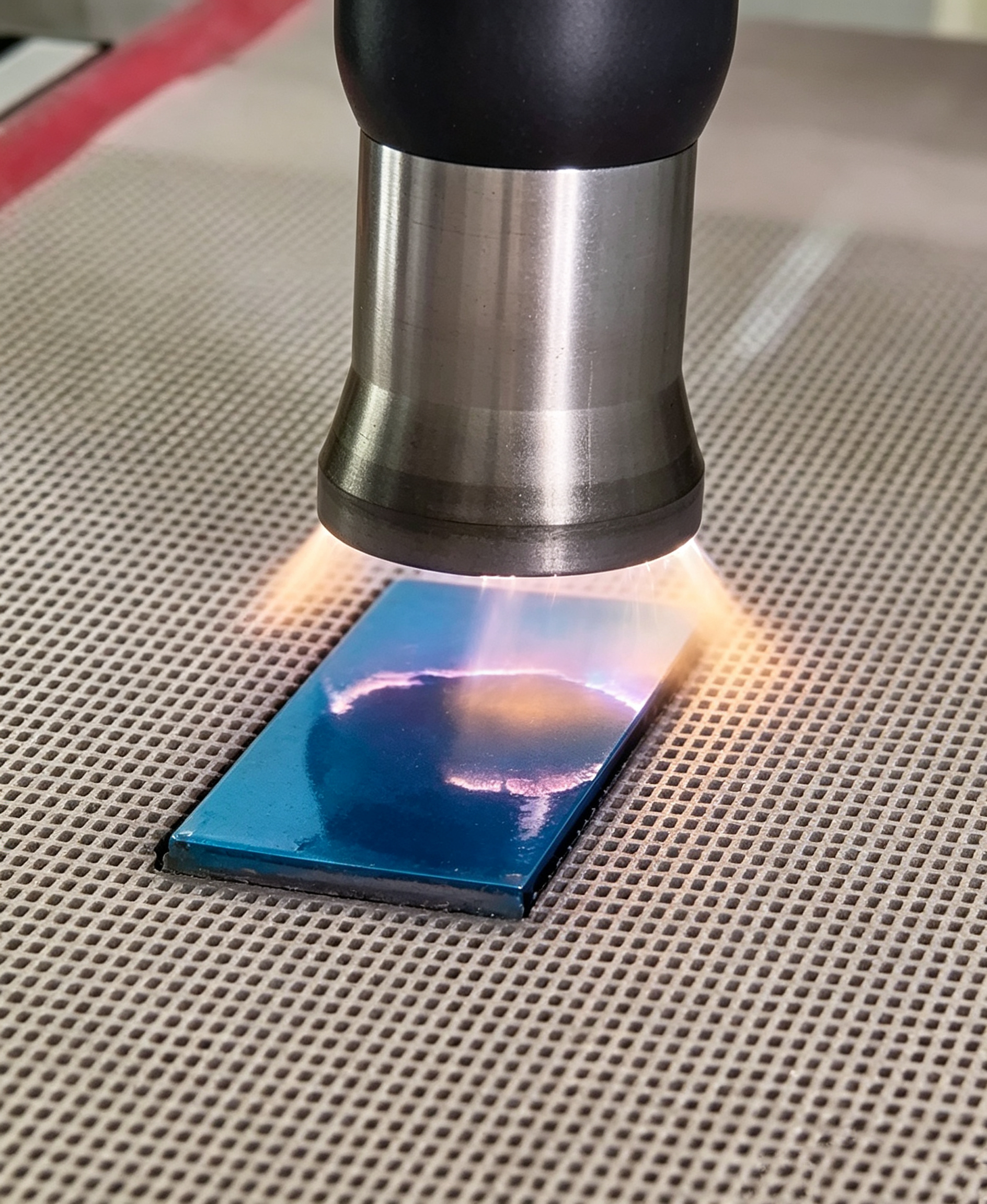
Localized plasma cleaning can reduce organic contamination before laser, ultrasonic or resistance welding. A cleaner contact area may improve process stability, but plasma cannot compensate for poor joint design, excessive oxide, incorrect clamping or an unsuitable weld recipe. Validation should compare contact resistance, weld appearance, pull or peel strength, spatter and long-term electrical performance.
Plasma may be useful on a controlled seal track when organic contamination or low wettability is a verified contributor to weak sealing. The laminate stack is heat sensitive, so the process must avoid shrinking, embrittlement or damage to barrier layers. Seal strength, leak rate, aging and electrolyte compatibility remain the decisive tests.
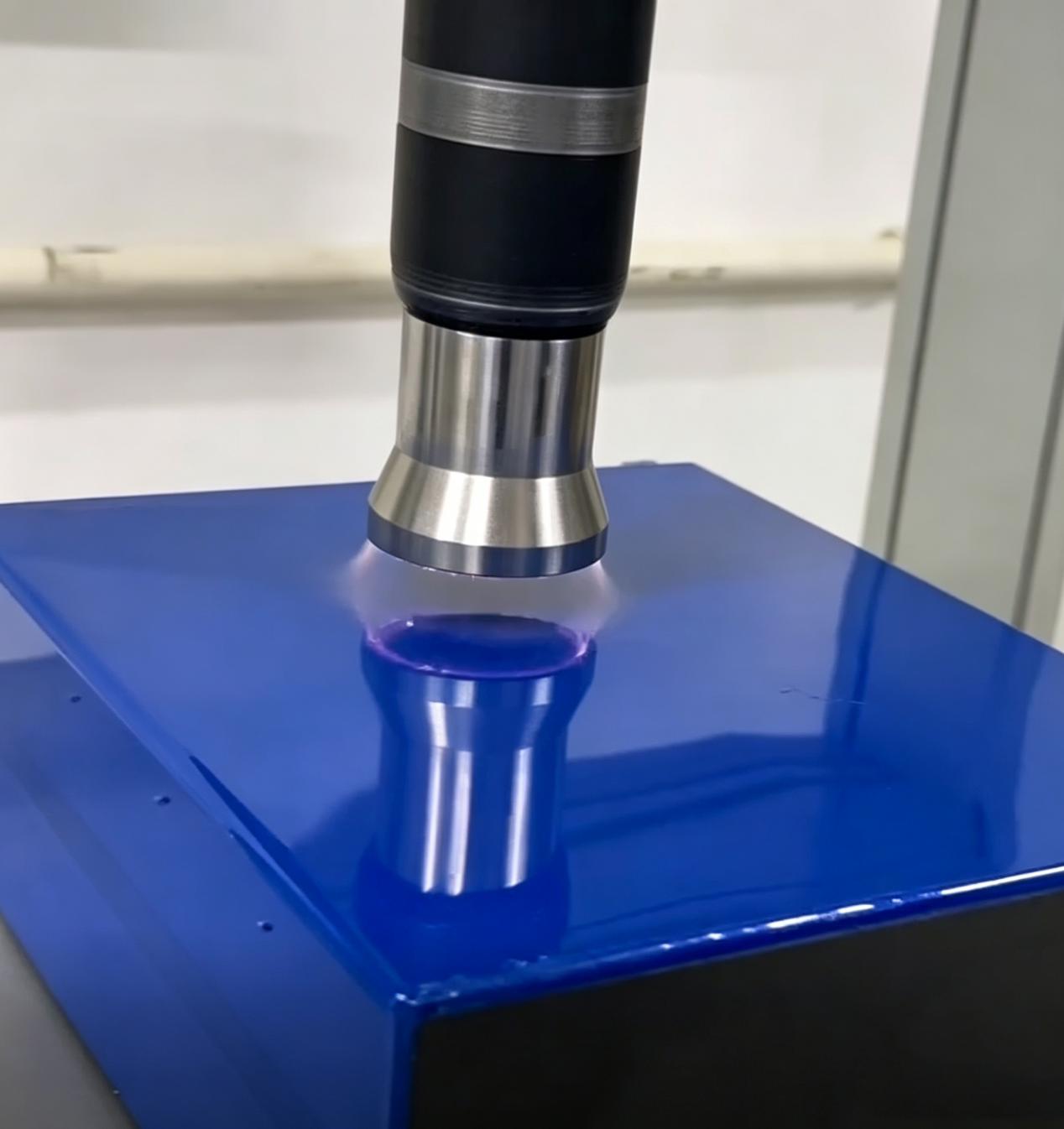
Aluminum, steel and polymer housings may need reliable adhesion for structural adhesives, protective coatings, gaskets or insulation films. Selective atmospheric plasma can follow the bond path immediately before dispensing. This reduces the opportunity for recontamination and supports automated process control.
At module and pack level, plasma can prepare busbars, cooling plates, structural frames and selected polymer surfaces before bonding, coating or application of thermal-interface materials. The goal is a repeatable interface, not simply a higher surface-energy reading. Mechanical strength, electrical isolation, thermal resistance, corrosion behavior and environmental aging must be verified for the completed assembly.
For production planning, review the requirements for inline plasma integration and our available plasma treatment systems.
Direct treatment of active-material-coated electrodes and battery separators should not be generalized from results on bare metal or housing parts. Plasma can change binder chemistry, pore structure, shutdown behavior, wettability or surface residues. Use on these components only after a material-specific program that includes electrochemical performance, safety and aging tests.
Likewise, “low temperature” does not mean zero thermal or chemical effect. Sensitive substrates can be affected by peak dose, repeated passes, reactive gases or poor nozzle control. The difference among cleaning, activation and etching should be considered when defining the intended mechanism.
Air, oxygen, nitrogen and argon can produce different surface reactions. Oxygen-containing plasmas are often effective for organic removal and oxidation, while argon can provide physical activation with different chemical effects. Nitrogen-containing processes may be selected for specific surface functionality. Gas choice must be based on the substrate and downstream requirement, not on a universal ranking. Our plasma gas selection guide outlines these differences.
A controlled recipe typically records power, duty cycle, gas type and flow, nozzle design, treatment width, standoff distance, scan or conveyor speed, number of passes and maximum time before the next operation. Equipment should also monitor critical alarms and prevent treatment when part position or line motion is outside the qualified range.
Begin with untreated controls and a designed parameter window. Screening can include contact angle, dyne level or XPS surface chemistry, but the final acceptance test must match the intended function. The strengths and limitations of these tools are compared in our article on surface-energy testing methods.
Depending on the application, functional validation may include:
The treatment-to-process delay must also be controlled because activated surfaces can age or collect new contamination. Production trials should cover material lots, shifts, tool wear and the full operating-speed range.
Yes, an excessive or incompatible process can alter sensitive metals, polymers, coatings or separators. A safe operating window must be established for the exact material and verified with functional testing.
There is no universal 24- or 48-hour rule. Surface aging depends on material, treatment chemistry, storage and contamination exposure. Bonding, coating or welding soon after treatment is generally easier to control; the maximum delay should be measured for each process.
Plasma may address a verified surface-contamination or wetting contribution, but it cannot by itself solve electrochemical design problems, moisture, particle contamination, incorrect weld settings or poor thermal management. Root-cause analysis remains essential.
Systems can be engineered for clean manufacturing, but compatibility depends on equipment materials, exhaust, particle generation, gas handling, maintenance and the facility standard. The installed process must be audited and qualified in its intended environment.
Compare the qualified baseline with the plasma-assisted process using scrap, rework, consumables, labor, throughput, maintenance and uptime. Do not assume a fixed improvement percentage before production data are available.
FARI Plasma can help identify candidate interfaces, run sample trials and develop an integration concept around the actual material and takt time. Browse our broader plasma treatment applications or contact us with the substrate, downstream operation, cleanliness target and acceptance test for a focused evaluation.




English

Spanish
Rogatus ad ultimum admissusque in consistorium ambage nulla praegressa inconsiderate