Atmospheric plasma treatment for wire and cable improves surface wettability before printing, marking, adhesive bonding, sealing and overmolding. Cable jackets are commonly made from PE, PVC, XLPE, TPE, TPU, silicone, rubber, nylon or fluoropolymers. Many of these materials have low surface energy or contain additives that migrate to the surface, making reliable adhesion difficult without pretreatment.
An inline plasma system provides a dry, controllable way to clean and activate the moving cable surface immediately before the next manufacturing step. This article explains the treatment mechanism, typical applications, integration options and the process controls needed for stable production.
A cable may look clean while still carrying a weak boundary layer of processing oil, release agent, plasticizer or migrated additive. At the same time, the jacket polymer may be too non-polar for an ink or adhesive to wet. These conditions can cause:
Changing ink or adhesive may improve the symptom without removing the underlying surface variation. Plasma treatment prepares the actual cable jacket so the downstream material can form a more consistent interface.
An atmospheric plasma generator ionizes compressed air or another process gas and directs the reactive flow through a treatment nozzle. The plasma interacts with the cable surface in three complementary ways:
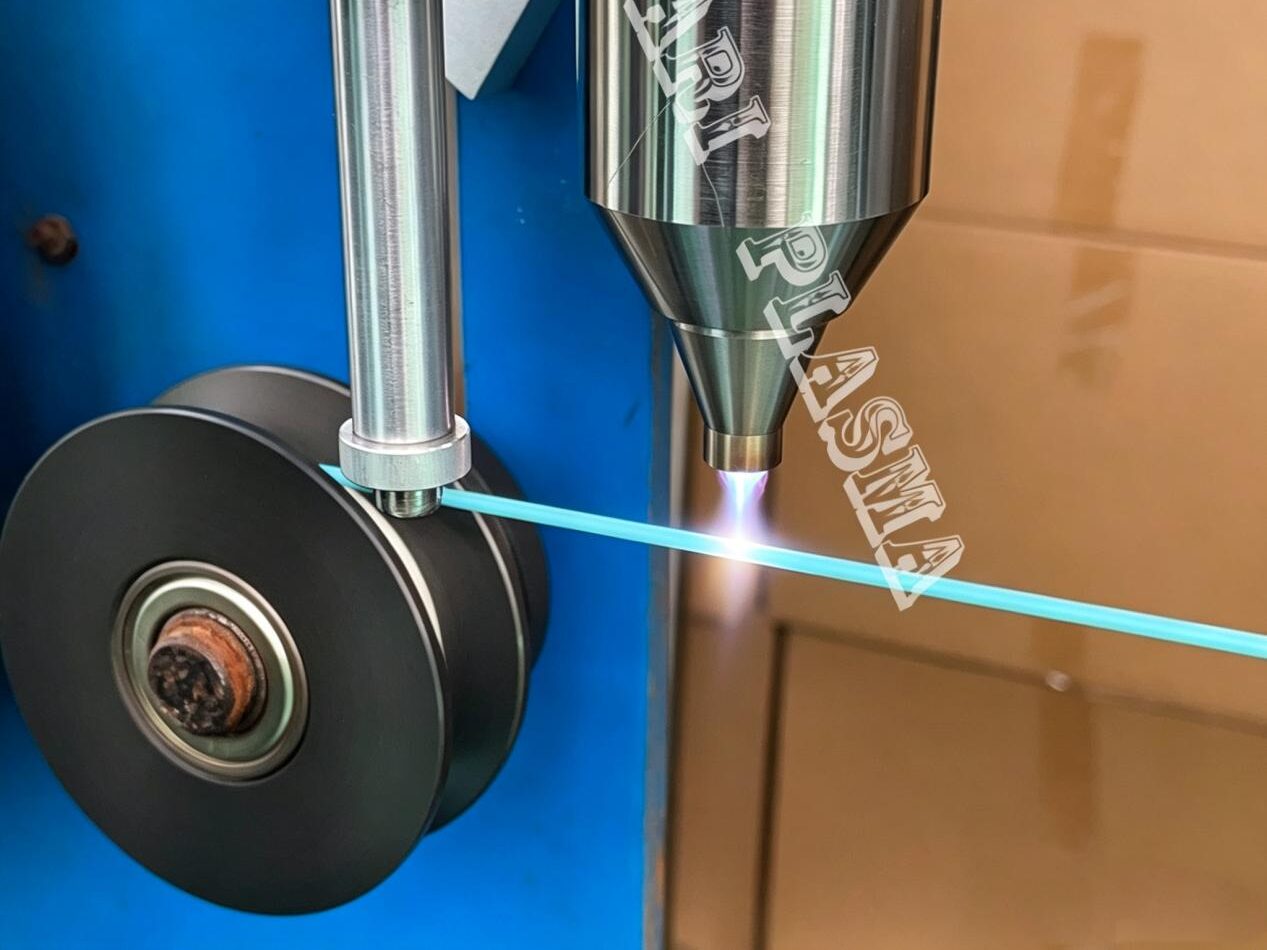
The process is dry and operates at atmospheric pressure, so it can be installed directly on a continuous line. Treatment energy is concentrated at the surface; correct distance, speed and power are still essential to protect the jacket and maintain electrical and mechanical performance. For a general overview, read Plasma Surface Treatment Explained.
Cables need durable legends for product identification, specifications, traceability and installation. Plasma activation before inkjet, pad printing or other ink-based marking improves wetting and can help the printed layer resist rubbing and handling. The same surface principles also apply to polymer films, as described in our guide to plasma treatment for ink and coating adhesion.
Plasma can prepare cable jackets before bonding labels, tapes, protective sleeves, sensor components or assembly features. Treating close to the adhesive application point minimizes variation caused by surface aging or recontamination.
At an overmolded connector, the cable jacket must bond to the molding compound strongly enough to resist flexing, pull forces and environmental exposure. Plasma treatment can improve the interface before injection molding, potting or sealing. The final result also depends on material compatibility, mold conditions and joint geometry.
Specialty cables may receive protective coatings, primers or encapsulants. Raising surface energy helps these materials form a uniform film and reduces dewetting, pinholes and edge pullback.
The treatment station can be installed after extrusion and cooling, or immediately before printing, bonding or overmolding. A typical inline setup includes cable guides, a plasma nozzle, height adjustment, guarding and line-speed synchronization.
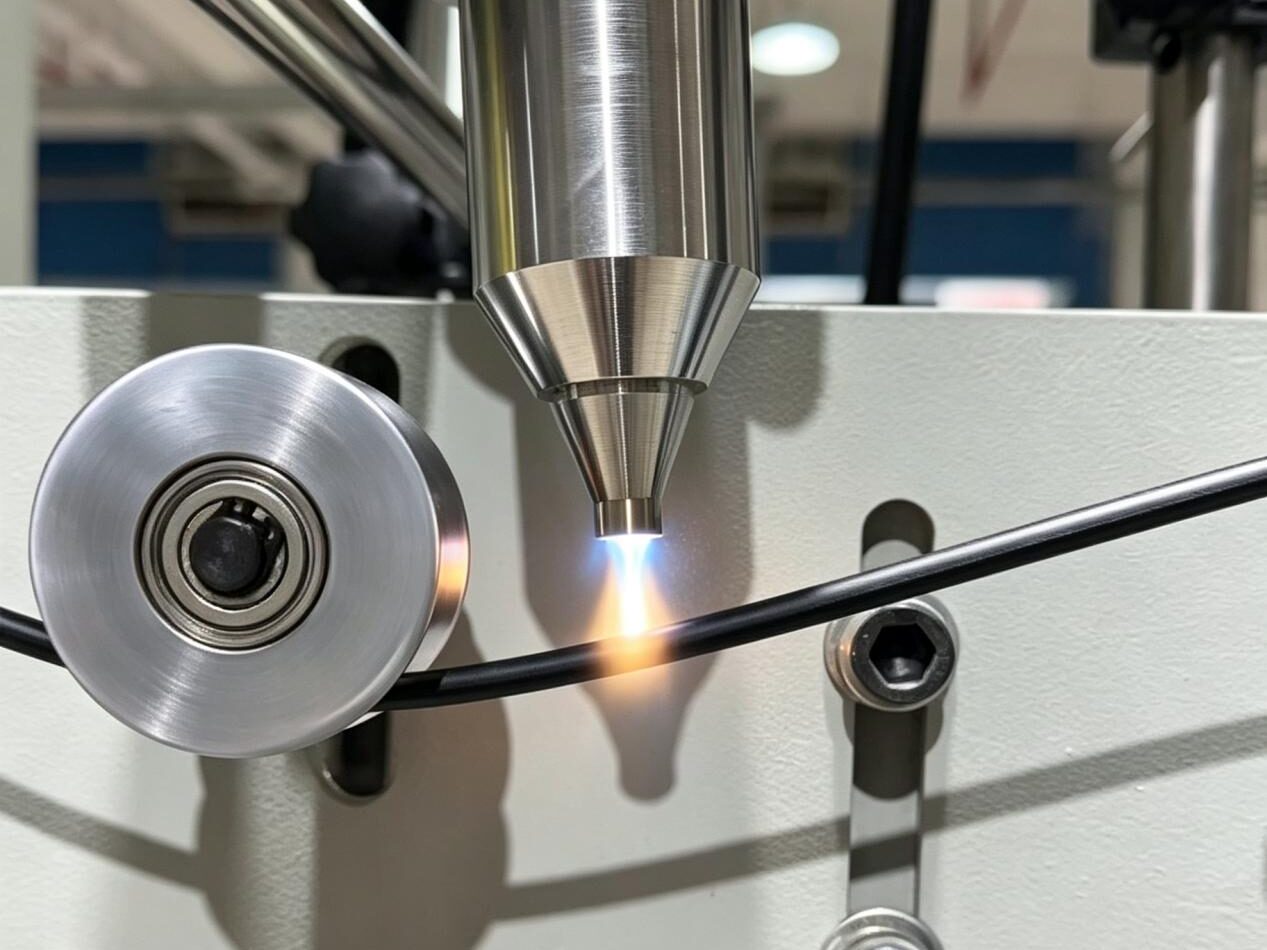
Important integration decisions include:
For higher-volume planning, see 5 Signs Your Production Line Is Ready for Inline Plasma Integration.
A single fixed jet activates only the area it reaches. When an application requires full 360-degree bonding or overmolding, the system can use angled nozzles, a multi-head arrangement, cable rotation or a purpose-built ring treatment configuration. The nozzle geometry should be selected around cable diameter, line speed and the required treatment width rather than copied from a flat-part process.
Atmospheric treatment is usually the practical choice for continuous cable because the product passes through the station without a vacuum cycle. The differences between delivery formats are explained in Atmospheric vs. Low-Pressure Plasma.
Atmospheric plasma can be evaluated for PE, PVC, XLPE, TPE, TPU, silicone, rubber, nylon and selected fluoropolymer jackets. There is no universal recipe: fillers, flame retardants, plasticizers, colorants and surface additives can change the response even within the same polymer family.
Before releasing production, manufacturers should test representative cable lots and confirm:
Surface activation is not reliably judged by appearance alone. A fast line-side check can use dyne solution or a dyne pen on a suitable test area. Contact-angle testing on flat reference coupons is useful when direct measurement on a curved cable is difficult.
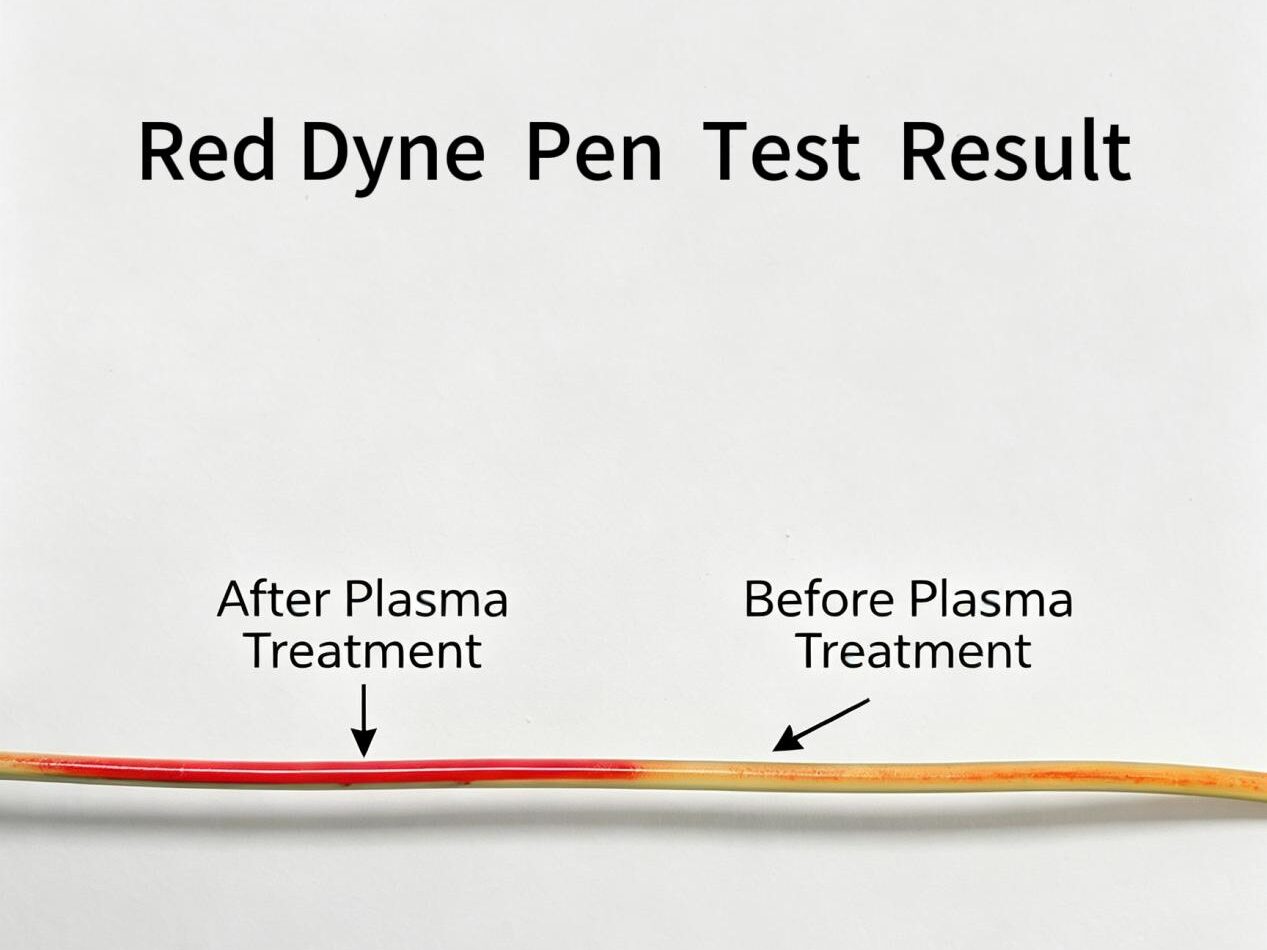
Surface-energy data should be paired with a functional test such as print rub resistance, tape adhesion, peel strength, overmold pull-off or leak testing. For help choosing a method, review Dyne Ink Testing vs. Contact Angle vs. XPS.
Process gas also affects surface chemistry. The plasma treatment gas selection guide provides additional context for air, oxygen, nitrogen and argon processes.
A correctly designed process can activate the surface without damaging the bulk insulation. The safe operating window depends on jacket material, wall thickness, cable speed, nozzle distance and power. Visual, electrical and mechanical tests should be included in qualification.
Yes. Atmospheric plasma stations are commonly configured as inline modules. The integration should include mechanical guides, guarding, line-speed synchronization and a stop interlock so a stationary cable is not overexposed.
No. PE, PVC, XLPE, TPE, TPU, silicone and fluoropolymer formulations respond differently. Additives and colorants can also change the process window, so recipes should be validated and stored by cable family.
In some applications plasma can reduce or eliminate a primer step, but this depends on the ink, adhesive, overmold compound and performance requirement. The decision should be based on comparative adhesion and aging tests.
Monitor equipment parameters such as power, gas flow, distance and line speed, then confirm output with a surface-energy check and a functional adhesion test. Trending both process and quality data makes nozzle wear, contamination and setup drift easier to detect.
The right system depends on cable material, diameter, line speed, required coverage and the downstream print or bonding process. Explore our plasma treatment products or contact FARI Plasma to arrange sample testing and discuss an inline or customized cable-treatment station.




English

Spanish
Rogatus ad ultimum admissusque in consistorium ambage nulla praegressa inconsiderate