If your production line is experiencing persistent adhesion failures, inconsistent surface quality, or you’re spending more time on offline pre-treatment than on actual manufacturing, your process is probably screaming for inline plasma integration. The five signs below aren’t subtle — they’re the same patterns we see repeatedly in facilities that are about to make the leap from batch-style plasma treatment (or no plasma at all) to a fully integrated, automated inline system. Recognizing them early saves you months of troubleshooting and potentially hundreds of thousands in scrap costs.
This is the most common trigger. You’re running a bonding, printing, coating, or lamination step — and the reject rate keeps creeping up. Maybe it’s 3%. Maybe it’s 8%. Either way, it’s costing real money, and the root cause almost always traces back to inconsistent surface energy on the parts entering that step.
Here’s the thing most engineers overlook: surface activation has a shelf life. Plasma-treat a polymer part, then let it sit in a bin for 30 minutes, and the contact angle can drift significantly — sometimes back to near-untreated levels depending on the material. If your current workflow involves treating parts in a separate station and then queuing them for the next process, recontamination and hydrophobic recovery are quietly sabotaging your yields.
For instance, an automotive tier-1 supplier we worked with was plasma-treating polypropylene bumper fascia components in a batch chamber, then transferring them to a painting line two floors away. By the time parts reached the primer station, surface energy had dropped from 56 mN/m back below 40 mN/m. Inline integration — placing an atmospheric plasma system directly before the primer applicator — eliminated that decay window entirely and cut paint adhesion rejects from 6.2% to under 0.4%.
If you’re seeing adhesion-related scrap and you’re already doing some form of surface treatment, the problem likely isn’t the plasma itself — it’s the gap between treatment and application. That gap is exactly what inline integration closes.
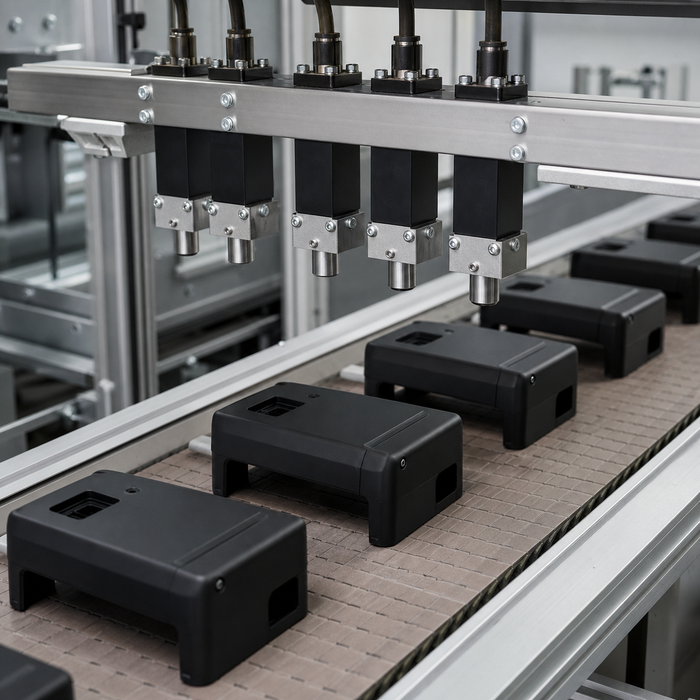
Batch plasma chambers are excellent for R&D, prototyping, and low-to-medium volume production. But they hit a wall. If your line is running 500+ parts per hour — or you’re scaling toward that — the math on batch treatment stops working.
A typical low-pressure batch plasma cycle takes 2 to 10 minutes depending on the process gas, power, and part geometry. Load time, pump-down, treatment, vent, and unload — that’s a lot of non-value-added time when your downstream line is hungry for parts. You end up either buying multiple chambers (expensive, space-consuming) or throttling your entire line to match the slowest step.
Inline atmospheric plasma systems, by contrast, treat parts at line speed. A rotary jet or array of nozzles can process continuously at conveyor speeds of 5 to 50+ meters per minute, depending on the required activation level and substrate. There’s no pump-down, no batch loading, no waiting. The plasma unit becomes just another station on the line — invisible to your cycle time.
If you’re already running at capacity and your pre-treatment step is the constraint, that’s a textbook sign. Explore our plasma treatment capabilities to see how inline systems scale with your throughput demands.
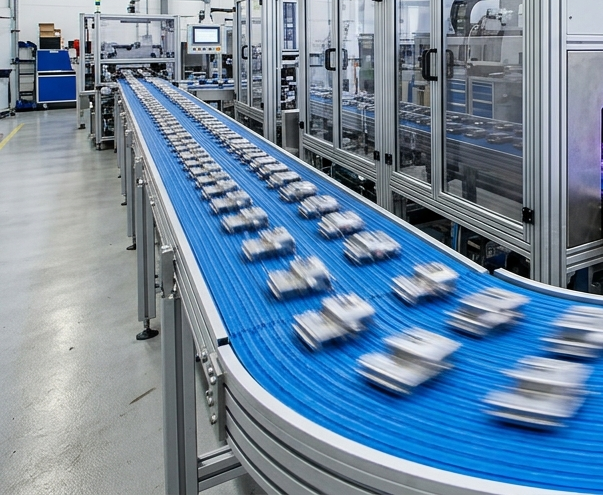
This one surprises people. Many manufacturers don’t realize they’re compensating for poor surface preparation with expensive (and often hazardous) chemical primers, adhesion promoters, or solvent wipes. If your process requires a chemical pre-treatment step before bonding or coating, inline plasma can likely replace it — or at minimum reduce the concentration and cost of the chemistry involved.
Chemical primers add direct material cost, but the indirect costs are worse: VOC compliance, hazardous waste disposal, worker safety protocols, drying/flash-off time, and the quality variability that comes with manual application. A solvent wipe station might seem cheap, but factor in the IPA or acetone consumption, the ventilation requirements, and the inconsistency of a human operator wiping 800 parts a shift, and the true cost per part is surprisingly high.
Atmospheric plasma treatment achieves surface activation through ionized gas — no chemicals, no residue, no drying time. For many polymer, composite, and even metal substrates, a properly configured inline plasma system delivers equal or better adhesion promotion than wet chemical primers. The process is dry, clean, and adds zero VOCs to your facility.
A medical device manufacturer we supported was using a three-step solvent wipe, primer application, and UV cure process before bonding PEEK housings. Replacing all three steps with a single inline plasma treatment station reduced their pre-treatment time from 45 seconds per part to under 3 seconds, eliminated two chemical consumables, and actually improved bond strength by 18% in peel testing.
If your BOM includes adhesion promoters or your EHS team is managing solvent inventories for surface prep, it’s worth evaluating whether plasma can simplify the whole chain.
Automotive. Medical devices. Electronics. Aerospace. If your customers or regulatory environment have recently raised the bar on surface quality, bond reliability, or process traceability, manual or semi-automated pre-treatment methods become a liability fast.
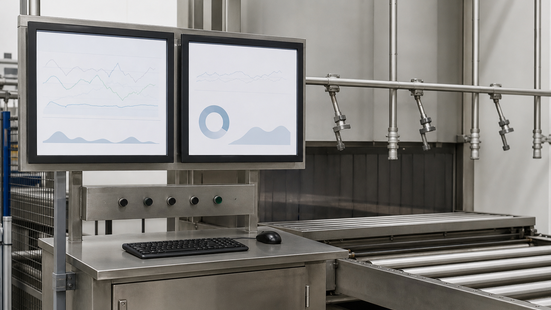
Inline plasma systems don’t just treat surfaces — they generate data. Modern units log power, gas flow, treatment speed, and duration for every part or every meter of substrate. That data feeds directly into your MES or quality management system, giving you the traceability that auditors and OEM customers increasingly demand. Try getting that from a manual corona wand or a solvent wipe station.
Here’s a nuance that experienced quality engineers understand: it’s not about achieving the highest possible surface energy on one part. It’s about achieving a consistent, controlled surface energy on every part, shift after shift. Inline plasma systems excel here because the treatment parameters are fixed by the machine — not by operator technique, fatigue, or shift changes.
If your quality team is spending significant effort on incoming inspection, surface energy spot-checks, or adhesion pull-test sampling because they don’t trust the pre-treatment consistency, that’s a clear signal. Inline integration turns surface treatment from a variable into a controlled process parameter. Visit our technology and knowledge hub for deeper dives into how plasma treatment parameters affect surface quality outcomes.
Product design is moving relentlessly toward lighter, cheaper, and more sustainable materials — and many of those materials are notoriously hard to bond, coat, or print on without surface modification. If your engineering team is specifying PTFE, polyolefins (PP, PE), silicone, PEEK, or certain composites, you’re going to need plasma treatment. The question is whether to bolt it on as an afterthought or design it into the line from day one.
There’s a meaningful cost and complexity difference between integrating a plasma station during line design versus retrofitting one later. When you plan for inline plasma early, you can optimize conveyor layout, part orientation, nozzle positioning, and extraction — all of which affect treatment uniformity and system longevity. Retrofits work, but they often involve compromises: awkward nozzle angles, suboptimal treatment distances, or additional conveyors to route parts past the plasma station.
If you’re in the line-design or new-product-introduction phase and your material choices include low-surface-energy substrates, now is the time to spec inline plasma. Not after the first adhesion failure in validation testing.
Our applications overview covers the specific materials and industries where inline plasma integration delivers the highest impact.
Not every situation calls for inline integration. Batch (low-pressure) plasma treatment still has a strong role — particularly for 3D parts with complex geometries, very low volumes, or processes where you need specific gas chemistries (like fluorination or deposition) that atmospheric inline systems can’t replicate.
The comparison table above summarizes the key differences. The decision usually comes down to three factors: volume, time-to-next-process, and part geometry. High volume, short time windows, and relatively flat or uniform parts strongly favor inline atmospheric plasma. Lower volume, complex 3D surfaces, and specialized gas chemistries favor batch low-pressure systems.
Many facilities actually run both — a batch chamber for R&D and specialty work, and inline units on the production floor. That’s not redundancy; it’s smart process architecture.
Recognizing the signs is step one. Before you purchase and integrate an inline plasma system, there are a few critical evaluation steps that separate smooth implementations from expensive headaches.
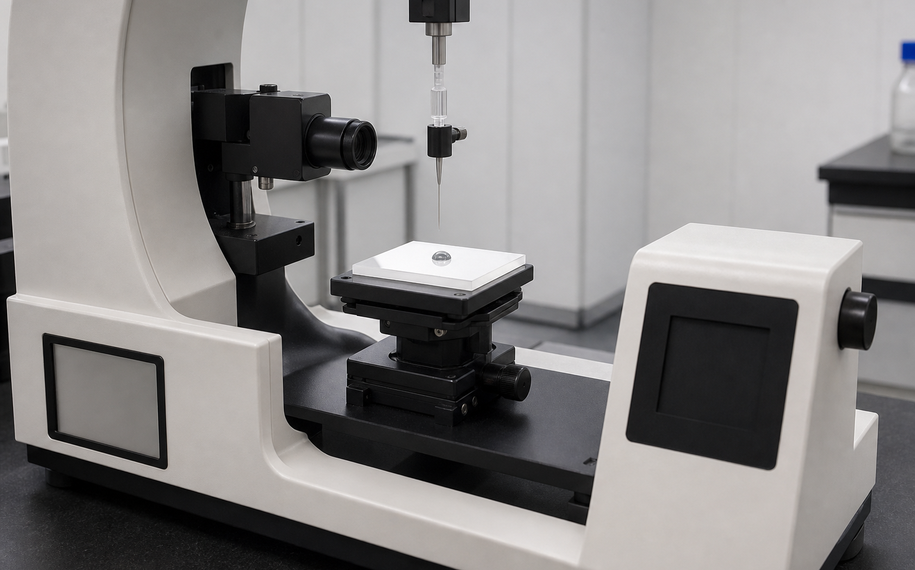
Not all polymers respond the same way to plasma. Contact angle measurements before and after treatment — at various power levels and exposure times — give you the data to specify the right system. If you haven’t done this testing yet, it should be your first move.
How much time elapses between plasma treatment and the next process step? Seconds? Minutes? This determines whether atmospheric inline plasma is sufficient or whether you need the deeper, longer-lasting activation that low-pressure systems provide.
Where physically can a plasma station fit? What’s the available footprint? Is there adequate extraction for ozone (a byproduct of atmospheric plasma in air)? These are mechanical integration questions that affect system selection.
Calculate your current cost of adhesion failures, chemical consumables, manual labor for surface prep, and quality inspection overhead. Compare that to the capital and operating cost of an inline plasma system. In high-volume production, payback periods under 12 months are common.
For detailed technical specifications and system options, check our plasma treatment products page, or reach out to our engineering team for a consultation tailored to your specific line.
If two or more of these signs resonate with your current production reality, you’re not just “ready” for inline plasma — you’re likely leaving performance and money on the table by waiting. The manufacturers who get the most value from inline plasma integration are the ones who treat it as a process engineering decision, not a purchasing decision. That means involving your quality, production, and design teams early.
At fariplasmatech, we don’t just sell plasma systems — we help you determine the right configuration, validate treatment results on your actual substrates, and support integration into your specific line architecture. Whether you’re scaling an existing process or designing a new production line from scratch, we’ll help you get it right the first time.
Start by exploring our services or requesting a process evaluation. The sooner you close the gap between surface treatment and your critical bonding or coating step, the sooner your reject rates — and your chemical consumable costs — start dropping.




English

Spanish
Rogatus ad ultimum admissusque in consistorium ambage nulla praegressa inconsiderate