Plasma treatment for carton gluing is a dry, inline surface-preparation method that can improve adhesive wetting on coated, laminated and metallized paperboard. It is especially useful when an otherwise stable folder-gluer process begins producing open seams, weak side joints or inconsistent bonds because the adhesive is meeting a low-energy finish rather than absorbent paper fibers.
The important point is that plasma is not a universal glue substitute. It prepares the bonding track so the selected adhesive can make more reliable contact. A successful process still depends on the board finish, adhesive chemistry, treatment dose, glue application and compression time.
Uncoated kraft and paperboard usually offer a porous, comparatively easy-to-wet surface. Premium packaging is different. A folding carton may include lamination film, UV varnish, barrier coating, metallic decoration or an impregnated surface. These finishes provide appearance and protection, but they can lower surface energy or leave process residues in the glue flap.
Typical symptoms include:
These are interface problems. The adhesive may be suitable, but the topmost molecular layer of the carton is not receptive enough. Our overview of common adhesive-bonding failure mechanisms explains why contamination and insufficient surface energy often matter more than the bulk material.
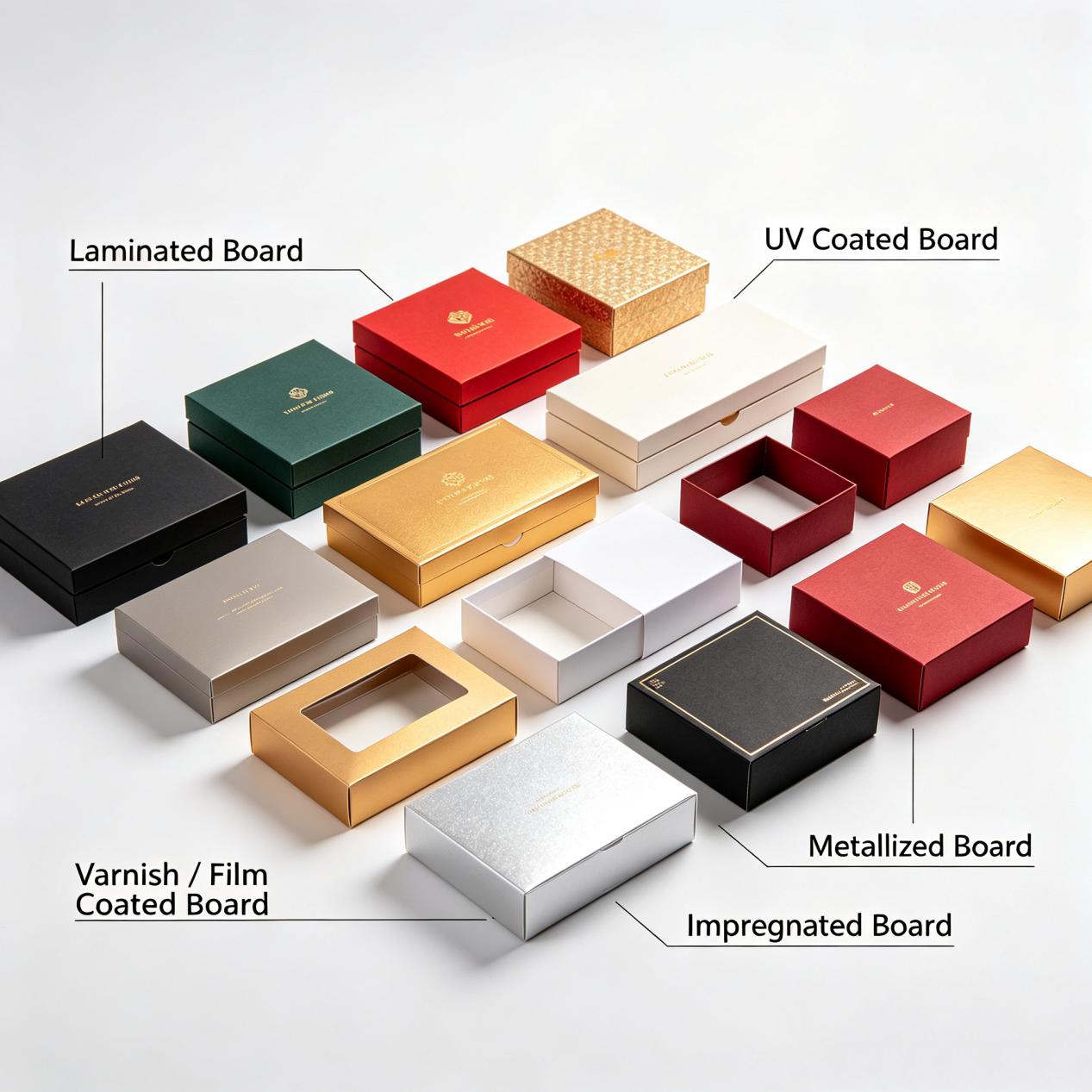
Potential candidates include white card, gray board and kraft board with laminated films, UV coatings, varnish or film coatings, metallized layers and some impregnated finishes. Printed or decorated folding cartons can also be treated along a narrow, controlled glue track.
Material names alone are not enough to define a recipe. Two boards described as “laminated” can use different polymers, slip additives and surface treatments. Ink and varnish coverage can also change along the flap. Incoming materials should therefore be tested by supplier, finish and production lot when variation is suspected. For related packaging interfaces, see our guide to plasma treatment for flexible-packaging adhesion.
An atmospheric plasma jet generates reactive species in a controlled gas flow and directs them onto the surface. Depending on the material and process settings, treatment can combine three effects:
For a deeper explanation, read what plasma surface treatment actually does and the practical differences among plasma activation, cleaning and etching.
The goal is better wetting, not maximum treatment intensity. Excessive energy or dwell can affect sensitive coatings, print appearance or thin films. Nozzle distance, power, gas flow, line speed and treatment width must be qualified on the actual carton construction.
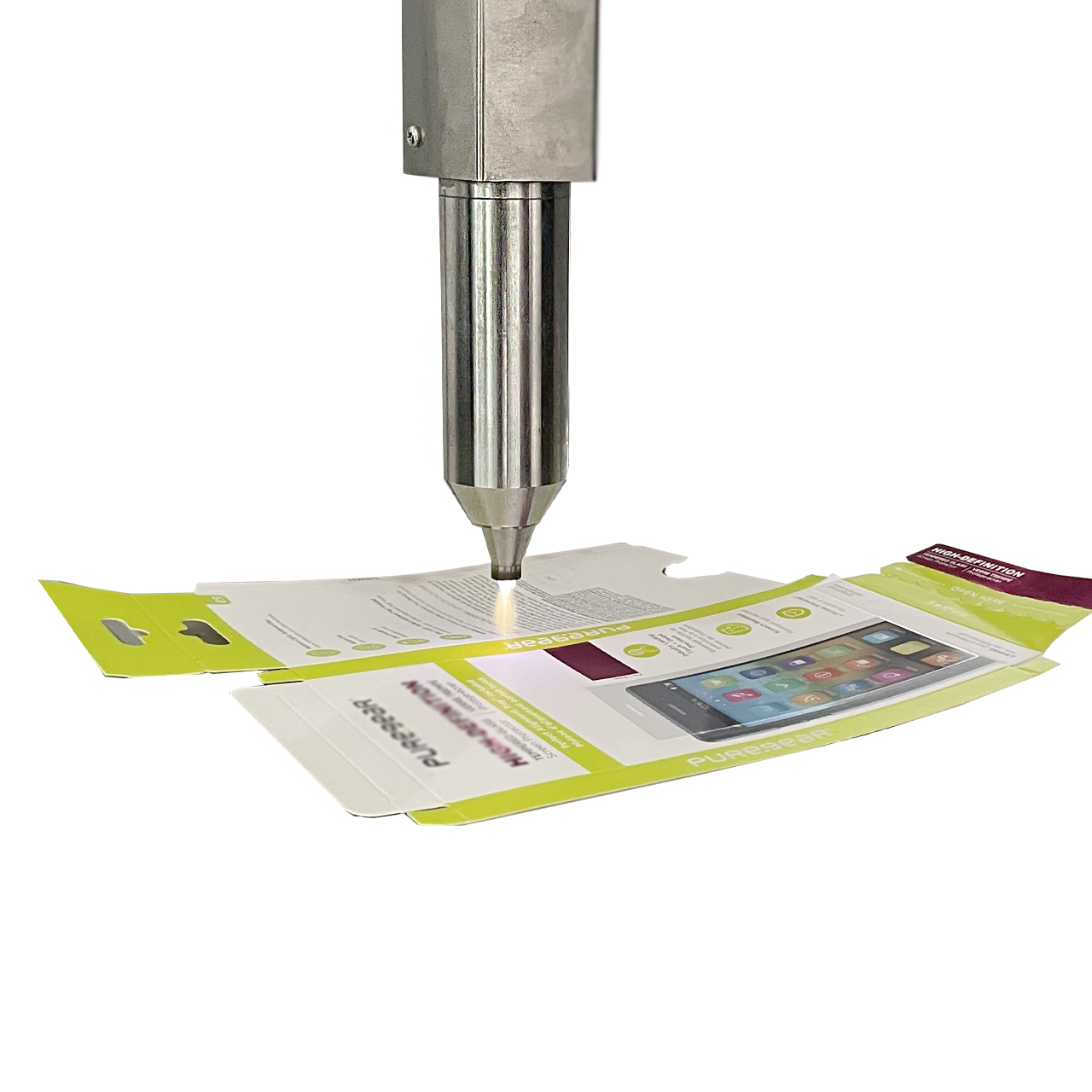
In a typical inline layout, one or more plasma nozzles are installed upstream of the glue station. The treatment path follows the flap, after which adhesive is applied and the carton enters compression. Treating close to bonding helps limit the effect of surface-energy decay and prevents the activated area from collecting new contamination.
Integration design should account for:
If your line already needs more repeatable surface preparation, review the signs that a production line is ready for inline plasma integration. Available configurations can also be compared on our plasma treatment products page.
After the process window is validated, carton converters may gain more consistent adhesive spreading and stronger, more repeatable seams on difficult finishes. The process may also reduce dependence on manual abrasion or solvent-containing primers, simplify changeovers and support automated treatment at production speed.
Actual savings must be calculated from site data. Include consumables, rejected cartons, cleaning labor, adhesive use, maintenance and line availability. Plasma should be compared with the current process using the same board, adhesive, cure time and test method rather than relying on a generic percentage claim.
A practical trial begins with untreated controls. Evaluate several treatment doses across the expected line-speed range, then bond with the production adhesive and compression settings. Useful checks include wetting behavior, fiber tear or peel performance, aging under storage conditions and inspection for changes in color, gloss or print quality.
Dyne ink or contact-angle measurements can help screen surface changes, but they do not replace a finished-bond test. Our comparison of dyne ink, contact angle and XPS shows what each method can and cannot confirm.
The final recipe should define the board and finish, nozzle type, gas, power, distance, treatment width, conveyor speed, maximum time before gluing and acceptance criteria. Recheck the process after a coating supplier change or a significant carton redesign.
A correctly qualified process can treat a narrow glue track without visible damage, but compatibility cannot be assumed. Thin films, heat-sensitive coatings, metallic layers and specialty inks should be tested for gloss, color, warping and bond performance at the highest expected dose.
As soon as practical. Activated surfaces can gradually lose wettability or become recontaminated. Inline treatment immediately before adhesive application normally provides the most controllable window.
Many such surfaces respond well, but results depend on the top-layer chemistry and the adhesive. Each carton construction needs its own trial and documented recipe.
Often yes, provided there is suitable space, stable carton guidance, guarding, exhaust and a way to synchronize output with line speed. A layout review determines nozzle count, position and control requirements.
No single surface-treatment step establishes packaging compliance. The converter must assess the complete board, ink, coating, adhesive and process against applicable migration, hygiene and quality requirements. Plasma parameters and any process by-products should be included in that validation.
FARI Plasma can evaluate representative cartons, define a treatment window and recommend an inline arrangement for the glue flap. Explore more plasma treatment applications or contact us with your board finish, adhesive, flap width and folder-gluer speed to discuss a practical sample trial.




English

Spanish
Rogatus ad ultimum admissusque in consistorium ambage nulla praegressa inconsiderate